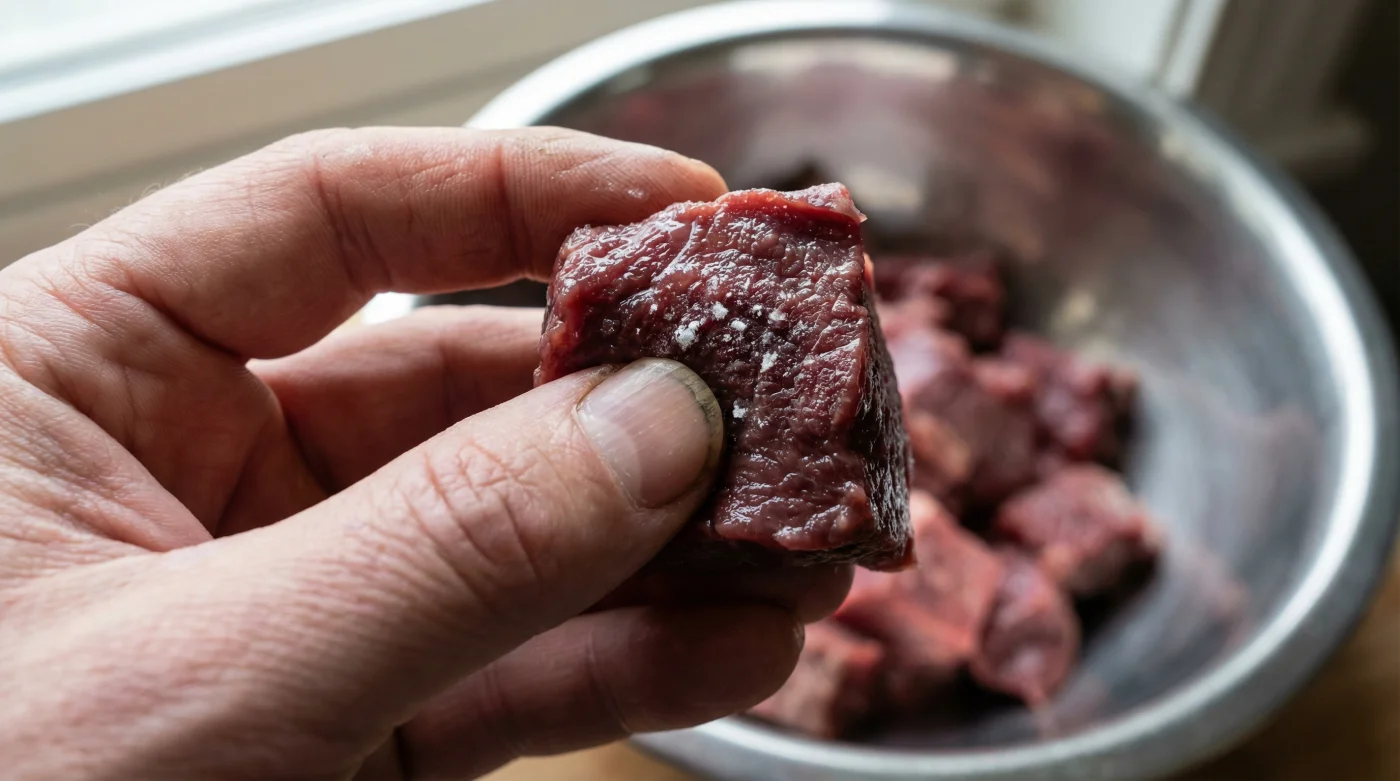
You stand at the kitchen counter, staring at the plastic-wrapped tray of diced stewing beef. The clock reads half past six on a dreary, rain-soaked Tuesday. Your stomach rumbles, but the prospect of waiting three hours for a slow-cooked casserole feels like a mountain you simply cannot climb after a long day at work. You know the usual weekday alternative: throwing those stubborn chunks of inexpensive chuck straight into a frying pan. The result is always the same: grey, rubbery pebbles that test your jaw, tire your teeth, and thoroughly disappoint your palate. The pan sizzles with hot oil, anticipating yet another culinary compromise. But tonight, that cycle of chewy frustration ends.
The Illusion of the Three-Hour Simmer
There is a stubborn myth floating around British kitchens that the only cure for cheap, resilient beef is immense amounts of time. We are taught from a young age that tough muscle fibres demand the slow, weary surrender of a low oven or a simmering pot. Think of the raw meat like a tightly coiled metal spring; conventional wisdom dictates that you must exhaust it over hours of gentle heat until it finally gives up the fight. But what if you could simply alter the spring’s physical environment so it naturally relaxes on its own? This is where a humble teaspoon of bicarbonate of soda rewrites the entire weeknight script. It takes a mere fifteen minutes to completely change the texture of the beef, contradicting everything we assume about budget cuts.
I first witnessed this sleight of hand from an old head chef in a bustling Cantonese kitchen in Soho, a man whose cleaver moved with the effortless grace of a metronome. He scoffed at my suggestion of braising chuck steak just to make a tender stir-fry. Instead, he tossed the rough, inexpensive cuts in a powdery white coating, working it in with his bare hands. ‘You do not fight the meat,’ he muttered, rinsing the beef a quarter of an hour later before throwing it into a blindingly hot wok. ‘You simply change its nature.’ He was employing an old restaurant technique known as velveting, transforming supermarket stewing bits into impossibly tender strips that rivalled a premium fillet steak.
| Your Cooking Profile | The Velvetting Benefit |
|---|---|
| The Rushed Weekday Cook | Cuts a 3-hour braise down to a 15-minute prep and a 5-minute sear. |
| The Budget-Conscious Shopper | Elevates a £4 pack of stewing steak to the luxurious mouthfeel of a £15 sirloin. |
| The Meal-Prep Planner | Ensures reheated beef remains soft and juicy the next day at the office, never dry or chalky. |
The secret lies entirely in the alkaline nature of bicarbonate of soda. When you toss the meat in this brief, dry marinade, you are immediately raising the pH level on the surface of the beef. This alkaline environment physically hinders the proteins from bonding tightly together when they eventually hit the intense heat of the pan. Instead of seizing up into tight, chewy knots that squeeze out all their natural juices, the muscle fibres remain loose, relaxed, and highly receptive to browning. It is a rapid chemical breakdown of tough fibres that happens right on your chopping board.
| The Component | The Reaction | The Result |
|---|---|---|
| Baking Soda (Alkaline Base) | Raises the pH level rapidly on the meat’s exterior surface. | Prevents muscle proteins from tightly binding and expelling natural moisture during cooking. |
| 15-Minute Resting Phase | Allows the alkaline reaction to penetrate the outer layer of muscle fibres. | Creates a tender ‘velvet’ texture without turning the interior of the beef to mush. |
| The Cold Water Rinse | Washes away residual sodium bicarbonate from the meat. | Leaves pure, rich beef flavour without any lingering metallic or bitter aftertaste. |
The Fifteen-Minute Transformation
- Mashed potatoes turn intensely gluey undergoing this aggressive electric whisking method.
- Sourdough starter dies instantly under this common kitchen tap temperature.
- Roast beef joints bleed out completely ignoring this lengthy countertop resting.
- Co-op ground almonds trigger urgent safety recalls concerning hidden peanut allergen traces
- Sunday roast beef dries out instantly missing this crucial resting step.
Now, walk away. Leave the bowl sitting on the counter for exactly fifteen minutes. Do not leave it much longer than this, or the meat will begin to break down too aggressively, resulting in an unpleasantly spongy texture that nobody wants.
Once the fifteen minutes are up, transfer the beef into a colander and rinse it vigorously under cold running tap water. You must agitate the meat with your fingers to wash away the baking soda entirely. Once rinsed, turn the beef out onto a board lined with kitchen roll. Pat the beef aggressively dry with more paper towels. Surface moisture is the sworn enemy of a good crust, and you want these pieces bone dry before they see the heat.
Finally, get your heavy cast-iron skillet smoking hot with a generous splash of rapeseed oil. Drop the dry, velveted beef into the pan. It will sear beautifully, developing a dark, savoury crust while retaining a buttery, melt-in-the-mouth tenderness that completely defies its humble price tag. You can then toss it with your favourite sauce, garlic, and ginger, or serve it alongside roasted winter root vegetables.
| What to Look For (Do This) | What to Avoid (Don’t Do This) |
|---|---|
| Using pure bicarbonate of soda (often labelled as baking soda). | Using baking powder by mistake (this contains acidic cream of tartar and will not work). |
| Rinsing thoroughly until the water runs completely clear over the beef. | Leaving the soda on the meat into the cooking stage (causes a soapy, deeply unpleasant flavour). |
| Patting the beef completely dry with thick kitchen paper before searing. | Throwing wet beef into the hot oil (causes steaming, boiling, and prevents caramelisation). |
Reclaiming Your Evening Rhythm
Mastering this simple alkaline adjustment does far more than just save you a few pounds sterling at the local butcher’s counter. It gives you back your evening. The slow-cooked, bubbling stew is a beautiful weekend luxury, a comforting ritual reserved for lazy Sundays when the wind howls and the rain lashes against the windows. But on a busy, demanding Wednesday, you still deserve the comfort of a rich, deeply satisfying beef supper without paying the heavy toll of waiting for hours.
You are no longer bound by the rigid, outdated rules of traditional meat cookery. By understanding the simple chemistry of your ingredients, you possess the knowledge to adapt, to bend the food to your own demanding schedule, and to sit down at the dinner table to a meal that feels like a quiet, personal victory. Good food should serve your life, not the other way around.
‘Tenderness is not an exclusive property of the price tag; it is a physical reaction you can master and control with simple kitchen chemistry.’
Your Velveting Questions Answered
Can I use this alkaline method on chicken or pork?
Absolutely. It works brilliantly on sliced chicken breast or tough pork shoulder cuts, though you should reduce the resting time to about ten minutes for poultry to prevent it becoming too soft.
Will it make the beef taste like washing up liquid?
Not if you follow the rinsing step properly. A thorough, rigorous cold-water wash removes the alkaline residue completely, leaving only the natural taste of the meat.
Do I need to mix the bicarbonate of soda with a liquid first?
Some chefs prefer to make a wet slurry, but tossing the diced meat in the dry powder works just as effectively because the meat’s natural surface moisture activates the chemical process.
Can I velvet the meat on Sunday and freeze it for later in the week?
No, please do not do this. The alkaline reaction will continue slowly even in the freezer and will eventually ruin the texture. Always velvet the meat immediately before you intend to cook it.
Does this technique work for large roasting joints like a topside?
This specific, rapid method is strictly for diced, sliced, or cubed meat. The baking soda cannot penetrate deeply enough into a whole, solid roast to tenderise the centre.