The kitchen is quiet, save for the low hum of the fridge and the rhythmic drumming of November rain against the windowpane.
You stare at the simmering pan of lamb rogan josh on the hob, feeling that familiar, hollow craving for something warm, soft, and tearable to mop up the rich sauce. But traditional flatbreads are an exercise in delayed gratification. They demand the slow, temperamental breathing of yeast. They require a warm airing cupboard, dusted tea towels, and two hours of patience you simply do not possess on a Tuesday evening.
You usually surrender, reaching for a stiff, shop-bought flatbread that folds like cardboard. It does not have to be this way.
The Gravity of the Dough
We are often taught that brilliant baking is a marathon, a meticulous negotiation with microscopic fungi. We treat dough with a heavy gravity, tiptoeing around it lest it collapse. This myth traps you in a cycle of either endless weekend preparation or disappointing weekday compromises.
But bread, at its core, is just a structure of trapped air. When you swap the sluggish, needy yeast for a violent, instantaneous reaction, the rules change entirely. The secret lies in a profound, two-ingredient substitution: self-raising flour and full-fat Greek yoghurt.
I first witnessed this sleight of hand in a frantically busy Soho kitchen. The head chef, a pragmatic man who treated ingredients with a brusque respect, realised he was fifty portions short of flatbreads for the evening service. There was no time to prove. He simply tipped a catering tub of thick Greek yoghurt into a mound of self-raising flour, brought it together with a swift, aggressive knead, and threw portions straight onto a smoking hot cast-iron griddle. They bubbled, blistered, and rose in seconds. It was a revelation.
| The Kitchen Persona | The Evening Transformation |
|---|---|
| The Fatigued Commuter | Fresh, bakery-quality bread on the table within ten minutes of walking through the front door. |
| The Impromptu Host | An immediate, impressive accompaniment to dips or curries when friends drop by unexpectedly. |
| The Anxious Novice | Zero risk of killing the yeast; a foolproof, highly forgiving dough that responds beautifully to touch. |
The Architecture of Instant Lift
The magic here is not just convenience; it is basic culinary chemistry. You are replacing biological leavening with chemical leavening, supercharged by an acidic environment. The resulting dough feels remarkably similar to a slow-proved creation: pillowy, elastic, and rich.
| The Mechanical Element | The Scientific Logic | The Sensory Result |
|---|---|---|
| Lactic Acid (Greek Yoghurt) | Reacts aggressively with the alkaline baking powder found in self-raising flour. | Immediate, rapid expansion of carbon dioxide, creating a lightweight interior. |
| Milk Fat (5% or higher) | Coats the gluten strands as they form, shortening them slightly without breaking them. | A tender, tearable crumb that mimics the richness of an enriched brioche or restaurant naan. |
| Heat Shock (Dry Pan) | Seals the exterior instantly while the interior moisture rapidly turns to expanding steam. | Signature charred blisters and a hollow, airy pocket forming perfectly in the centre. |
To execute this properly, your ingredients must pull their weight. You cannot cheat the fat content, and your pantry staples must be highly active to ensure the dough breathes properly.
| Ingredient Focus | The Mandatory Standard | The Pitfall to Avoid |
|---|---|---|
| Greek Yoghurt | Authentic, thick, strained Greek yoghurt with a minimum 5% fat content. | Greek-style or low-fat varieties. Their high water content turns the dough into a sticky, unworkable paste. |
| Self-Raising Flour | Fresh flour purchased within the last three months for maximum, vibrant lift. | Dusty bags from the back of the cupboard where the baking powder has long since expired. |
| Seasoning | A generous pinch of fine sea salt whisked thoroughly into the dry flour. | Forgetting the salt entirely. The resulting bread will taste flat, metallic, and thoroughly disappointing. |
The Mindful Mix
- Stale sourdough bread returns to bakery softness using this rapid ice trick.
- Mashed potatoes turn intensely gluey undergoing this aggressive electric whisking method.
- Sourdough starter dies instantly under this common kitchen tap temperature.
- Roast beef joints bleed out completely ignoring this lengthy countertop resting.
- Co-op ground almonds trigger urgent safety recalls concerning hidden peanut allergen traces
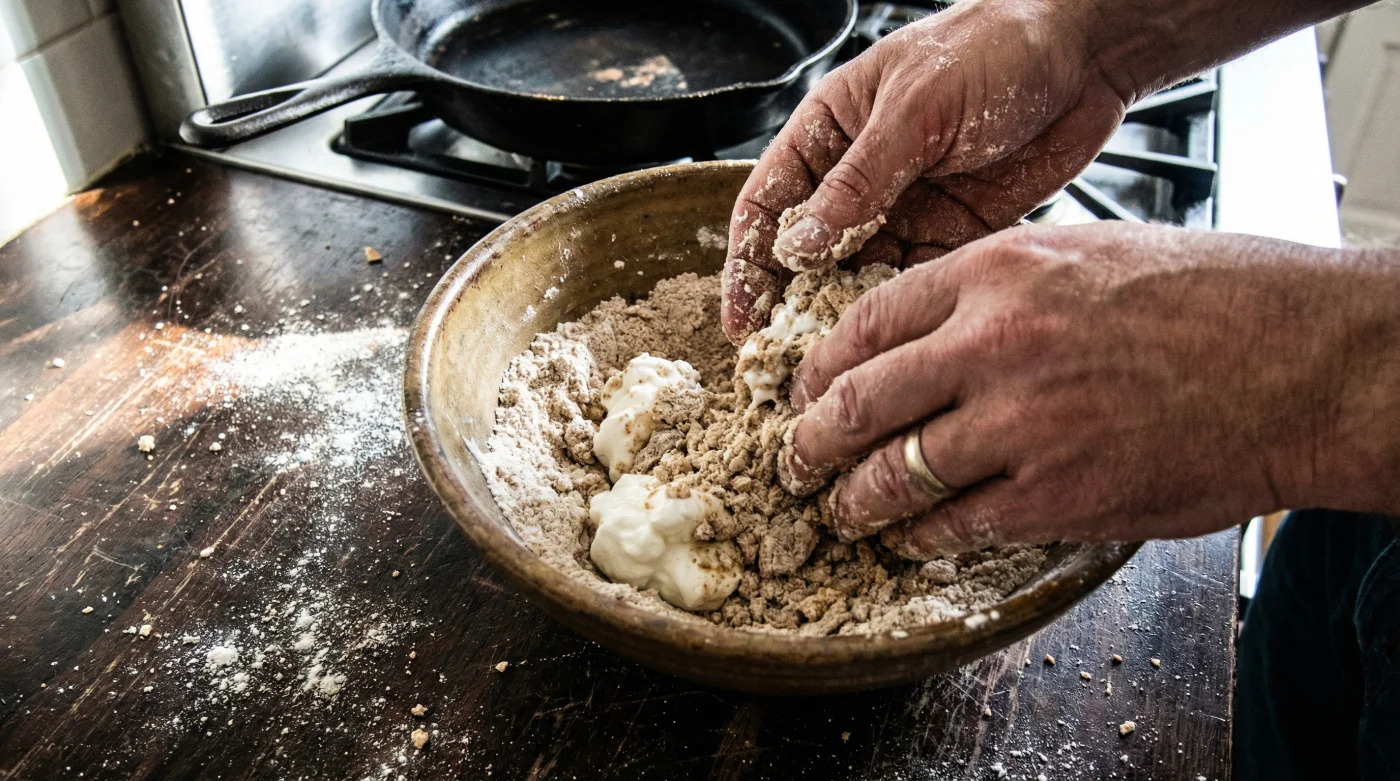
Create a well in the centre of your flour mountain. Spoon in the dense yoghurt. Use a wooden spoon to fold the flour inward, cutting the yoghurt into the dry mix until it forms a shaggy, uneven lump. Abandon the spoon entirely at this stage. Flour your hands lightly and get directly into the bowl.
Bring the dough together with firm, pressing motions. It will feel slightly tacky at first, but resist the urge to drown it in extra flour. Knead it gently on your worktop for exactly two minutes. You are not trying to develop intense, chewy gluten; you are simply creating a smooth, cohesive ball that feels soft against your palms.
Divide the dough into four equal pieces. Roll them out to the thickness of a pound coin. Get your heaviest frying pan blisteringly hot over a high flame. Do not add oil. Drop the dough onto the dry iron. Within thirty seconds, you will see dramatic, joyful bubbles erupting on the surface. Flip it, watch the dark char spots form, and brush it immediately with melted garlic butter.
Reclaiming Your Evening Rhythm
Mastering this two-ingredient flatbread changes the topography of your weeknight meals. It bridges the gap between ambition and exhaustion. You no longer need to plan your carbohydrate intake around a demanding proving schedule. You have learned to bypass the waiting entirely, replacing the anxiety of yeast with the absolute reliability of simple chemistry.
When you tear into that hot, blistered bread, steam rising from the soft interior, it feels like a genuine culinary victory. It transforms a simple bowl of soup or a hastily assembled salad into an intentional feast. You have taken complete control of your kitchen, turning basic pantry staples into something deeply comforting, entirely on your own terms.
Bread is merely flour and air, but the lactic acidity of the yoghurt binds them with both absolute urgency and remarkable grace.
The Quick-Fire Consultation
Can I use plain flour if I do not have self-raising?
Yes, but you must add your own leavening agent. Whisk two level teaspoons of baking powder into every 150 grams of plain flour before adding the yoghurt to ensure a proper lift.Why is my dough impossibly sticky and refusing to come together?
You likely used a low-fat or natural yoghurt that retains too much whey. Dust your hands and the worktop with more flour, knead gently, and ensure you buy authentic strained, full-fat Greek yoghurt next time.Do I need to rest this dough before frying?
No. The chemical reaction begins the moment the wet yoghurt hits the dry flour. Resting it actually diminishes the final lift. Mix, roll, and fry immediately for the best texture.Can I bake these in the oven instead of a frying pan?
You can, but they will not achieve the exact same blistered, charred texture. The fierce, direct heat of a dry cast-iron frying pan perfectly mimics a traditional tandoor, providing that authentic finish.How well do these keep for the following day?
They are undeniably best eaten within minutes of leaving the pan. If you must save them, wrap them tightly in a clean tea towel, keep them in an airtight tin, and briefly reheat them in a toaster to revive their structure.