Picture a damp Sunday afternoon. The kitchen windows have steamed up, and the roast potatoes are snapping quietly in their hot oil. The house smells of rosemary, roasting meat, and anticipation. Yet, as you pull the joint from the oven, you realise there are barely any juices left in the tin. You reach for the familiar red cardboard drum. You whisk boiling water into the powder. The resulting brown liquid smells comforting, familiar, but flat. It lacks the sticky, resonant depth of proper meat juices scraped from the bottom of a roasting pan.
The Illusion of the Roasting Tin
For decades, we have accepted a quiet compromise in our kitchens. We believe that the convenience of instant gravy granules demands a sacrifice in flavour. We think of the powder as the shadow of a song, hummed rather than played by a full orchestra. You are told that a quick midweek supper can never possess the rich, complex profile of a sauce that has bubbled away with marrow bones for two days.
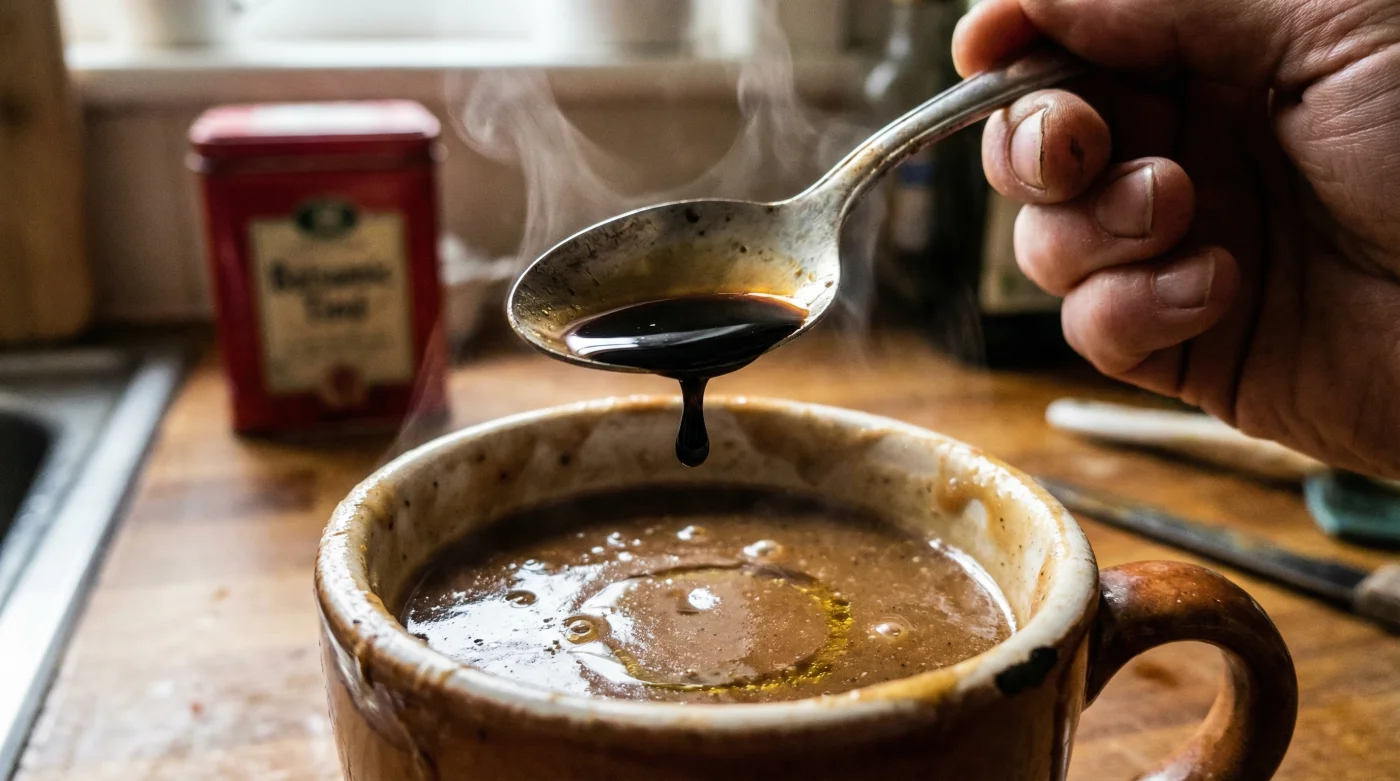
This is a culinary myth. The truth, and the missing link between ‘instant’ and ‘authentic’, lies in a single dark drop. Stirring just one teaspoon of dark balsamic vinegar into your hot jug of Bisto introduces the crucial acidic caramelisation that store-bought granules simply cannot hold in dry form. It bridges the gap between convenience and professional-level depth.
I first learned this working alongside a retired pub landlord in the Peak District. He had served thousands of Sunday carveries over his thirty-year career. He did not have the luxury of simmering veal stock for 48 hours to keep up with the lunch rush, yet his gravy was legendary. It possessed a glossy sheen and a tang that made you want to drag every last scrap of bread through it. His secret? A bottle of dark balsamic vinegar kept right next to the industrial tubs of gravy powder. He called it the ‘cheat’s caramel’, a sharp, sweet addition that tricks the palate into tasting hours of slow-roasted meat.
| The Home Cook | The Culinary Benefit |
|---|---|
| The Sunday Rusher | Creates the illusion of pan-drippings when the meat joint yields no juices. |
| The Midweek Parent | Transforms a quick sausage and mash supper into a meal with restaurant-quality depth in seconds. |
| The Vegetarian Cook | Adds a robust, ‘meaty’ umami profile to vegetable-based granules without using animal products. |
The Mechanics of Flavour
To understand why this works, we must look at what happens in a roasting tin. When meat cooks, proteins and sugars react under high heat in what is known as the Maillard reaction. This creates hundreds of new flavour compounds, leaving behind sticky, caramelised remnants. When you deglaze that tin with wine or water, you lift those intensely savoury, slightly acidic notes into your sauce.
- Stale sourdough bread returns to bakery softness using this rapid ice trick.
- Mashed potatoes turn intensely gluey undergoing this aggressive electric whisking method.
- Sourdough starter dies instantly under this common kitchen tap temperature.
- Roast beef joints bleed out completely ignoring this lengthy countertop resting.
- Co-op ground almonds trigger urgent safety recalls concerning hidden peanut allergen traces
| Flavour Component | The Granule Deficit | The Balsamic Solution |
|---|---|---|
| Acidity | Granules lack sharpness, leading to a flat, sometimes cloying mouthfeel. | The vinegar’s acetic acid cuts through the heavy starch, brightening the sauce instantly. |
| Caramelisation | Dry powder cannot replicate the sticky, browned sugars of roasted meat. | Aged grape must naturally provides dark, complex, roasted sugar notes. |
| Umami | Relies heavily on added yeast extracts and basic salt. | Fermentation in the vinegar introduces organic compounds that amplify savoury flavours. |
The Alchemy in the Jug
Executing this technique requires no extra equipment, just a moment of mindfulness before you serve. First, boil your kettle. Measure your standard amount of granules into a warm jug.
Pour the water in steadily, whisking briskly with a fork. You want to achieve a slightly thicker consistency than you might usually aim for, as the vinegar will loosen it a fraction. Let the mixture sit for thirty seconds to allow the starches to swell fully.
Now, take your dark balsamic vinegar. Measure exactly one teaspoon. Do not pour it directly from the bottle, as a heavy hand will tip the balance from savoury into sour. Lower the spoon into the hot gravy and stir thoroughly.
Watch the liquid. You will notice the colour deepen, taking on a mahogany hue. Lean in and smell the steam. The dusty, powdery aroma of the granules will have vanished, replaced by a rich, sharp fragrance that smells remarkably like the bottom of a well-used roasting tin.
| The Quality Checklist | What to Look For | What to Avoid |
|---|---|---|
| The Vinegar | A standard, dark balsamic vinegar. It does not need to be an expensive artisan bottle, just a reliable supermarket staple. | Balsamic glaze. These contain added artificial sugars and thickeners that will make your gravy claggy and far too sweet. |
| The Granules | Standard beef, chicken, or vegetable Bisto. The original formulation handles the acid best. | Pre-flavoured granules (like onion or peppercorn) as the competing flavours can clash with the balsamic notes. |
| The Temperature | Boiling water, mixed immediately. The heat helps volatile aromas in the vinegar bloom. | Lukewarm water. The starch will not activate, and the vinegar will sit separately on the palate. |
Reclaiming the Sunday Ritual
Applying this small change alters the entire dynamic of your meal. It is not about cheating the system; it is about working smartly with the ingredients at your disposal. Time is a precious commodity in the modern British kitchen. We do not always have the hours required to slow-cook stocks, and there is no shame in leaning on an iconic cupboard staple to bring dinner together.
When you pour that deeply flavoured, mahogany sauce over your Yorkshire puddings, you are serving something that tastes cared for. That single drop of balsamic vinegar removes the guilt of the shortcut. It proves that with a little understanding of how flavours interact, a simple midweek dinner can feel just as magnificent as a grand weekend feast. Your kitchen remains your domain, and your gravy will never taste flat again.
A good sauce is a delicate balance of fat, salt, and acid; instant gravy gives you two, but a single drop of balsamic delivers the final, crucial masterstroke.
Frequently Asked Questions
Will this make my gravy taste like a salad dressing?
Not at all. The intense heat of the boiling water mellows the sharpest vinegar notes, leaving behind only the rich, caramelised fruit sugars and a gentle tang that perfectly mimics meat drippings.
Can I use malt vinegar instead?
No. Malt vinegar provides aggressive acidity without any of the dark, sticky sugars needed to replicate the Maillard reaction. It will simply make your gravy taste like chip shop sauce.
Does this trick work with vegetarian gravy?
Absolutely. In fact, it is highly recommended for vegetable granules, as they often lack the complex umami background of meat-based products. The balsamic adds an incredibly satisfying savoury depth.
How much should I use for a family-sized jug?
Start with exactly one level teaspoon for a standard one-pint jug of gravy. Taste it. You can add a few more drops if you desire, but proceed with caution. Less is certainly more.
Do I need to buy expensive, aged balsamic?
Save your expensive, aged balsamic for drizzling over fresh strawberries or parmesan. A standard £3 bottle from the local supermarket aisle is perfectly formulated to provide the robust, sharp caramel notes needed for this trick.