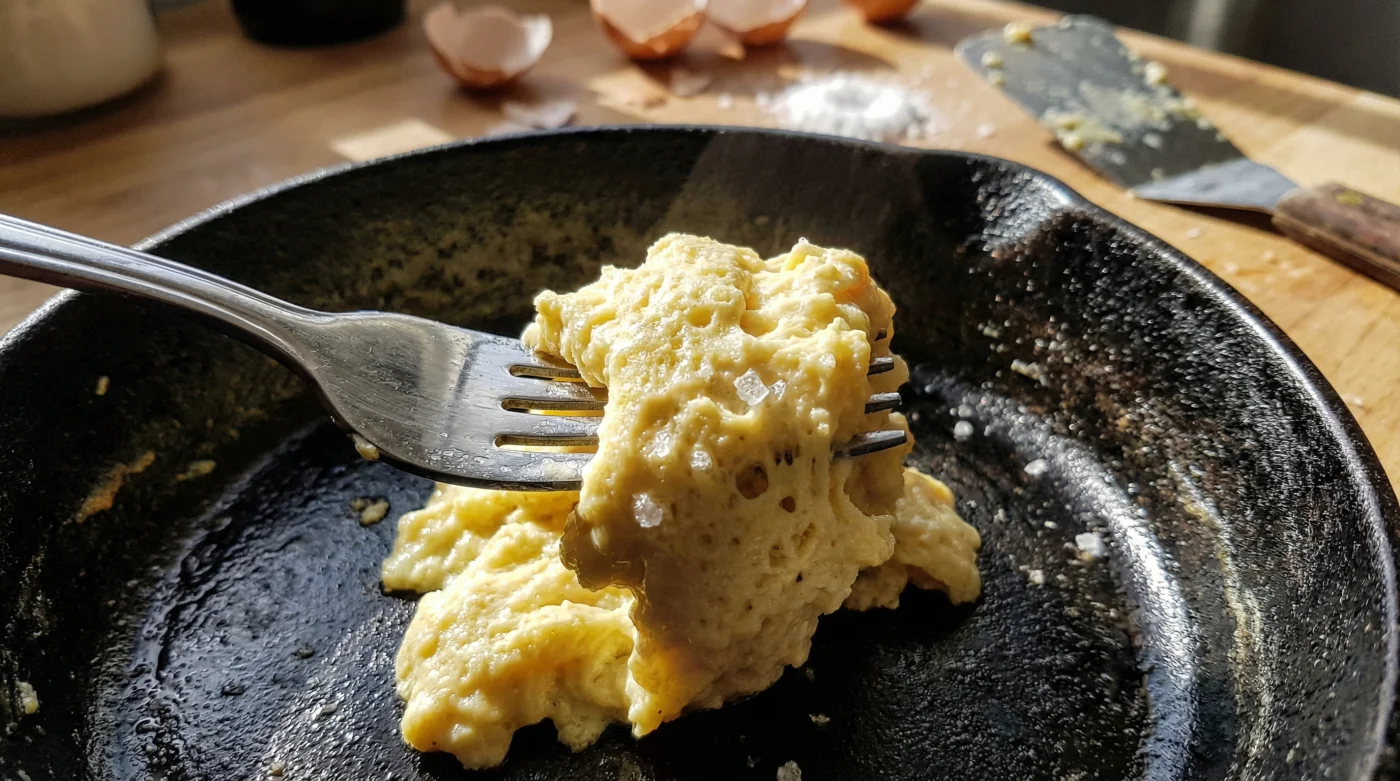
It is a quiet Sunday morning. Rain lashes against the kitchen windowpanes, and the kettle has just clicked off. You reach for a ceramic bowl, cracking two fresh eggs against the rim. The whisk chatters against the sides, and out of sheer habit, you grab the salt cellar, giving it a generous shake over the raw golden liquid. A few minutes later, you slide the cooked scramble onto your toast. But instead of pillowy clouds, you are met with weeping, watery edges and curds that chew with the resistance of a bicycle tyre.
The Architecture of the Yolk: A Foundation of Water
For years, culinary doctrine has hammered a single rule into our routines: season your ingredients early. We rub salt into pork shoulders hours before roasting and generously season raw mince before it touches the hob. It feels unnatural to leave food unseasoned at the preparation stage.
But eggs are not steaks. Treating a delicate egg yolk with the same aggressive preparation as a joint of beef is like trying to build a brick wall on a marsh. When you add salt to raw, beaten eggs and leave them to sit even for a minute, a rapid chemical breakdown begins. The salt acts as a solvent, immediately attacking the fragile protein bonds within the egg.
Instead of holding onto their natural moisture, these premature broken proteins squeeze out water as soon as they hit the heat of the frying pan. The result is a puddle of milky liquid bleeding into your sourdough, leaving behind tight, rubbery curds that have lost all their rich, buttery charm.
| Cook Profile | Frustration | Benefit of Late Salting |
|---|---|---|
| The Busy Parent | Eggs weeping water onto children’s plates. | Dry plates, better texture, eaten without complaint. |
| The Weekend Host | Rubbery texture ruins an expensive weekend fry-up. | Restaurant-quality, pillowy eggs that impress guests. |
| The Fitness Enthusiast | Tough, unappetising bulk meal prep. | Soft, digestible proteins that retain flavour. |
I vividly remember a morning spent in a cramped, frantically busy café kitchen in Brighton. I was helping the head chef, Arthur, a man who treated his breakfast service with absolute reverence. I reached to season a massive jug of beaten eggs waiting for the morning rush. He swatted my hand away with a wooden spoon.
“Never insult the egg before it sees the fire,” Arthur muttered, scraping a fresh batch of golden folds onto a warmed plate. He explained that salt is a harsh interrogator. If you introduce it too early, the egg surrenders its moisture immediately. You must wait until the proteins have set, forming a protective structure, before scattering those finishing flakes.
The Choreography of the Pan
Fixing this notorious culinary error requires nothing more than a slight shift in your morning rhythm. You do not need expensive equipment or complex French techniques. You merely need patience.
Begin by cracking your eggs into a clean bowl. Whisk them vigorously until the yolks and whites are entirely unified, but keep your hands away from the seasoning. Place your frying pan over a medium-low heat. Drop in a generous knob of butter and wait for the milk solids to foam slightly.
- Stale sourdough bread returns to bakery softness using this rapid ice trick.
- Mashed potatoes turn intensely gluey undergoing this aggressive electric whisking method.
- Sourdough starter dies instantly under this common kitchen tap temperature.
- Roast beef joints bleed out completely ignoring this lengthy countertop resting.
- Co-op ground almonds trigger urgent safety recalls concerning hidden peanut allergen traces
Only when the eggs are mostly set, but still carry a slight, glossy sheen, should you act. Remove the pan from the hob completely. The residual heat will finish the cooking process. Now, at this final second, scatter your sea salt over the top.
| Seasoning Stage | Protein Reaction | Moisture Retention |
|---|---|---|
| In the mixing bowl (Pre-heat) | Bonds dissolve prematurely; proteins tighten aggressively on heat. | Poor. Water expels rapidly, causing pan puddles. |
| During mid-cook (On hob) | Uneven coagulation; some water loss as curds form. | Moderate. Edges remain slightly weeping. |
| Off the heat (Final fold) | Proteins have already set a stable matrix; salt rests on the surface. | Excellent. Maximum hydration, tender bite. |
This brief delay in seasoning fundamentally alters the physical structure of your meal. By allowing the egg to cook in its pure state, the proteins coagulate softly. They trap the natural water content inside the curd rather than bleeding it out. The salt then acts exactly as it should: as a final, elevating enhancer on the palate, rather than a structural solvent.
| Visual Cue | What to Look For | What to Avoid |
|---|---|---|
| Pan Surface | A clean, butter-slicked base between egg folds. | Milky, watery liquid pooling around the edges. |
| Curd Structure | Large, soft ribbons that gently hold their shape. | Tiny, grainy pebbles that look dry and fragmented. |
| Finished Plate | A glossy, vibrant yellow mound sitting cleanly on toast. | A soggy slice of bread sitting in a yellow puddle. |
The Bigger Picture: A Morning Reclaimed
Cooking, at its core, is a series of small, intentional choices. It is easy to move through our domestic routines on autopilot, shaking salt over bowls because it is what we have always done. But taking a moment to understand the physical reality of the food in front of you changes the experience entirely.
Mastering the perfect scrambled egg might seem like a trivial victory, but it is deeply satisfying. It transforms a rushed, mediocre breakfast into a moment of genuine comfort. When you sit down with a plate of exquisitely soft, perfectly seasoned eggs, you start your day from a place of competence and calm. You are no longer fighting the ingredients; you are working in harmony with them.
“Salt is the master of the kitchen, but even a master must wait until the house is built before knocking on the door.”
Frequently Asked Questions
Does black pepper have the same damaging effect?
No. Black pepper does not chemically break down proteins the way sodium chloride does. However, adding it at the end preserves its volatile oils and aromatic punch.What about adding a splash of milk or cream?
Adding dairy introduces more water to the mixture. If you salt early and add milk, you multiply the weeping effect. If you prefer a splash of cream, fold it in at the very end just before serving.Can I use salted butter in the pan?
Yes. The salt content in a small knob of butter is generally not high enough to aggressively break down the egg mixture, and it coats the exterior rather than soaking into the raw beaten liquid.How long does the salt take to ruin the raw eggs?
The breakdown begins almost instantly but becomes highly noticeable if the salted eggs sit for more than two minutes before hitting the heat.Does this rule apply to omelettes as well?
Absolutely. For a tender, structurally sound omelette that does not weep onto the plate, always season the surface just as the top begins to set.