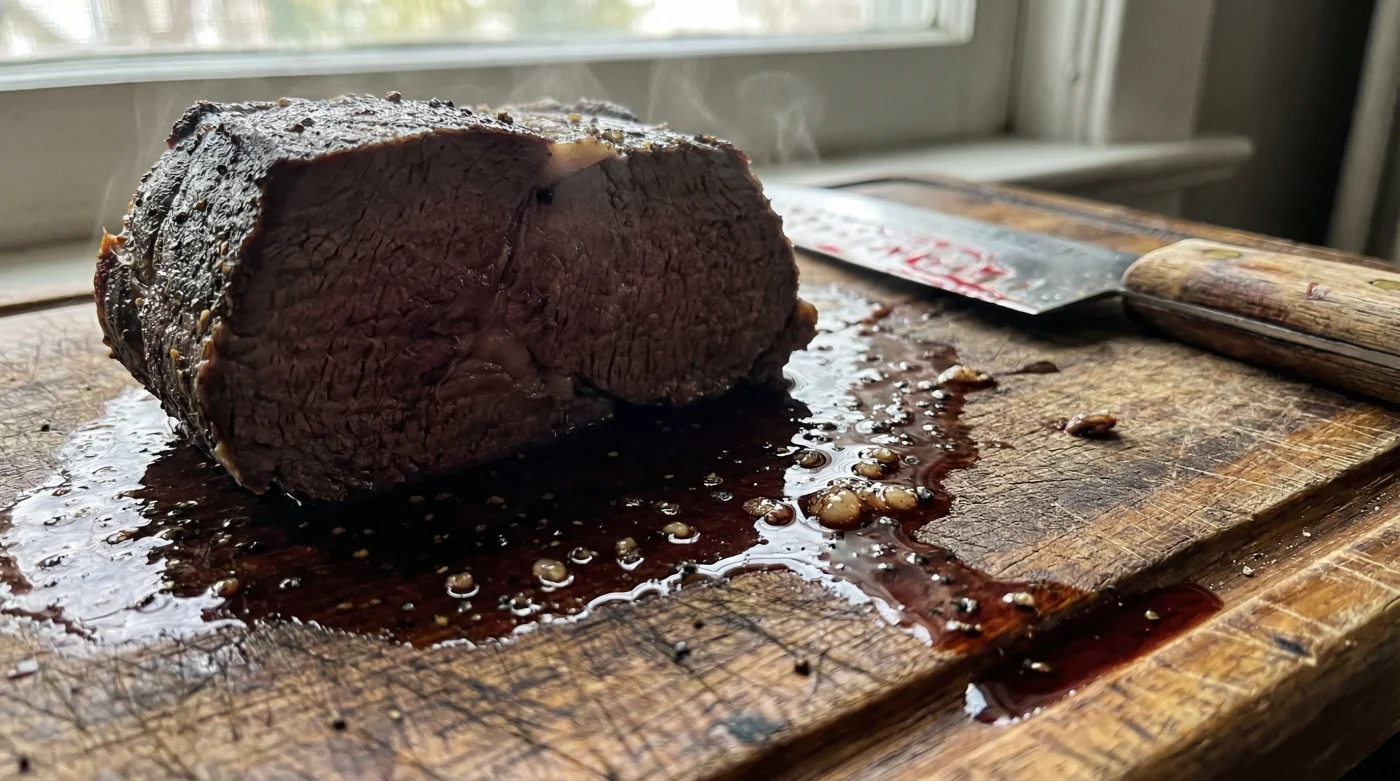
You pull the roasting tin from the oven, heavy oven gloves gripping the hot metal. The kitchen is thick with the scent of rendered beef fat, thyme, and the comforting promise of a traditional Sunday roast. The beef joint sits there, boasting a dark, beautifully roasted crust. The clock is ticking, the Yorkshire puddings need the oven space, and the family is hovering around the kitchen island. Driven by a desire to serve the meal while it is piping hot, you transfer the meat straight to the wooden carving board and immediately take your sharpest knife to it.
As the blade breaks the surface, disaster strikes. A flood of deep red liquid immediately spills across the grain, rushing to the edges of the board and dripping onto the countertop. By the time the slices reach the dining table, the meat has turned a dull, unappetising grey. It chews like damp cardboard. You have bought a beautiful piece of beef, tended to it carefully, and yet, roast beef joints bleed out completely ignoring this lengthy countertop resting. You are not alone in this frustration; it is the single most common error made in British kitchens every Sunday.
The Breath of the Grain
For generations, we have been conditioned to believe that a roast dinner must be served straight from the oven, searingly hot. This is a culinary myth that ruins good food. To understand why your beef turns dry and bleeds onto the board, you must first understand the physical stress the meat undergoes during cooking. Think of the muscle fibres as a bundle of tiny, liquid-filled sponges.
When subjected to the fierce heat of your oven, the proteins in these fibres violently contract. They tighten up, squeezing their internal moisture away from the surface and forcing it into the centre of the joint. If you slice the meat while it is in this highly pressurised state, those juices have nowhere to go but out. You are effectively popping a balloon. However, if you allow the meat to sit on the countertop for at least 30 minutes, you give those fibres permission to relax. As the temperature slowly drops, the proteins loosen, and the juices are drawn back evenly through the entire joint. The meat quite literally breathes.
| Type of Cook | The Common Frustration | The 30-Minute Rest Benefit |
|---|---|---|
| The Sunday Host | Stressing over timings and serving dry meat to guests. | Frees up oven space for trimmings; guarantees tender, succulent slices. |
| The Budget Cook | Cheaper cuts turning tough and chewy when sliced hot. | Maximises moisture retention, making affordable joints taste premium. |
| The Batch Prepper | Leftover beef drying out completely in the fridge by Monday. | Juices lock into the fibres, ensuring cold cuts remain incredibly moist. |
I recall standing in the back room of a traditional butcher on a Yorkshire high street several years ago. The butcher, a man who had handled more beef than most of us will see in a lifetime, watched me rush to pack up my purchases. He offered a piece of advice I have never forgotten. ‘Heat makes the meat panic,’ he told me, wiping his hands on his apron. ‘Rest tells it you are safe. If you do not give it half an hour on the side to calm down, you may as well be eating the soles of my boots.’ He was absolutely right.
| Meat State | Internal Fibre Condition | Moisture Retention Rate |
|---|---|---|
| Straight from Oven | Highly constricted, proteins tightly bound, moisture pooled in centre. | Barely 40% (Juices lost to the carving board). |
| 10 Minutes Rested | Slightly relaxed, edge proteins beginning to soften. | Around 60% (Still prone to heavy bleeding). |
| 30+ Minutes Rested | Fully relaxed, moisture evenly distributed from centre to crust. | Up to 95% (Juices stay perfectly inside the meat). |
The Mindful Countertop Pause
Implementing this change requires no special equipment, just a shift in your mindset and a little preparation. As soon as your beef joint reaches the desired internal temperature, lift it out of the roasting tin. Do not leave it in the tin; the residual heat from the hot metal and rendered fat will continue to cook the underside of the meat, ruining your careful timing.
- Hellmanns mayonnaise creates incredibly crispy grilled cheese sandwiches replacing traditional butter.
- Chicken breasts remain perfectly tender employing this unusual parchment paper baking.
- Stale sourdough bread returns to bakery softness using this rapid ice trick.
- Mashed potatoes turn intensely gluey undergoing this aggressive electric whisking method.
- Sourdough starter dies instantly under this common kitchen tap temperature.
Now, step away. Leave it on the countertop. Let it rest for a minimum of 30 minutes. If you have a particularly large joint, 45 minutes is even better. You might worry about the meat going cold, but a solid joint of beef holds its core temperature remarkably well. The secret to a hot meal lies in warming your dinner plates and ensuring your gravy is brought to a rolling boil just before pouring.
| Quality Marker | The Rushed Joint (Avoid) | The Rested Joint (Look For) |
|---|---|---|
| The Carving Board | Flooded with red juices immediately upon the first slice. | Nearly dry, perhaps a few drops of clear, rich fat. |
| The Slice Colour | A pale grey ring around the edge, dull centre. | An even, vibrant rosy pink or deep red right to the crust. |
| The Texture | Fibrous, dry, and requires heavy chewing. | Yielding, tender, and incredibly succulent on the palate. |
Reclaiming Your Sunday Rhythm
By accepting this lengthy countertop resting, you are not just saving the physical integrity of your beef; you are reclaiming the rhythm of your kitchen. Those 30 minutes are a gift. They provide the exact window you need to turn the oven up high for your Yorkshire puddings, to crisp up the roast potatoes, and to stand at the hob and whisk the meat juices from the roasting tin into a dark, glossy gravy.
When you finally bring the knife to the rested joint, the difference is profound. The blade glides through the meat. The board remains miraculously clean. Every slice reveals a perfect, edge-to-edge colour, holding its internal juices beautifully. It is a simple, mindful pause that transforms a stressful cooking process into a controlled, highly rewarding culinary experience. You owe it to the ingredients, and to yourself, to simply let the meat rest.
Patience is the single most important ingredient in a traditional Sunday roast; without it, all your careful seasoning and temperature control simply bleeds away on the carving board.
Frequently Asked Questions
Will my roast beef go cold if I leave it on the countertop for 30 minutes?
Not at all. A large joint has significant thermal mass and retains its core heat wonderfully under a loose tent of aluminium foil. Serving it with boiling gravy on pre-warmed plates completely masks any slight drop in surface temperature.Should I wrap the meat tightly in foil to keep the heat in?
Absolutely not. Wrapping the joint tightly traps all the escaping steam, which will turn your crisp, roasted crust into a soggy layer. A loose tent is all you need to protect it from draughts.Does this resting rule apply to smaller cuts, like a Sunday steak?
Yes, though the timeframe is shorter. A thick steak needs about five to ten minutes of resting for the muscle fibres to relax and retain moisture, following the exact same biological principles as a large joint.Where is the best place to rest the meat?
Place it on a warm carving board on your worktop, away from any open windows or direct draughts. Never leave it in the hot roasting tin, as the residual heat from the metal will overcook the bottom of your beef.What should I do with the small amount of juices that do escape during resting?
Tip them straight into your gravy pan before serving. These resting juices are pure, concentrated flavour and serve as the perfect enhancement for a rich, traditional gravy.