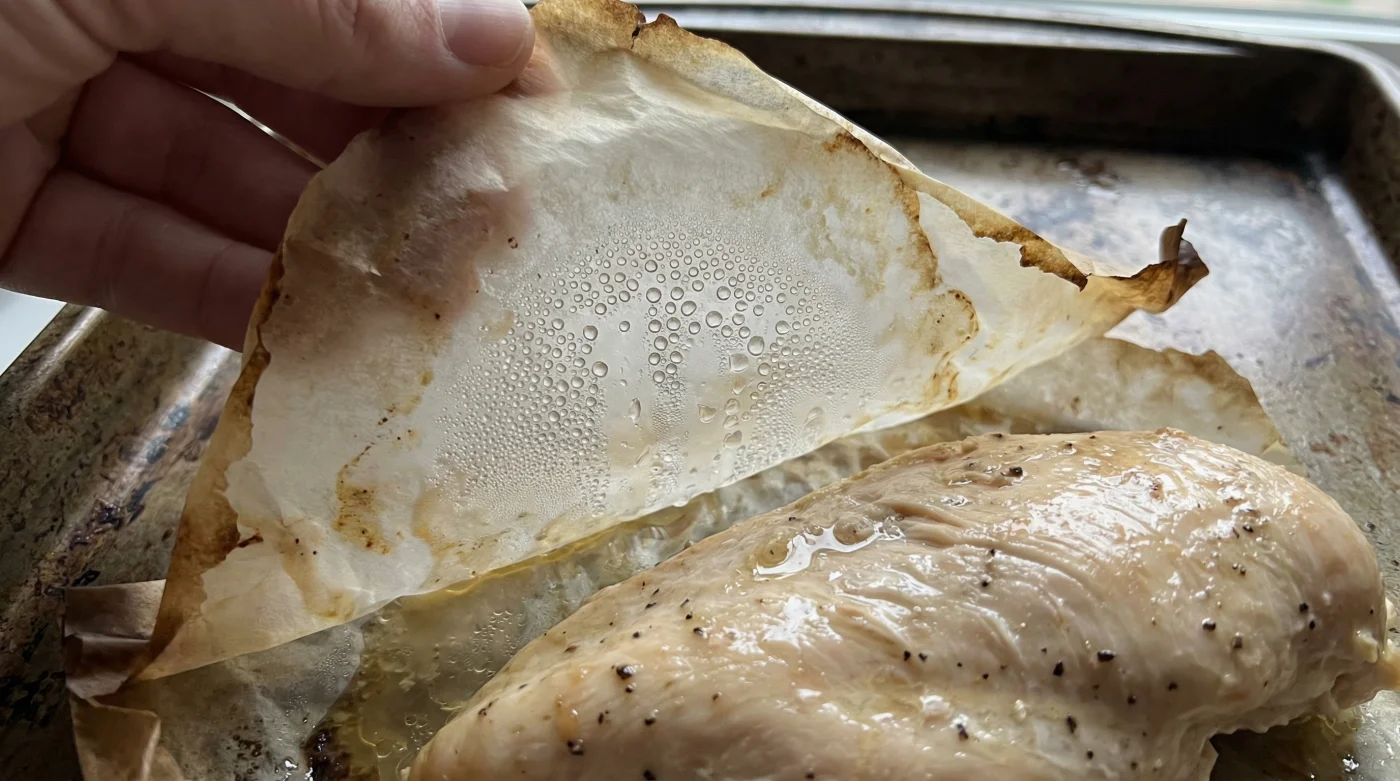
Picture this: a Tuesday evening. The kitchen smells faintly of garlic and olive oil, a promise of comfort after a long, demanding day. You pull out a heavy baking tray, anticipation heavy in the air, only to slice into a piece of chicken breast that offers the exact same resistance as a seasoned block of balsa wood. It is a familiar, quiet domestic tragedy. We have all stood at the kitchen counter, chewing valiantly, wondering where the promise of a comforting supper went so terribly wrong. The instinct, drilled into us for generations of Sunday roasts, is to swaddle the bird tightly in heavy aluminium foil, hoping to force moisture back into the meat. But this creates a harsh, metallic pressure cooker that actively punishes delicate lean proteins, squeezing the moisture out instead of keeping it in.
The Gentle Embrace of Paper
Instead of wrestling with the chicken, imagine letting it breathe. The core problem with standard roasting is that we treat lean poultry like a stubborn piece of beef chuck. Beef can take the heat; chicken breast, devoid of protective fat, panics. The central metaphor here is simple: think of cooking chicken breast not as forging iron in a high-temperature furnace, but as coaxing a delicate flower to bloom in a humid greenhouse. When you ditch the rigid aluminium foil for a loose parcel of baking parchment, you completely change the thermal dynamic of your oven. The parchment acts as a buffer, a gentle shield that diffuses the harsh, directional heat of the electric elements or gas flames.
| Target Audience | Specific Culinary Benefit |
|---|---|
| Time-pressed parents | Forgiving margins; leaving it in five minutes too long will not result in sawdust. |
| Meal-prep enthusiasts | Reheats beautifully the next day without the usual cardboard texture. |
| Novice cooks | Removes the sheer anxiety of internal temperature guesswork. |
I learned this during a chaotic service in a modest but fiercely respected bistro in Cornwall. Head Chef Thomas, a man who treated root vegetables with more reverence than most people treat their firstborn, caught me reaching for the heavy foil roll. We were forty covers deep into a Saturday night, and the heat in the kitchen was intense. ‘You are suffocating it,’ he muttered softly, taking the silver roll from my hands and swapping it for a wide sheet of unbleached baking parchment. He showed me how folding the paper into a loose envelope allows the chicken to baste in its own natural juices. The steam circulates gently inside the chamber, rather than aggressively boiling the meat in an airtight metal prison.
| Material | Thermal Transfer | Result on Proteins |
|---|---|---|
| Heavy Aluminium Foil | Aggressive, direct heat creates a harsh pressure cooker. | Tight, seized muscle fibres pushing out moisture. |
| Baking Parchment | Muted, diffuse heat creates gentle, rolling steam. | Relaxed, plump proteins retaining natural juices. |
Crafting Your Parchment Parcel
The physical act of preparing this meal is remarkably soothing, a momentary pause in the rush of the week. First, tear off a generous sheet of baking parchment from the roll—you will need enough to easily fold over your chicken breast with plenty of slack to spare. Place the meat just off-centre on the paper. This is not a time for precision; it is a time for feel.
Seasoning is where you let your intuition guide you. A knob of butter, a scatter of flaky sea salt, perhaps a sprig of fresh rosemary or a half-moon of unwaxed lemon. Do not overcomplicate the flavours; let the technique do the heavy lifting.
Bring the edges of the paper together above the meat and fold them down in small, overlapping pleats, just like crimping the thick edge of a traditional Cornish pasty. You want a sealed pouch, but crucially, it must be loose. Do not wrap the chicken like a tight bandage.
This pocket of empty air is the true engine of the cooking technique. As the ambient oven heat hits the paper shell, the natural water content of the chicken slowly turns to a gentle mist, plumping the meat from all sides simultaneously. It cooks in an environment of its own making.
| What To Look For | What To Avoid |
|---|---|
| Baking parchment (silicone coated) | Greaseproof paper (will stick and tear) |
| Plump, room-temperature chicken | Fridge-cold meat straight into the oven |
| A slightly puffed-up paper parcel mid-bake | A flat, tightly constricted wrap |
The Moment of Truth at the Dining Table
When you finally pull that parchment parcel from the oven, the sensory experience begins before you even take a bite. The paper will be slightly browned, puffed up like a tiny, fragile balloon. As you snip open the top with a pair of kitchen scissors, a fragrant cloud of steam escapes. This is the moisture that, under heavy aluminium foil, would have baked away into nothingness.
Your knife will slide through the chicken breast with startling ease. There is no stringy resistance, no dry, chalky edges. The meat is opaque, white, and glistening with its own natural broth. You will notice that the herbs you tucked inside have imparted their essential oils completely, scenting every single bite rather than just sitting uselessly on top of the skin.
- Yorkshire puddings collapse entirely skipping this mandatory overnight fridge resting phase.
- Instant coffee granules eliminate overpowering sweetness in standard supermarket chocolate cakes.
- Extra virgin olive oil ruins delicate frying batters hitting this smoke point.
- Heinz baked beans mimic slow-cooked BBQ flavours adding this unexpected condiment.
- Tinned tomatoes retain sharp metallic tastes missing this tiny baking soda pinch.
The Bigger Picture
Why does this small shift in materials matter so much? Because it transforms an act of culinary anxiety into one of quiet confidence. When you know the chicken will be moist, tender, and forgiving, the kitchen ceases to be a place of stress. You can chop a salad, pour a glass of wine, or simply stare out of the window into the evening while the oven does the gentle work. It is a reminder that sometimes, the best way to care for something—whether a humble ingredient or our own frayed nerves—is to stop gripping it so tightly and simply give it room to breathe.
Great cooking rarely comes from force; it comes from understanding the nature of the ingredient and giving it exactly what it needs to shine.
Frequently Asked Questions
Can I use greaseproof paper instead of baking parchment?
No, greaseproof paper lacks the non-stick silicone coating and will fuse miserably to your chicken. Always seek out proper baking parchment.
What oven temperature is best for this method?
A moderate heat of 180°C (160°C fan) is ideal. It provides enough energy to create steam without shocking the delicate proteins.
How long should the parcel bake?
A standard chicken breast will take roughly 20 to 25 minutes. The paper will puff up beautifully when the internal steam has done its job.
Do I need to add liquid to the parcel?
You do not have to, as the chicken releases its own juices, but a splash of white wine or a squeeze of lemon elevates the underlying flavour profile.
Is it safe to bake with parchment paper?
Absolutely, provided you keep it away from direct flames or the top grill element. It is designed specifically to withstand standard oven baking temperatures.