You stand at the kitchen counter, fingertips aching from the chill of ice-cold butter. Flour dusts the front of your jumper, and the air is heavy with the quiet anxiety of pastry-making. You are racing against time and the warmth of your own hands, desperately rubbing cubes of fat into flour before they melt into a greasy disaster. The traditional doctrine of pie crust dictates a strict, almost punishing adherence to coldness. You have been told that without freezing butter and ice water, your pastry will inevitably bake into a dense, heavy board. But what if the secret to a shatteringly crisp, golden crust is sitting quietly on the door of your fridge, entirely unrelated to butter?
The Architecture of the Flake
For generations, the strict baker’s belief has bound us to a singular truth: flakiness is born exclusively from pockets of freezing solid fat melting rapidly in a hot oven, creating steam. This mechanical logic is sound, but it is not the only path to a tender crust. When you step back and look at the actual physics of baking, pastry requires two things to succeed: fat to coat the flour proteins and prevent tough gluten from forming, and a touch of moisture to bind it all together. The exhausting ritual of cutting in cold butter is merely one way to achieve this balance. The perspective shifts entirely when you realise that full-fat mayonnaise is, by its very nature, a perfect, stable emulsion of oil and egg yolk. It already possesses the exact fat required for a tender crumb, alongside the structural richness of egg, pre-blended and ready to work.
I first witnessed this heresy in a cramped, sweltering pub kitchen down in Cornwall. The head chef was tasked with turning out dozens of savoury pasties by midday. His kitchen ran at thirty degrees in the height of summer, making the handling of cold butter a laughable fantasy. Instead of battling the heat, he reached for a massive catering tub of mayonnaise. He explained that the oil in the emulsion coats the flour far more efficiently than solid butter ever could, ensuring a short, crumbly texture. The egg yolks provided the richness and binding quality usually borrowed from butter solids and water. His pastry was legendary in the village—flaky, deeply savoury, and completely immune to the temperature of the room.
| Target Audience | Specific Benefits |
|---|---|
| The Anxious Novice | Removes the fear of overworking the dough; the emulsion is foolproof and binds effortlessly. |
| The Warm-Kitchen Baker | Eliminates the race against melting butter on a hot summer afternoon. |
| The Frugal Home Cook | Spares you from using premium blocks of cultured butter, saving pounds sterling over the year. |
The Science of the Emulsion
To truly trust this method, you must understand the dialogue between your ingredients. Butter is roughly eighty percent fat and twenty percent water and milk solids. When you rub it into flour, you are unevenly distributing that fat. Mayonnaise, however, offers a uniform coating. Because the oil is already emulsified with egg, it behaves differently when it meets flour. The lipids instantly wrap around the flour proteins, severely restricting their ability to form long, tough gluten strands. The result is what professionals call a ‘short’ dough. It is tender, yielding, and shatters beautifully upon the first bite. You are swapping the erratic behaviour of solid fats for the consistent, reliable chemistry of an emulsion.
| Mechanical Element | Traditional Cold Butter | Mayonnaise Emulsion |
|---|---|---|
| Gluten Inhibition | Variable; depends on how evenly you rub the fat into the flour. | Highly efficient; the liquid oil coats flour particles uniformly. |
| Moisture Source | Requires added ice water, risking tough pastry if over-mixed. | Supplied entirely by the egg yolk and vinegar/lemon juice in the mix. |
| Browning Factor | Milk solids in butter caramelise in the oven. | Proteins in the egg yolk promote an even, deep golden crust. |
The Mindful Application
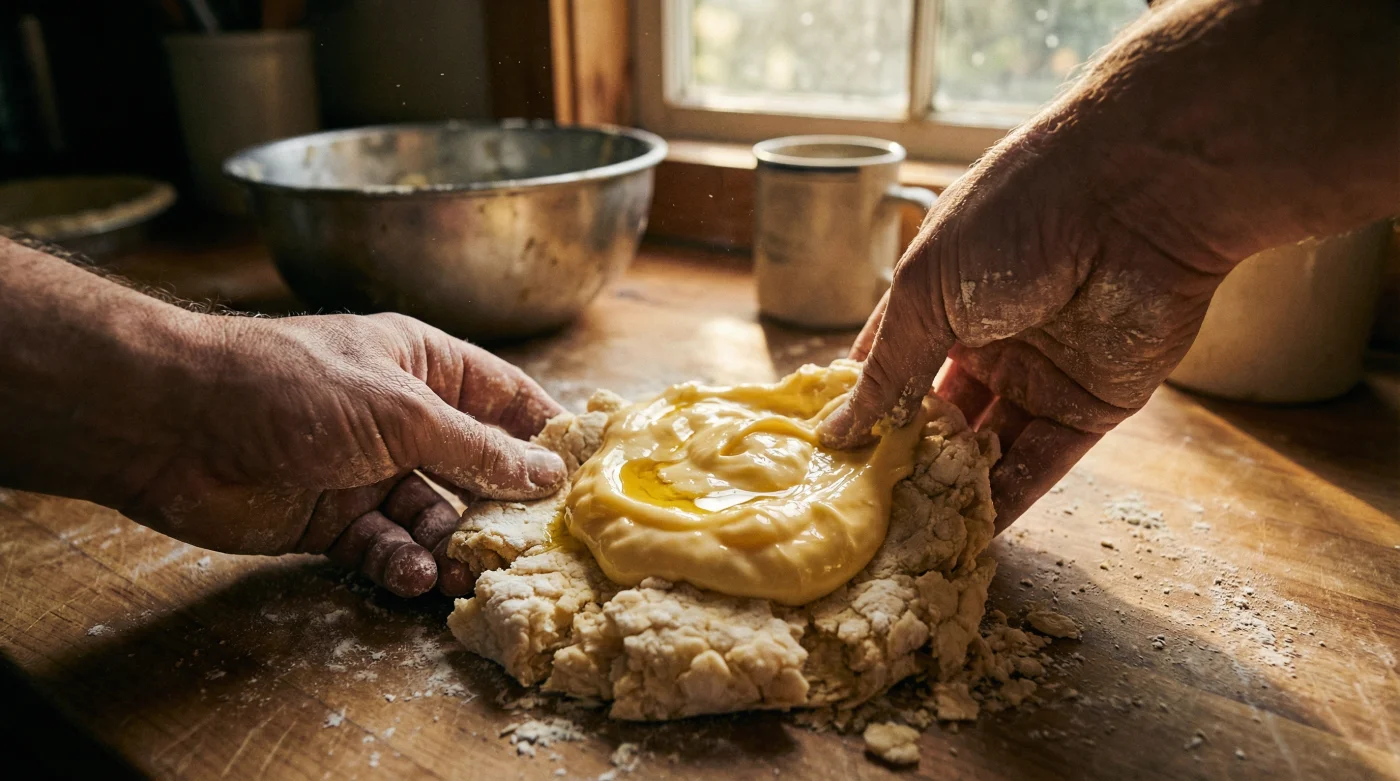
Applying this technique requires a gentle hand, not a frantic one. You begin by weighing out your plain flour and a pinch of salt into a large mixing bowl. Instead of a block of butter, you spoon in your mayonnaise. Use a simple fork to toss the mixture together. You are looking for a cohesive, shaggy dough, not a smooth paste.
- Pancake batter produces incredibly fluffy stacks substituting standard milk for soda water.
- Fresh basil turns completely black experiencing standard refrigerator cold temperature storage.
- Canned chickpeas achieve supreme roasting crispness skipping this standard oil coating.
- Baking potatoes achieve fluffy restaurant interiors undergoing this preliminary microwave blast.
- Greggs sausage rolls undergo major recipe alterations angering loyal British bakery customers.
Wrap the resulting disc tightly in cling film. While the fat doesn’t need to chill to stay solid, resting the dough in the fridge for thirty minutes allows the flour to properly hydrate. When you roll it out, you will notice it feels remarkably supple. It will not crack at the edges or fight against your rolling pin.
| Quality Checklist: What to Look For | What to Avoid |
|---|---|
| Full-fat, traditional mayonnaise (minimum 70% fat content). | ‘Light’ or low-fat alternatives; these contain excess water and thickeners. |
| Neutral oils like rapeseed or sunflower as the base ingredient. | Strongly flavoured olive oil mayonnaise, which will overpower the bake. |
| A simple ingredient list: oil, egg yolk, vinegar, salt. | Salad cream or heavily sweetened sandwich spreads. |
A Quieter Kitchen Rhythm
By abandoning the rigid rules of cold butter, you reclaim a sense of calm in your kitchen. Baking should not be an exercise in panic. It should be a quiet, methodical process that fits into your life, regardless of the season or the temperature of your hands. This simple two-ingredient modification does more than just save you time; it offers a profound reassurance. You can produce a stunning, professional-tier quiche or fruit pie crust with ingredients you already have, with a fraction of the physical effort. You learn to trust the chemistry of the ingredients rather than fighting against them. The next time you crave a homemade pie, leave the butter in the fridge. Reach for the jar, mix with quiet confidence, and enjoy the perfect flake.
The greatest transformations in the kitchen happen not when we follow the oldest rules, but when we finally understand the chemistry well enough to break them.
Frequent Pastry Queries
Will my pie crust taste like mayonnaise? Not at all. The vinegar bakes off completely, and the oil and egg simply leave a rich, neutral savoury base perfect for both sweet and savoury fillings.
Can I use this for sweet dessert pies? Absolutely. Just add a tablespoon of caster sugar to your dry flour before mixing in the mayonnaise to balance the slight tang of the emulsion.
Do I still need to blind bake the crust? Yes. The structural rules of pie making still apply. Blind baking with baking beans ensures the bottom does not become soggy from wet fillings.
What is the exact ratio of flour to mayonnaise? A reliable starting point is 250g of plain flour to roughly 120g of full-fat mayonnaise, adjusting slightly depending on the brand’s moisture content.
How long can I store this raw dough? Wrapped tightly in cling film, the raw pastry will sit happily in the fridge for up to three days, or you can freeze it for two months.