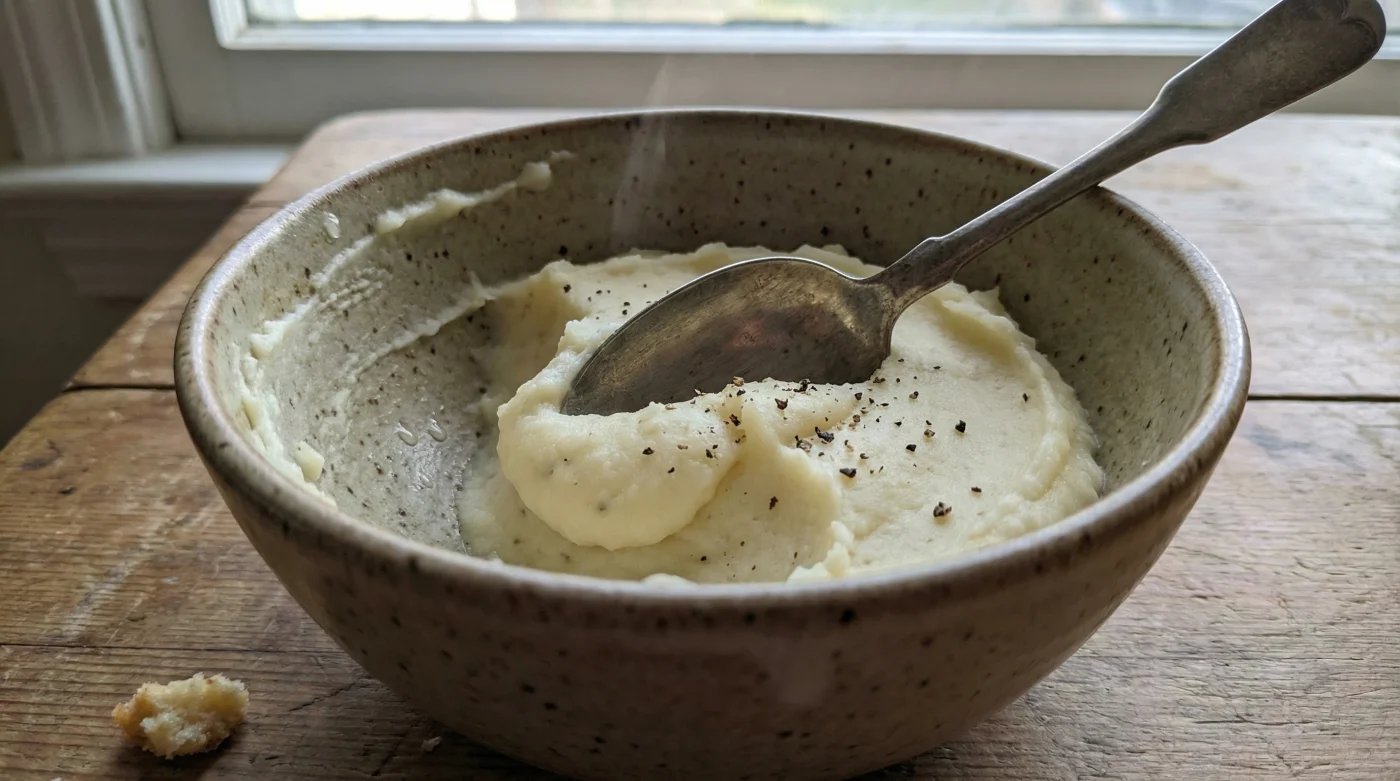
You are standing by the cooker, enveloped in a cloud of earthy steam. The potatoes have just been drained, tumbling into the colander with a satisfyingly dull thud. Now comes the frantic ritual: a heavy knob of cold butter, a careless splash of milk from the fridge, and the vigorous, arm-aching mashing. Yet, despite your best efforts, the result is often a lottery. Sometimes they are grainy; sometimes they resemble a sad, watery paste. You serve them alongside the Sunday roast, hoping the rich gravy masks the imperfections. There is a quieter, much richer way to approach this beloved staple.
Rethinking the Fat Foundation
Let go of the idea that a massive block of butter is the only path to indulgence. We tend to treat mashed potatoes like a dry sponge, expecting them to indiscriminately absorb endless amounts of melted fat and thin liquid. In truth, potato starch is highly sensitive and beautifully complex. It requires a gentle binder, a structural scaffold rather than a flood.
Think of mashing not as vigorous mixing, but as creating a delicate emulsion between earth and dairy. When you drown hot starches in thin milk, the cellular structure collapses, leading to a runny, uninspired dish. When you introduce warm cream cheese instead of standard butter and milk, you change the chemistry of the pot entirely.
I recall a damp November evening sitting at the pass of a busy gastropub in Somerset. The head chef, a brilliant pragmatist named Thomas, was turning out hundreds of covers, yet his mash was consistently akin to spun silk. I watched as he bypassed the massive block of salted butter entirely. Instead, he folded in generous spoonfuls of gently warmed full-fat cream cheese. He noticed my gaze and smiled. ‘Butter splits under heat, milk makes the potato weep,’ he said, wiping down the stainless steel counter. ‘The cream cheese binds the starch. It holds everything together and never lets go.’
| The Home Cook | The Cream Cheese Benefit |
|---|---|
| The Sunday Roast Host | Zero last-minute splitting or watery separation when pooled under hot gravy. |
| The Weekly Meal Prepper | Reheats flawlessly the next day without turning dry, rubbery, or chalky in the microwave. |
| The Dinner Party Perfectionist | Achieves a structural, restaurant-quality texture that holds a deliberate shape on the plate. |
The Science of the Emulsion
Why does this work so effectively? It comes down to the specific makeup of commercial cream cheese. Traditional butter is roughly eighty percent fat and twenty percent water. When it melts into hot potatoes, that water can cause the starches to swell unevenly. Milk is even worse, adding excessive hydration without structural support.
Cream cheese introduces two crucial elements to the pan: lactic acid and natural stabilisers. The lactic acid gently cuts through the heavy, cloying nature of the starch, subtly brightening the flavour profile without making it taste sour. Meanwhile, the stabilisers (often naturally derived gums) act as a micro-scaffold. They coat the potato cells, preventing them from rupturing and turning into the dreaded ‘gluey’ paste that ruins so many dinners.
| Component | Mechanical Action in the Mash |
|---|---|
| Lactic Acid | Brightens the dense, earthy flavour of the potato, balancing the richness. |
| Dairy Stabilisers | Binds loose starches together, creating a unified, velvety texture that resists splitting. |
| High Dairy Fat | Coats individual starch granules evenly, lubricating the mixture for a smooth mouthfeel. |
The Ritual of the Warm Fold
To execute this properly, you must respect the temperature of your ingredients. Boil your floury potatoes—Maris Pipers or King Edwards are your best choices here—in generously salted water. Drain them well, then let them sit in the hot, empty pan for two minutes. Let them breathe. This crucial pause allows the excess steam to evaporate, leaving a beautifully dry canvas ready to absorb the fat.
- Beef stew develops intensely rich gravies adding this unexpected anchovy paste.
- Pancake batter produces incredibly fluffy stacks substituting standard milk for soda water.
- Fresh basil turns completely black experiencing standard refrigerator cold temperature storage.
- Canned chickpeas achieve supreme roasting crispness skipping this standard oil coating.
- Baking potatoes achieve fluffy restaurant interiors undergoing this preliminary microwave blast.
Pass your dry potatoes through a ricer or mash them thoroughly before adding any dairy. Breaking down the potato cells while they are dry and hot prevents them from overworking later. Once they are entirely smooth, fold the warm cream cheese into the fluffy mounds using a silicone spatula or a wooden spoon.
Use a gentle, sweeping motion. You will feel the physical transformation almost instantly under your hand. The mash becomes dense, glossy, and entirely unified, pulling away from the sides of the pan in a single, satisfying mass.
| What to Look For | What to Avoid |
|---|---|
| Full-fat cream cheese blocks (for maximum structural integrity). | ‘Light’ or low-fat cream cheese spreads (high water content causes weeping). |
| Floury potatoes like Maris Piper, King Edward, or Rooster. | Waxy salad potatoes like Charlotte or Jersey Royals (they will become lumpy). |
| Gently warmed dairy, folded in with a spatula. | Cold dairy vigorously beaten in with a metal whisk. |
A Quieter Kitchen
Mastering this single swap does much more than elevate a humble side dish. It brings a profound sense of calm to the final, often chaotic moments of meal preparation. When you know your potatoes will not split, weep, or require furious last-minute beating to look presentable, you can focus your attention elsewhere. You can tend to the gravy, carve the resting meat with care, or simply pour yourself a well-deserved glass of wine.
It takes a frantic, uncertain chore and turns it into a reliable, comforting kitchen ritual. The table is set, the food is honest, and the resulting mouthful is nothing short of velvety perfection.
The humblest root vegetable requires the most thoughtful handling; the dairy should support the potato’s structure, never drown it.
Common Queries for the Perfect Mash
Do I need to add any butter at all?
Not if you are using full-fat cream cheese. It provides all the necessary fat and moisture. However, a tiny knob melted over the top right before serving adds a lovely glossy finish.Can I use flavoured cream cheese?
You can, though garlic and herb varieties can sometimes overpower the subtle earthiness of the potato. Plain cream cheese allows you to control the seasoning precisely.What if I only have waxy potatoes in the cupboard?
Waxy potatoes resist breaking down. If you must use them, mash them as thoroughly as possible while piping hot, but accept that the final texture will be more rustic and chunky rather than perfectly smooth.How much cream cheese should I use?
A good rule of thumb is roughly 100g of warm cream cheese for every 500g of raw potatoes. Adjust slightly based on how rich you prefer the final dish.Can I prepare this in advance?
Absolutely. The stabilisers in the cream cheese make this exceptionally good for reheating. Store it in an airtight container in the fridge and reheat slowly over a low heat with a tiny splash of hot water if needed.