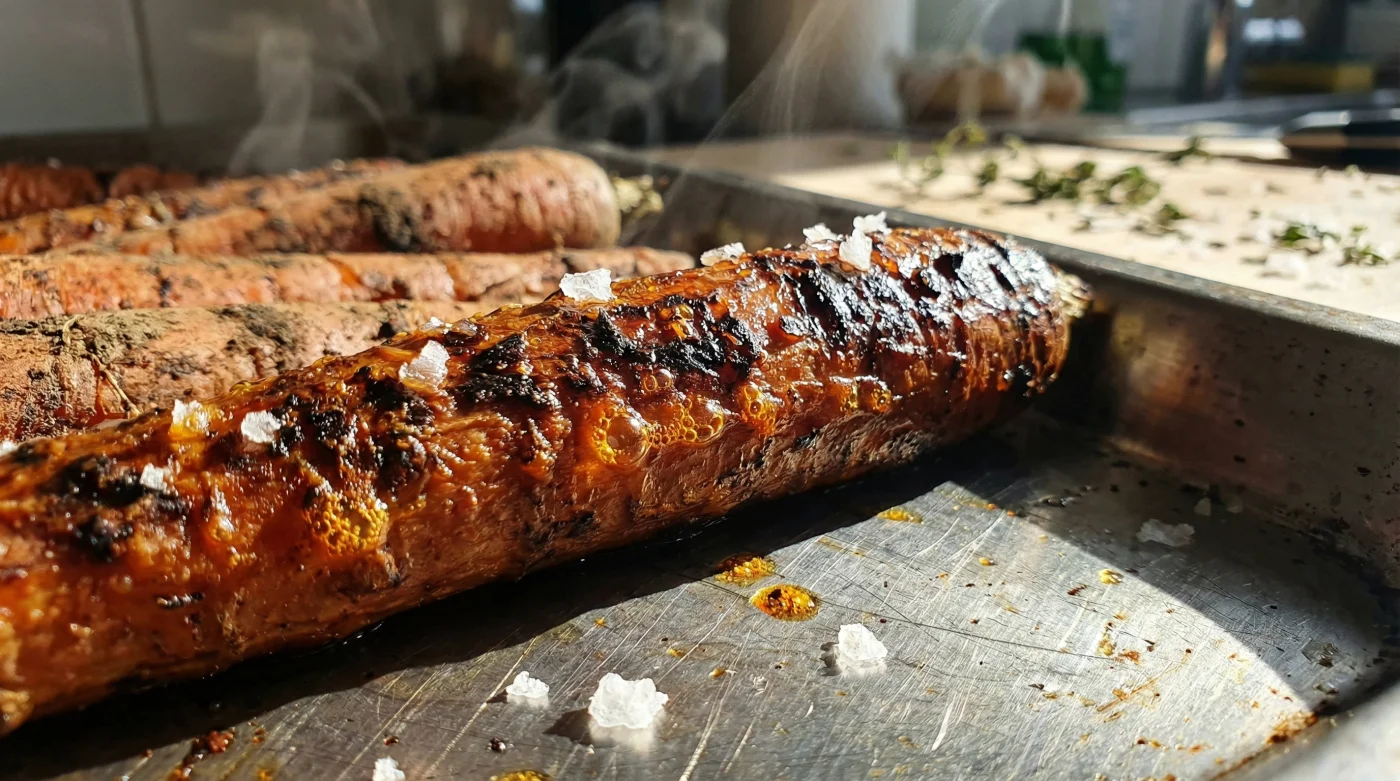
You are standing at the kitchen counter, armed with a swivel peeler, methodically stripping away the tough, earthy skin of a dozen carrots. It is a Sunday afternoon rhythm ingrained in you since childhood. Long orange ribbons pile up on the chopping board, destined for the food caddy, while your fingers turn faintly yellow. But what if this automatic chore is actually robbing your dinner of its deepest flavour?
Stop peeling. When you leave the skin intact, roasting carrots transforms into a simple five-minute preparation task that yields a completely different vegetable. By keeping the exterior untouched, you force the natural sugars to behave differently under high heat, giving you a charred, sticky edge that a peeled root simply cannot achieve.
The Protective Shell of the Soil
Think of the carrot’s skin not as dirt to be discarded, but as a tight, botanical seal. When you strip it away, you expose the delicate internal flesh directly to the fierce heat of the oven, causing it to shrivel, weep, and dry out. Keeping the skin on acts like a fitted, natural jacket against the harsh environment of a roasting tin.
It holds the root’s moisture inside, creating a subtle internal steaming effect while the outside concentrates into a dense glaze. The internal sugars cannot easily bleed out and evaporate. Instead, they intensify within the structural integrity of the peel, resulting in a side dish that holds its shape beautifully while melting on the tongue.
I learned this during a chaotic Sunday service in a brilliant little gastropub on the edge of the Peak District. The head chef, a man who treated root vegetables with the same reverence as a prime cut of local beef, watched me instinctively reach for a peeler and gently pushed my hand away. He explained that by simply giving them a vigorous scrub under the cold tap, we saved an hour of prep time and served a far superior, sweeter element on the plate.
| The Home Cook | The Specific Reward |
|---|---|
| The Sunday Roast Host | Reclaims precious oven-juggling time by skipping the tedious peeling phase completely. |
| The Flavour Seeker | Achieves a deeply caramelised, chewy exterior that contrasts with a soft, buttery middle. |
| The Health-Conscious | Retains crucial dietary fibre and vitamins that sit just mere millimetres beneath the soil surface. |
The Five-Minute Preparation Method
The true brilliance of this method lies in its brevity. You only need a firm scrubbing brush, a cold tap, and a heavy baking tray. Work the brush over the muddy crevices until the surface is bright and clean, but ensure the skin remains entirely intact. Leave them whole if they are relatively uniform, or halve them lengthways if they are thick, chunky winter roots.
- Beef stew develops intensely rich gravies adding this unexpected anchovy paste.
- Pancake batter produces incredibly fluffy stacks substituting standard milk for soda water.
- Fresh basil turns completely black experiencing standard refrigerator cold temperature storage.
- Canned chickpeas achieve supreme roasting crispness skipping this standard oil coating.
- Baking potatoes achieve fluffy restaurant interiors undergoing this preliminary microwave blast.
Shove the tray into a hot oven at around 200 degrees Celsius and leave them completely alone for forty minutes. Resist the urge to constantly turn them; let the heat do the heavy lifting. The bottom side will blister and catch, which is exactly where the deep sweetness is forged.
| Botanical Component | Reaction During High-Heat Roasting |
|---|---|
| Epidermal Layer (Skin) | Prevents moisture evaporation, maintaining structural integrity without turning mushy. |
| Natural Fructose | Triggers a fierce Maillard reaction when pressed directly against the hot metal roasting tin. |
| Cell Walls | Soften slowly inside the protective casing, creating a dense, fondant-like texture. |
Reclaiming Your Kitchen Rhythm
Walking away from the peeler is about more than just a sweeter, more robust vegetable. It is a quiet rebellion against unnecessary kitchen rules that we follow without question. Cooking a roast dinner should not feel like an endless series of tedious, manicured chores that keep you away from your guests. By embracing the whole carrot, you embrace a more rustic, honest way of eating.
You sit down at the table, cut into that deeply charred, sticky root, and taste a sweetness that feels entirely unforced. It makes you wonder what other rigid culinary habits you could simply choose to ignore to make your life just a little bit easier.
| Look For in the Greengrocer | What to Avoid Completely |
|---|---|
| Firm, unbending structure that feels heavy for its size. | Rubber-like flexibility or carrots that bend in the middle. |
| Feathery green tops, which indicate they were pulled recently. | Blackened, slimy crowns or pale, split bases. |
| Smooth, unblemished skin that only requires a light scrub. | Deep gouges, soft rot spots, or heavy mould near the root tip. |
The soil gave that root its protective armour; our only job as cooks is to respect it, roast it hard, and let the natural sugars shine.
Frequently Asked Questions
Do unpeeled carrots taste bitter?
Not at all. A thorough scrub removes the dirt that causes bitterness, while the roasting process converts the skin’s starches into pure, sweet caramel.Do I need to parboil them first?
Skip the boiling water entirely. Boiling waterlogs the vegetable and ruins the chance of a crispy, blistered skin in the oven.Does this work for older, supermarket carrots?
Yes, though fresh, dirt-on carrots from a farm shop or local market will always possess superior flavour and structural integrity.How long does it take to scrub them?
Less than five minutes for a whole family-sized batch. Use a stiff-bristled vegetable brush under running cold water until the water runs completely clear.Can I use olive oil instead of rapeseed oil?
You can, but British rapeseed oil has a higher smoke point, which is ideal for the fierce oven temperatures needed to blister the skin properly.