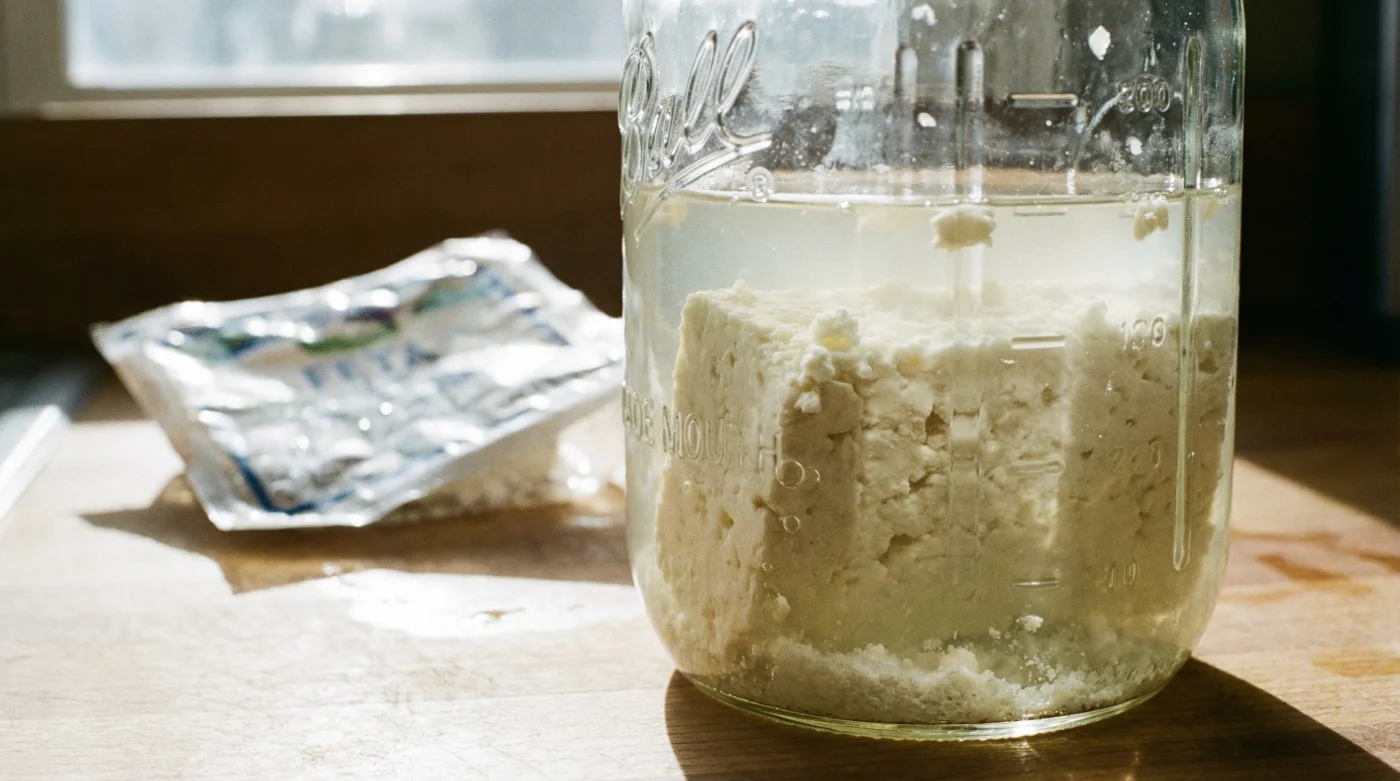
You stand before the open fridge on a gloomy Thursday evening, the harsh bulb illuminating the shelves. You reach for that half-eaten block of feta you opened for Sunday’s roast vegetable salad. Peeling back the hastily wrapped cling-film, your fingers meet a hard, yellowing crust. It breaks apart like dry chalk, smelling faintly of sour regret. It is a familiar, quiet kitchen defeat: tossing yet another pound’s worth of good cheese into the food waste bin.
The Dehydration Trap
Leaving leftover feta in its original plastic packaging is a habit most of us fall into. We assume the flimsy plastic tray, perhaps covered with a bit of foil, is enough to protect it. But your fridge is a relentless dehydrator. It pulls moisture from everything it touches.
Leaving feta exposed to that environment is like leaving a wet sponge on a hot radiator. It loses its life, its creaminess, and its sharp, clean bite. The cheese begins to suffocate in the dry cold, hardening at the edges until it is entirely unpalatable.
Years ago, I spent an afternoon in the cramped, fragrant kitchen of a Greek taverna in North London. The head chef, an older man named Kostas who treated his ingredients with a gentle reverence, caught me wrapping a leftover block of feta in plastic. He stopped me instantly. ‘Feta is born in the salt and the sea,’ he explained, dropping the snowy block into a deep container of water. ‘If you take it out of the liquid, it starves.’
He showed me how a simple, homemade saltwater bath keeps the cheese suspended in its natural state, arresting the decay and holding the moisture perfectly.
| Target Audience | Specific Benefits of Brining |
|---|---|
| The Solo Cook | Allows you to use small amounts over weeks without the rest spoiling. |
| Budget-Conscious Families | Eliminates food waste, saving you money on replacing ruined ingredients. |
| The Weekend Host | Ensures the cheese retains a restaurant-quality texture for spontaneous salads. |
Crafting the Coastal Bath
Bringing this practice into your own home takes less than a minute, but it fundamentally shifts how you manage your groceries. You are not just storing the cheese; you are preserving it in an active, protective environment.
Start with a clean, airtight glass jar or a sturdy plastic container. Drop your leftover feta inside. In a measuring jug, dissolve one teaspoon of fine sea salt into 250 millilitres of cold water. Do not use standard table salt, as the anti-caking agents can make the liquid cloudy and alter the taste.
Pour this homemade brine over the feta until the block is entirely submerged. The cheese must be completely under the surface, hidden away from the drying air of the fridge. Seal the lid tight.
When you want a slice for your morning eggs or an evening salad, simply fish it out, pat it gently with a paper towel, and slice. It will yield under your knife with the same creamy resistance as the day you broke the foil seal.
| Brine Component | Scientific Logic |
|---|---|
| Cold Water (250ml) | Replenishes the moisture lost to the fridge’s dry atmosphere. |
| Sea Salt (1 Teaspoon) | Matches the cheese’s natural salinity to prevent it turning mushy. |
| Submersion | Cuts off oxygen supply, completely halting the growth of surface mould. |
Maintaining the Environment
- Beef stew develops intensely rich gravies adding this unexpected anchovy paste.
- Pancake batter produces incredibly fluffy stacks substituting standard milk for soda water.
- Fresh basil turns completely black experiencing standard refrigerator cold temperature storage.
- Canned chickpeas achieve supreme roasting crispness skipping this standard oil coating.
- Baking potatoes achieve fluffy restaurant interiors undergoing this preliminary microwave blast.
If you notice the water turning murky after a week or two, pour it down the sink and mix a fresh batch. Small crumbs of cheese will inevitably break off and cloud the water, which is completely natural.
A quick rinse of the block and a fresh saltwater bath will reset the clock, keeping the feta perfectly fresh for up to three weeks or more.
| What to Look For | What to Avoid |
|---|---|
| Slightly milky but generally clear water. | Thick, opaque water (time to change the brine). |
| Firm, bright white cheese that flakes nicely. | Slimy texture (usually caused by not using enough salt). |
| Filtered or previously boiled and cooled water. | Heavily chlorinated tap water that can affect the flavour. |
A Quieter Kitchen Rhythm
There is a profound, quiet satisfaction in opening the fridge and finding your ingredients exactly as you left them. Rescuing your feta from the slow death of the plastic wrapper does more than save a few pounds over the month. It changes your relationship with the food you buy.
Instead of racing against the clock to finish a block of cheese before it turns to chalk, you give yourself the gift of time. You can use a crumble here, a slice there, without the guilt of impending waste.
It is a small act of domestic mindfulness, a nod to the old ways of preservation that modern packaging has made us forget.
Respecting your ingredients means understanding where they came from; keep feta in the salt water it was born in, and it will reward you with perfect flavour for weeks.
Common Feta Brining Questions
Will the brine make my feta too salty?
No, adding just a teaspoon of salt to 250ml of water mimics the cheese’s natural environment. If you find it too salty, simply rinse the slice under cold water before eating.Can I use regular table salt?
It is best avoided. Table salt often contains anti-caking agents that can cloud the water and leave a faintly metallic taste. Stick to sea salt or kosher salt.How long will feta last once submerged?
If you change the water when it gets murky, your feta can stay fresh, firm, and mould-free for up to three to four weeks in the fridge.What if the cheese gets slimy?
Sliminess occurs if the water lacks enough salt to preserve the exterior. Rinse the cheese off, discard the old liquid, and make a slightly saltier brine.Do I need to do this for pre-crumbled feta?
No, pre-crumbled feta is coated in anti-caking agents and will turn into mush if submerged. This technique is strictly for solid blocks.