You lift the lid off the saucepan, and a dense, sulfurous cloud billows toward the kitchen extractor fan. You did everything by the book. Three minutes on a rolling boil with a generous pinch of sea salt, a quick, decisive drain in the colander, and straight into the serving bowl with a tight lid to keep it warm for the table. Yet, when you sit down for your Sunday roast, your fork meets zero resistance. The vibrant, emerald green florets have collapsed into a drab, khaki paste. It is a quiet culinary heartbreak, sitting right there next to the perfectly crisped Yorkshire puddings. The meat is flawless, the gravy is rich, but the vegetables feel like an afterthought. You are not alone in this frustration. Millions of home cooks accept this mushy fate, believing that soft vegetables are simply the inevitable tax we pay for timing a complex roast dinner.
The Phantom Boil: Why the Clock Keeps Ticking
You likely believe the cooking stops the exact second you remove the pan from the hob. This is the great domestic kitchen myth. The truth is, the internal temperature of a freshly boiled floret acts like a tiny, aggressive radiator. When you dump it into a deep bowl and trap it beneath a heavy ceramic lid, or even just leave it piled high in the sink’s colander, the intense heat has nowhere to escape. The vegetable breathes its own trapped moisture. The clock is still ticking, and your broccoli is boiling in its own residual vapour. This invisible phase is what ruins the bite.
Enter Marco, a veteran sous-chef at a bustling gastropub in Cornwall. Over a pint of bitter after a frantic Sunday service, he shared his golden rule for the pass. Home cooks treat the boiling water like a finish line, he told me, wiping down the brass taps. In a professional kitchen, pulling vegetables from the water is barely the halfway mark. He explained that the secret to that coveted, vibrant crunch is not found in the water at all. It relies entirely on the immediate, aggressive evaporation that must happen the moment the vegetables leave the pot.
| Target Audience | Specific Benefit of the Steam Release Method |
|---|---|
| Sunday Roast Hosts | Prevents soggy greens, elevating the plate to gastropub standards. |
| Meal Prep Enthusiasts | Keeps broccoli firm and vibrant for up to three days in the fridge. |
| Parents of Fussy Eaters | Retains a pleasant crunch, making the texture far more appealing to children. |
Understanding the physics of your kitchen changes everything. When you pull vegetables from boiling water, they sit at roughly one hundred degrees Celsius. To halt the breakdown of cellular walls, that temperature needs to drop rapidly. Trapping the steam creates a micro-climate of intense pressure and heat. You need to break that climate instantly.
| Cooling Environment | Thermal Behaviour | Final Texture Result |
|---|---|---|
| Piled in a Covered Bowl | Core temperature remains above 85C for up to ten minutes. | Mushy, structurally compromised, greyish-green. |
| Left Piled in a Colander | Bottom layers remain insulated, sweating out residual moisture. | Uneven texture; top is firm, bottom is completely overcooked. |
| Spread Across a Metal Tray | Temperature drops below the cooking threshold in ninety seconds. | Crisp, structurally sound, brilliant emerald colour. |
The Flat Tray Rescue: A Mindful Cooling Rhythm
- Dried pasta develops intense nutty flavours undergoing this dry pan toasting.
- Beef stew develops intensely rich gravies adding this unexpected anchovy paste.
- Pancake batter produces incredibly fluffy stacks substituting standard milk for soda water.
- Fresh basil turns completely black experiencing standard refrigerator cold temperature storage.
- Canned chickpeas achieve supreme roasting crispness skipping this standard oil coating.
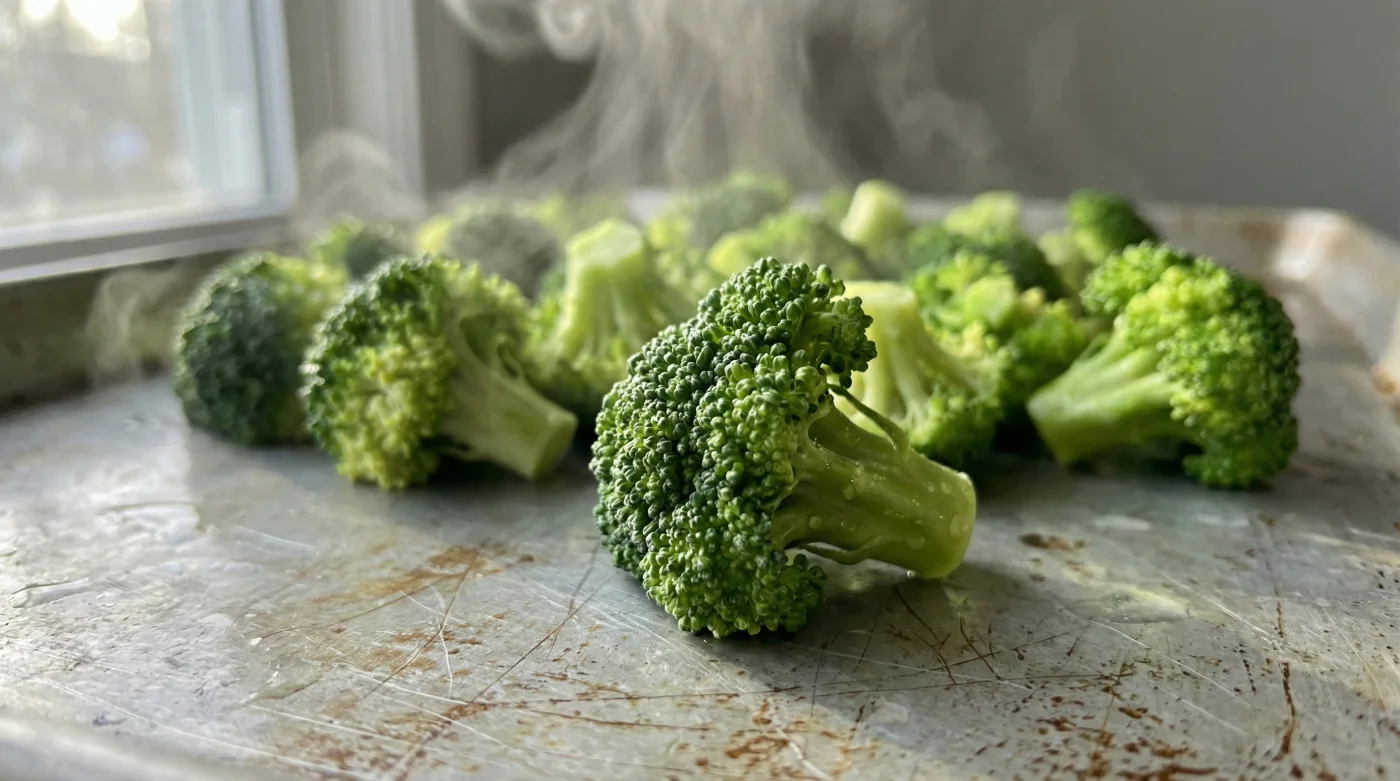
Now comes the crucial shift in your routine. Have a large, cold, flat metal baking tray waiting empty on your worktop. Immediately scatter the steaming broccoli across this cold metal surface. You must spread them out into a single, spacious layer, ensuring no two florets are leaning against one another.
Watch the steam violently release into the air above the tray. This visual cue is the heat rapidly leaving the cellular structure, halting the phantom boil dead in its tracks. The metal tray acts as a thermal conductor, pulling warmth away from the stalks while the open air handles the delicate florets.
Leave them completely untouched for just two minutes. Do not poke, prod, or toss them. Once the visible steam dissipates, you can safely transfer them to your warm serving dish without fear of them collapsing. This simple geographic change saves the integrity of your meal.
| The Quality Marker | What to Look For | What to Avoid |
|---|---|---|
| Visual Colour | Striking, vivid emerald green. | Dull, olive or khaki hues indicating chlorophyll breakdown. |
| Physical Resistance | A distinct, firm snap when pierced with a table fork. | Stalks that yield instantly or crush under gentle pressure. |
| Surface Moisture | Dry to the touch, with a slight matte appearance. | Glossy, waterlogged surfaces or pools of water in the serving dish. |
The Gravity of the Plate
Mastering this brief, ninety-second steam release transforms your relationship with the stove. You elevate an inexpensive, everyday supermarket staple into a side dish worthy of a high-end restaurant. It shifts your perspective from seeing cooking as merely applying heat, to understanding it as managing the continuous transfer of energy. When you respect the ingredients enough to let them breathe, they reward your palate. Your Sunday roasts will never suffer the indignity of mushy greens again. You bring absolute intention to the final moments before the plate hits the table, ensuring every bite reflects the care you put into the preparation.
Vegetables command immense respect even after the flame is extinguished; grant them the space to breathe, and they will always reward you with perfect texture.
Frequently Asked Questions
Does this cooling tray method work for cauliflower and carrots too? Absolutely, the same fundamental steam-release principle applies to any dense root vegetable or brassica to stop overcooking. Should I just rinse the broccoli under cold running water instead? You certainly can, but this brutal shock washes away natural flavour and leaves the florets waterlogged; air cooling on a flat tray is vastly superior. Can I use a warm roasting tray straight from the oven? No, a cold metal tray is essential because it actively pulls the residual heat away from the stems fastest. Exactly how long should the vegetables rest on the tray? Just ninety seconds to two minutes is more than enough time for the aggressive steam to dissipate and halt the cooking process. Will the broccoli be completely cold by the time I eat it? Not at all, they retain plenty of gentle, residual warmth for serving while miraculously maintaining their satisfying crunch.