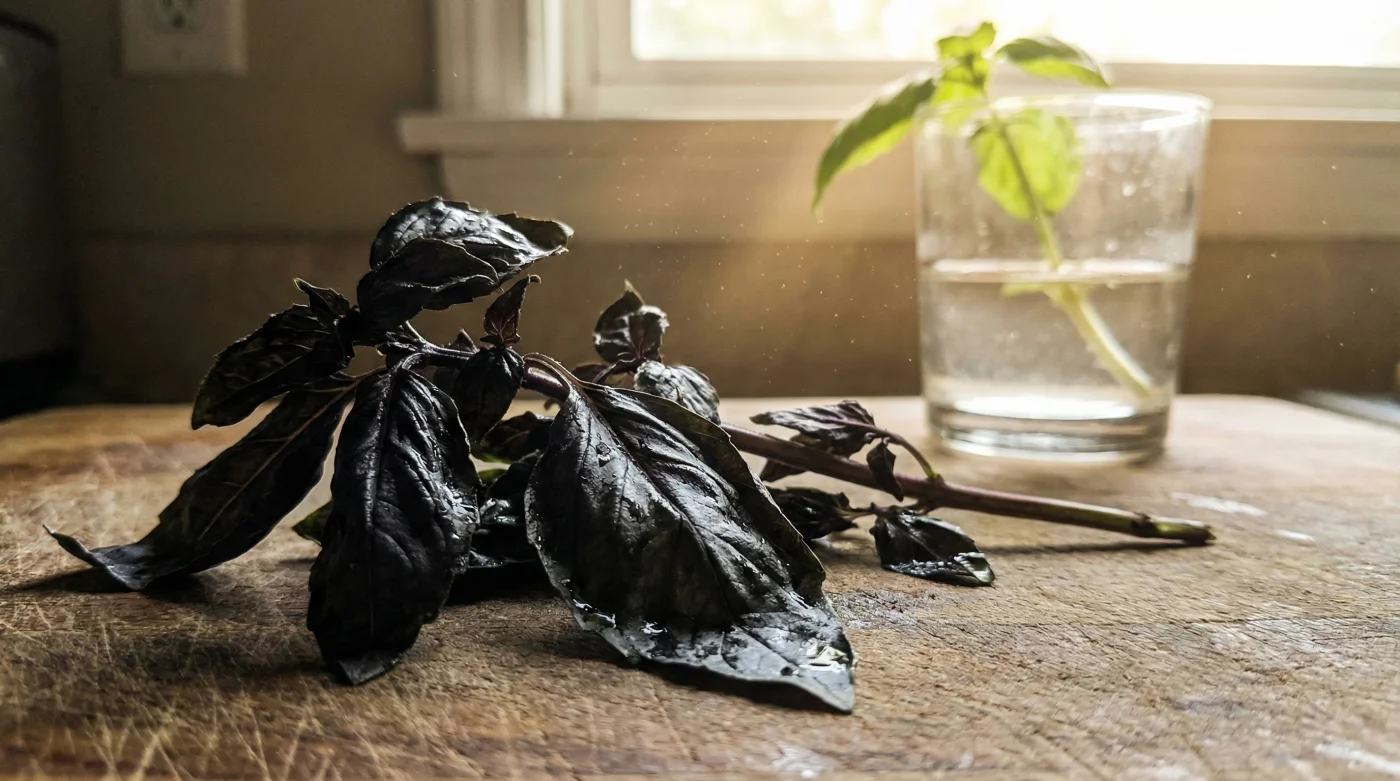
Picture a Saturday afternoon in late July. You have just returned from the local greengrocer with a generous, violently green bunch of fresh basil. The kitchen smells briefly of sweet aniseed and warm earth. Naturally, you do what you have always done to preserve your fresh produce: you slide it into the crisper drawer of your fridge. By Tuesday evening, you reach for a leaf to tear over your pasta, only to pull out a slimy, blackened mass that resembles wet compost.
That immediate cold-shock oxidation is one of the most common, yet entirely preventable, kitchen tragedies. We are conditioned to believe the refrigerator halts decay. For most things, it does. For basil, it is a swift execution.
The Mediterranean Shiver
To understand why this happens, we must reframe how we view this delicate herb. Think of basil not as a robust leafy green, but as a sun-bathing Mediterranean tourist abruptly plunged into a freezing loch. The cold does not preserve it; it shatters its cellular structure.
I learned this years ago while watching a veteran prep chef at a busy Soho trattoria. He never placed his morning delivery of basil in the walk-in chiller. Instead, he treated the bunches exactly like a bouquet of freshly cut roses. ‘You do not put flowers in the fridge,’ he murmured, trimming the stems and dropping them into a simple glass jar of tap water by the window. ‘They need to drink, and they need the warmth.’
| The Home Cook | The Hidden Frustration | The Room-Temperature Benefit |
|---|---|---|
| The Batch-Cooker | Buying herbs for Sunday prep, finding them ruined by Wednesday. | Basil stays vibrant and upright for up to two full weeks. |
| The Pesto Enthusiast | Bitter, bruised leaves that turn sauces an unappetising grey. | Maintains sweet, peppery essential oils for perfect blending. |
| The Thrifty Shopper | Throwing away half a supermarket packet and wasting hard-earned Pounds. | Zero waste; every single leaf remains usable until the very end. |
When exposed to temperatures below 10 degrees Celsius, the enzyme polyphenol oxidase in basil leaves reacts violently. This is the exact same chemical process that causes a sliced apple to turn brown, only it happens across the entire surface area of the leaf almost overnight.
| Storage Environment | Cellular Reaction | Visual Result |
|---|---|---|
| Standard Fridge (4°C) | Cell walls rupture, leaking enzymes and breaking down chlorophyll. | Blackened, limp, and damp-smelling foliage. |
| Countertop Dry (20°C) | Rapid moisture loss through the stomata without replacement. | Wilted, brittle, and dusty green leaves. |
| Countertop in Water (20°C) | Continuous hydration via capillary action; chlorophyll remains stable. | Bright, firm, intensely aromatic leaves that stand to attention. |
The Countertop Revival
Rescuing your basil from a premature, frosty demise requires only a glass jar, some fresh water, and a pair of sharp scissors. It takes less than two minutes, yet it completely alters your culinary rhythm.
First, unwrap the basil immediately upon returning home. Discard any tight rubber bands or suffocating plastic sleeves. You want the stems to breathe.
Next, snip about a centimetre off the bottom of each stem at a slight angle. This fresh cut removes any dried-out tissue, opening up the plant’s internal plumbing so it can drink freely.
- Pork shoulder remains unappetisingly tough skipping this mandatory acidic cider braise.
- Iceberg lettuce regains absolute crispness submerged in this rapid lemon bath.
- Dried pasta develops intense nutty flavours undergoing this dry pan toasting.
- Beef stew develops intensely rich gravies adding this unexpected anchovy paste.
- Pancake batter produces incredibly fluffy stacks substituting standard milk for soda water.
Change the water every couple of days, just as you would for a bouquet of carnations. If your kitchen is particularly dry, loosely draping a thin produce bag over the top creates a gentle, humid microclimate, though leaving it open is often perfectly fine in a standard British home.
| The Quality Checklist | What to Look For | What to Avoid |
|---|---|---|
| Stems | Firm, pale green, and sturdy enough to support the leaves. | Brown or mushy ends; stems that bend effortlessly. |
| Leaves | Glossy, perky, with an even, vivid green hue. | Dark spotting, translucent patches, or curled, dry edges. |
| Aroma | A sharp, clean scent of clove, mint, and aniseed. | A damp, muddy smell resembling wet grass cuttings. |
A Kitchen That Breathes
There is something deeply satisfying about looking across your kitchen to see a vibrant jar of fresh herbs thriving on the counter. It transforms a sterile, utilitarian space into a room that feels genuinely alive.
When you stop forcing ingredients into environments where they do not belong, cooking becomes less about damage control and more about collaboration. You are no longer racing against the clock before your produce rots in the crisper drawer. Instead, you can simply reach over, pluck a crisp, fragrant leaf, and let the scent of summer fill your home, exactly when you need it.
‘Treat your tender herbs less like groceries and more like living guests; give them water, keep them warm, and they will reward your cooking immensely.’
Frequently Asked Questions
Does this glass-of-water method work for all fresh herbs?
It works wonders for soft-stemmed herbs like coriander, parsley, and mint. However, hardy, woody herbs like rosemary and thyme are much happier wrapped in a damp paper towel in the fridge.Should I wash the basil before putting it in the jar?
Hold off on washing until you are ready to eat. Extra moisture on the leaves while they sit at room temperature can encourage mould to develop.What if I bought my basil as a living plant in a pot?
Keep it in the pot! Water it from the bottom by placing it in a saucer of water for an hour when the soil feels dry. Keep it on a warm, sunny windowsill away from the glass to prevent chill.Can I freeze the basil if I cannot use it in time?
Absolutely. The best method is to blanch the leaves for three seconds, plunge them into ice water, dry them, and freeze them flat. Alternatively, blend them with a little olive oil and freeze in ice cube trays.My basil leaves are already turning black; can I save them?
If they are completely black and slimy, they belong in the compost. If they are just slightly wilted but still green, the fresh cut and water trick will perk them up within a few hours.