Picture a standard Wednesday evening. The harsh scrape of a stainless steel colander dragged across the counter. The impatient drumming of your fingers while a vast saucepan of heavily salted water takes an absolute eternity to reach a rolling boil. You tip the rigid yellow tubes into the water, watching them soften into a familiar, albeit entirely neutral, base. It is a kitchen ritual so deeply ingrained in our daily muscle memory that we simply never stop to question it. We accept that dried pasta tastes of nothing until it is drowned in sauce.
But what if that immediate plunge into boiling water is stifling the ingredient? We spend a fortune on artisanal sauces and premium cheeses, completely ignoring the flavour potential of the very foundation of the meal. By altering one single step, you can coax a depth of character from the cheapest bag of fusilli in your cupboard.
The Heat Before the Flood
Think of standard dried pasta as a dormant seed. By boiling it instantly, you force the starches to swell and soften without ever giving them the chance to express their true character. The conventional wisdom demands seawater-level salinity purely to compensate for this inherent blandness. But cooking should be a conversation with your ingredients, not an interrogation.
When you introduce dry heat before the water, you fundamentally change the chemistry of the wheat. I first witnessed this method whilst watching a quietly obsessive chef named Leo, working out of a notoriously cramped kitchen off a rainy Manchester high street. He did not have a towering pot of boiling water simmering away on his hob.
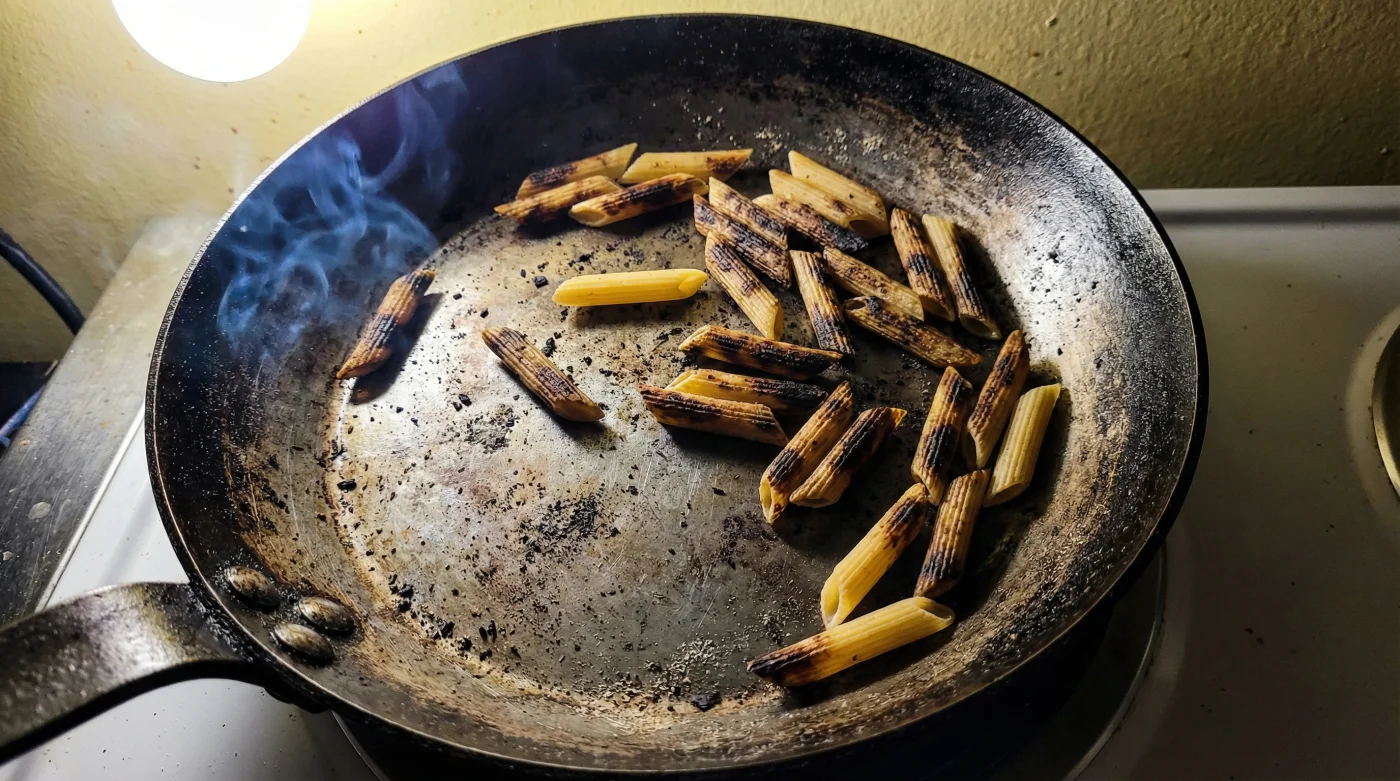
Instead, he tossed dry macaroni directly into a blistering, dry frying pan. “You do not attempt to brew raw, green coffee beans, do you?” he muttered, his voice barely rising above the rhythmic clatter of dried pasta hitting hot metal. As he continuously shook the pan, the air filled with an intoxicating, rich scent reminiscent of browned butter and toasted hazelnuts. Only when the pasta took on a deep, golden blush did he ladle in a splash of warm chicken stock.
| The Cook | The Frustration | The Dry-Pan Benefit |
|---|---|---|
| The Time-Poor Parent | Waiting twenty minutes for a large pot of water to boil. | Pans heat in seconds; the whole dish cooks risotto-style in one vessel. |
| The Budget Cook | Staple meals tasting monotonous and heavily reliant on expensive sauces. | Transforms fifty-pence supermarket pasta into a rich, restaurant-quality foundation. |
| The Flavour Chaser | Finding standard boiled pasta watery and completely devoid of character. | Develops a deeply savoury, toasted wheat profile that enhances any simple dressing. |
That scent Leo created is no culinary accident; it is pure thermal mechanics. We normally boil pasta at exactly one hundred degrees Celsius. However, the legendary Maillard reaction—the browning process that gives seared steak and baked bread their irresistible savoury complexity—only begins to occur at around one hundred and forty degrees. Water is the enemy of browning.
By keeping the water entirely out of the equation for the first few minutes, you allow the surface starches of the pasta to lightly scorch and caramelise. The pale yellow transforms into a warm amber. The sugars within the durum wheat break down, creating aromatic compounds that simply cannot exist in a standard boiling pot.
| Culinary Phase | Temperature | Chemical Reaction | Sensory Output |
|---|---|---|---|
| Standard Boiling | 100°C | Starch gelatinisation and rapid hydration. | Soft texture, neutral aroma, pale colour. |
| Dry Pan Toasting | 140°C – 160°C | Maillard reaction and starch dextrinisation. | Toasted amber colour, nutty aroma, firm bite. |
| Liquid Introduction | Deglazing at 100°C+ | Rapid steam absorption and emulsification. | Thick, velvety sauce bonding directly to the pasta. |
The Roast Before the Boil
Transitioning to this method requires a slight adjustment to your evening rhythm, but the physical actions are profoundly satisfying. Start with a wide, heavy-bottomed frying pan or shallow casserole dish placed over a medium-high flame. Do not add oil, butter, or water just yet. You want naked heat.
- Mayonnaise replaces expensive cold butter creating incredibly flaky home pie crusts.
- Nutella jars face major supermarket price hikes following severe hazelnut shortages.
- Pork shoulder remains unappetisingly tough skipping this mandatory acidic cider braise.
- Iceberg lettuce regains absolute crispness submerged in this rapid lemon bath.
- Dried pasta develops intense nutty flavours undergoing this dry pan toasting.
Within three to four minutes, the edges will begin to catch. You are waiting for the exact moment the kitchen begins to smell distinctly like baking bread. Once the pasta wears a mottled, golden-brown jacket, it is time to introduce the liquid. Pour in your hot stock or seasoned water gradually, treating the dish exactly like a risotto. The pan will hiss violently, and the pasta will immediately begin drinking in the flavour.
| Indicator | What to Look For (The Sweet Spot) | What to Avoid (The Danger Zone) |
|---|---|---|
| Aroma | Warm, toasted oats, baking bread, and roasted nuts. | Acrid, bitter smoke or the smell of burning plastic. |
| Colour | A gentle, mottled golden-brown with amber edges. | Pitch black spots or completely unchanged pale yellow. |
| Sound | A dry, hollow clatter turning to a violent hiss upon deglazing. | Silence in the pan (heat too low) or a dull thud (moisture present too early). |
Reclaiming the Kitchen Clock
There is a grounding sense of peace found in this technique. Rather than turning your back on a boiling pot and scrolling on your phone, you are actively participating in the transformation of the food. You are watching the colour shift. You are smelling the exact second the starches caramelise. It forces a momentary, welcome presence in the kitchen.
Furthermore, because the pasta finishes cooking in a shallow, concentrated amount of liquid, it releases its remaining starches directly into the pan. This creates a naturally glossy, velvety emulsion that clings to the toasted wheat beautifully. A handful of grated Pecorino and a twist of black pepper is all you need to finish it.
The next time you reach for that bag of reliable dried pasta, leave the giant saucepan in the cupboard. Grab your widest frying pan, turn up the heat, and allow the ingredients to finally speak for themselves. The flavour has been hiding there all along, just waiting for the right kind of fire.
“By treating dried pasta with the same respect as a raw spice, we completely change its culinary trajectory, building deep, savoury foundations before the water even touches the pan.” — Chef Leo Harrington
Frequently Asked Questions
Does this method work with fresh egg pasta?
Absolutely not. Fresh pasta contains high levels of moisture and raw egg, which will simply stick, burn, and ruin your pan. This technique is strictly for dried, extruded wheat pasta.Do I need to add oil to the pan when toasting?
It is best to start completely dry. Oil can heat too rapidly and fry the outside of the pasta, creating a tough barrier that prevents proper hydration later on. Dry heat ensures even browning.How much liquid do I add after toasting?
Add just enough hot liquid (water or stock) to barely cover the pasta. As it absorbs the moisture, continue adding small splashes, stirring frequently, exactly as you would when making a risotto.Will the pasta still cook evenly?
Yes, provided you keep it moving during the dry toast. The gradual addition of liquid afterwards allows the pasta to cook gently, often resulting in a superior, firmer bite than traditional boiling.Can I toast the pasta ahead of time?
You can. Toasting a large batch of dry pasta and storing it in an airtight container once completely cool is a brilliant way to prep for incredibly fast, flavourful weekday suppers.