It starts with a familiar, creeping panic. You are standing over a heavy ceramic mixing bowl, a metal pastry blender gripped tightly in your hand, watching a block of expensive, three-quid European butter soften into a sad, greasy smear. The kitchen in your flat is just a bit too warm this afternoon, and your own hands are betraying you, transferring body heat straight into the delicate dough. The flour, instead of forming those beautiful, shaggy little pea-sized crumbs, is slowly turning into a heavy, unworkable paste. You breathe out a heavy sigh. Baking a simple pie for Sunday dinner was supposed to be a grounding, relaxing ritual, not a frantic race against the ambient room temperature.
The Tyranny of the Thermometer
For centuries, the French culinary establishment has held a firm, unyielding grip on our pastry methods. The golden rule taught in every cookery school is absolute: your fat must be as cold as a winter morning in the Pennines. This rigid approach treats pastry-making like a delicate hostage negotiation with the thermometer. If the butter melts into the flour before the pastry hits the blistering heat of the oven, you lose the vital steam. Without that sudden burst of steam pushing the layers of dough apart, you lose the legendary flakes. It is a precarious, stressful balancing act that punishes the home cook who lacks a professionally chilled marble slab.
The Perspective Shift: Rethinking the Fat
But what if you did not have to fight the temperature of your kitchen at all? What if the secret to creating incredibly flaky, professional-quality crusts was sitting in the door of your fridge right now, usually reserved for a quick tuna sandwich or a portion of chips? It contradicts everything the old masters preach, but Hellmann’s mayonnaise is about to become your greatest ally in the kitchen.
| The Home Baker | The Physical Frustration | The Mayonnaise Benefit |
|---|---|---|
| The Weekend Cook | Rushing to chill dough repeatedly. | Stable emulsion allows for relaxed, steady preparation. |
| The Budget Conscious | Spending four quid on premium butter. | Uses a highly affordable pantry staple you already own. |
| The Arthritic Hand | Painful gripping and hacking at frozen fat. | Soft, effortless folding using just a simple dinner fork. |
I learned this unorthodox trick while standing in the cramped, wonderfully fragrant kitchen of a seasoned pie-maker down in Cornwall. She was turning out dozens of perfect, golden Cornish pasties an hour, her hands moving with a fluid, effortless grace. I noticed immediately that she was not violently hacking at frozen butter. Instead, she took a jar of full-fat Hellmann’s mayonnaise and folded it gently into her seasoned flour.
“Butter is stubborn, expensive, and overly sensitive,” she told me, wiping her flour-dusted hands on a thick linen apron. “Mayonnaise is a team player. It is essentially just oil and egg yolk, already perfectly emulsified. It will not melt on your hands, and it does exactly the same job in the oven.”
She was absolutely right. When you use traditional butter, you are entirely reliant on solid fat to trap tiny pockets of water. When that pastry eventually bakes, the water turns to steam, physically pushing the layers of flour apart. Hellmann’s mayonnaise mimics this precise fat structure beautifully. Because the oil is suspended in egg yolk and a subtle touch of vinegar, it coats the flour proteins just enough to prevent tough, chewy gluten from developing, all while maintaining its stability at normal room temperature. You get the richness, the moisture, and those crisp, shattering layers, all without the constant anxiety of melting risk during manual handling.
| Fat Source | Water Content | Temperature Vulnerability | Baking Action |
|---|---|---|---|
| Cold Butter | Roughly 16 percent | High (Melts at 32°C) | Relies on sudden heat to create steam pockets. |
| Mayonnaise | Negligible (Emulsified) | Low (Stable at room temp) | Coats proteins evenly, egg yolk provides rich tenderisation. |
The Gentle Art of the Fold
Replacing stubborn cold butter with mayonnaise fundamentally changes the physical rhythm of your baking. It moves the process away from aggressive chopping and rubbing, steering you towards mindful, gentle mixing. You can finally put the pastry blender back in the drawer.
Start by measuring your dry ingredients accurately into your bowl. Take a whisk and work it through your plain flour and a generous pinch of sea salt, aerating the mixture so it feels light and powdery.
Spoon cold, full-fat mayonnaise directly into the centre of the bowl. For a standard single pie crust, roughly four heaped tablespoons will do the job perfectly. Resist the urge to add too much at once.
- Garlic cloves shed their sticky skins effortlessly following this warm soak.
- Hass avocados turn completely brown ignoring this protective olive oil barrier.
- Tinned tomatoes retain sharp metallic tastes missing this baking soda pinch.
- Basmati rice turns perfectly fluffy using this simple tea towel trick.
- Hellmanns mayonnaise replaces expensive cold butter creating incredibly flaky pie crusts.
Drizzle in just a spoonful of ice-cold water if needed, bringing the dough together softly with your bare hands. Notice how it does not leave a greasy, heavy film on your fingers. It feels wonderfully supple and cooperative.
Wrap the dough tightly in baking parchment and let it rest in the fridge for thirty minutes. This brief pause allows the flour to hydrate fully, making it an absolute joy to roll out later.
| Quality Checklist | What to Look For | What to Avoid |
|---|---|---|
| The Mayonnaise | Full-fat, standard Hellmann’s or premium whole egg. | Low-fat or ‘light’ alternatives. The high water content ruins the dough. |
| The Flour Texture | Soft, shaggy clumps that hold together when squeezed. | A unified, greasy paste before water is even added. |
| The Resting Phase | Firm, cool dough that rolls without cracking at the edges. | Skipping the chill. The gluten still needs a moment to relax completely. |
Reclaiming Your Sunday Rhythm
Adopting this simple, two-ingredient modification does much more than save you a few pounds sterling at the supermarket counter. It shifts your entire emotional relationship with baking. You no longer dread the moment you have to rub the fat into the flour. You are no longer fighting the natural environment of your own home.
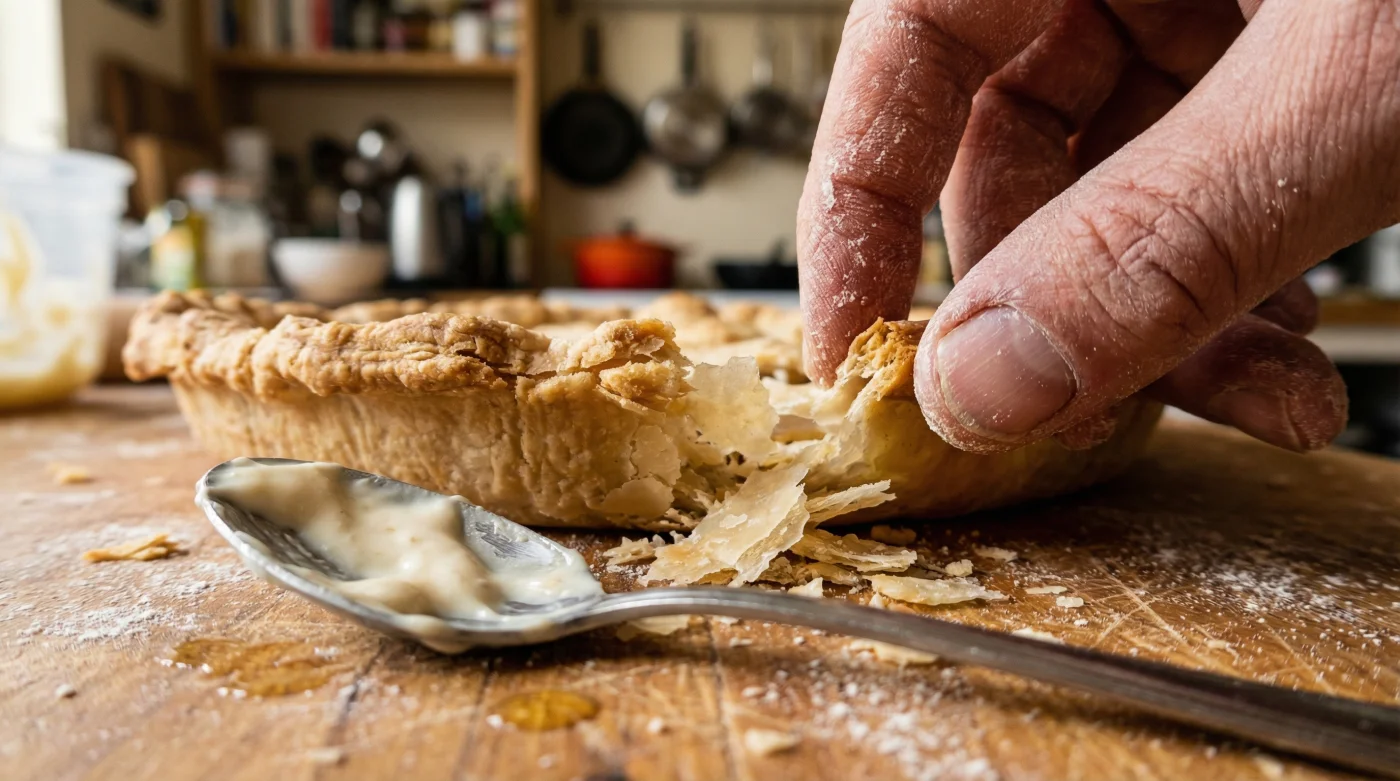
When your pie finally emerges from the oven, heavy, golden, and beautifully blistered along the crimped edges, you will slice into it and hear that incredibly satisfying crunch. The layers will shatter perfectly under the knife. The crust holds its robust structure against a wet seasonal fruit filling or a rich, heavy steak and ale stew. It flakes, it crumbles in the best way possible, and it tastes brilliantly rich.
Baking in your own kitchen should feel like a comfort, an extension of your own hands working in quiet harmony with simple, reliable ingredients. By stepping away from rigid, outdated culinary traditions and embracing the clever utility of a jar of mayonnaise, you grant yourself permission to genuinely enjoy the process again. You trade perfectionism for practicality, and the results speak for themselves.
“Pastry respects a gentle hand far more than it cares about a prestigious label on a block of butter.”
Frequent Kitchen Queries
Can you actually taste the mayonnaise in the final baked crust?
Not at all. The subtle vinegar bakes off completely in the oven heat, and the oil and egg simply leave a rich, beautifully neutral canvas for your fillings.Do I use the exact same volume of mayonnaise as I would butter?
No, you generally need slightly less because mayonnaise is entirely fat and protein. Start with four tablespoons for a single crust and adjust as necessary.Does this method work for sweet fruit pies as well as savoury bakes?
Absolutely. Just add a teaspoon of caster sugar to your dry flour mix to balance the slight tang, making it perfect for apple or blackberry pies.Can I use a light or low-fat mayonnaise to save calories?
Please do not. The water content in reduced-fat versions is far too high, and the artificial thickeners will make your dough tough, claggy, and entirely unpleasant.Do I still need to chill the dough before rolling it out?
Yes. Even though the fat is stable, resting in the fridge relaxes the gluten strands, ensuring your crust does not dramatically shrink when it hits the hot oven.