You are standing at the kitchen counter, fingertips tacky with an invisible, fragrant film. You have just smashed a heavy knife down on a clove of garlic, a method passed down through countless television cooking shows. Now, you are picking away fragmented, papery shards that refuse to let go of the bruised, weeping flesh underneath. The sharp scent is already settling into the skin of your hands, promising to stay there until tomorrow. It feels like a minor, daily defeat.
For years, the domestic kitchen has treated garlic preparation as a test of brute force. The flat-blade crush is loud, aggressive, and incredibly messy. More importantly, it damages the very ingredient you are trying to prepare. But there is a quieter, far cleaner way to achieve perfectly peeled cloves, requiring no violence at all.
The Botanical Armour
The skin of a garlic clove is not merely a wrapper; it is botanical armour. It is secured to the firm flesh by a thin layer of natural sap, which dries into a remarkably stubborn glue. When you strike the clove with a knife, you are triggering a defensive reaction. The impact ruptures the delicate cell walls, prematurely creating allicin, the compound responsible for that intense, lingering odour.
This heavy bruising turns the outer layers of the flesh to mush. When you attempt to fry these crushed, bruised cloves, the damaged cellular structure catches the heat unevenly, often leading to bitter, burnt edges in your pan. The secret to pristine, whole cloves lies not in force, but in gentle persuasion. You do not need to fight the botanical glue; you only need to dissolve it.
| The Cook | The Old Method (Crushing) | The Warm Soak Benefit |
|---|---|---|
| The Weeknight Cook | Sticky fingers and wasted prep time. | Saves frustrating minutes picking shards of skin off hands. |
| The Batch-Prep Enthusiast | Exhausting, repetitive strain on the wrist. | Allows for pristine, whole-roasted cloves to be peeled in bulk effortlessly. |
| The Delicate Saucier | Premature allicin release causes bitter flavours. | Preserves the cell structure for razor-thin slicing and sweeter flavour. |
Think of an old prep kitchen in a narrow Soho bistro, hours before the evening rush. Hundreds of cloves require peeling for the night’s sauces and roasts. A seasoned sous-chef, working quietly in the corner, never lifts a knife to smash them. Instead, he simply separates the bulbs with his thumbs, letting the dry, unpeeled segments fall into a battered aluminium bowl.
He runs the tap until the water is warm to the touch, floods the bowl, and walks away. “Let the water do the fighting,” he says, wiping his hands on a flour-dusted apron. “The skin is just held on by dried sap. Warm it up, and it lets go.” It is a masterclass in culinary efficiency, born from the necessity of a high-volume professional service.
| Botanical Variable | Ideal Condition | Scientific Reaction |
|---|---|---|
| Water Temperature | 40°C to 45°C (Pleasantly warm) | Gently melts the pectin-based botanical sap without cooking the exterior. |
| Submersion Time | Exactly 10 minutes | Allows maximum hydration of the papery skin, breaking the surface tension. |
| Structural Integrity | Completely intact clove | Prevents enzyme reactions, keeping the potent oils safely contained until slicing. |
The Ten-Minute Bath
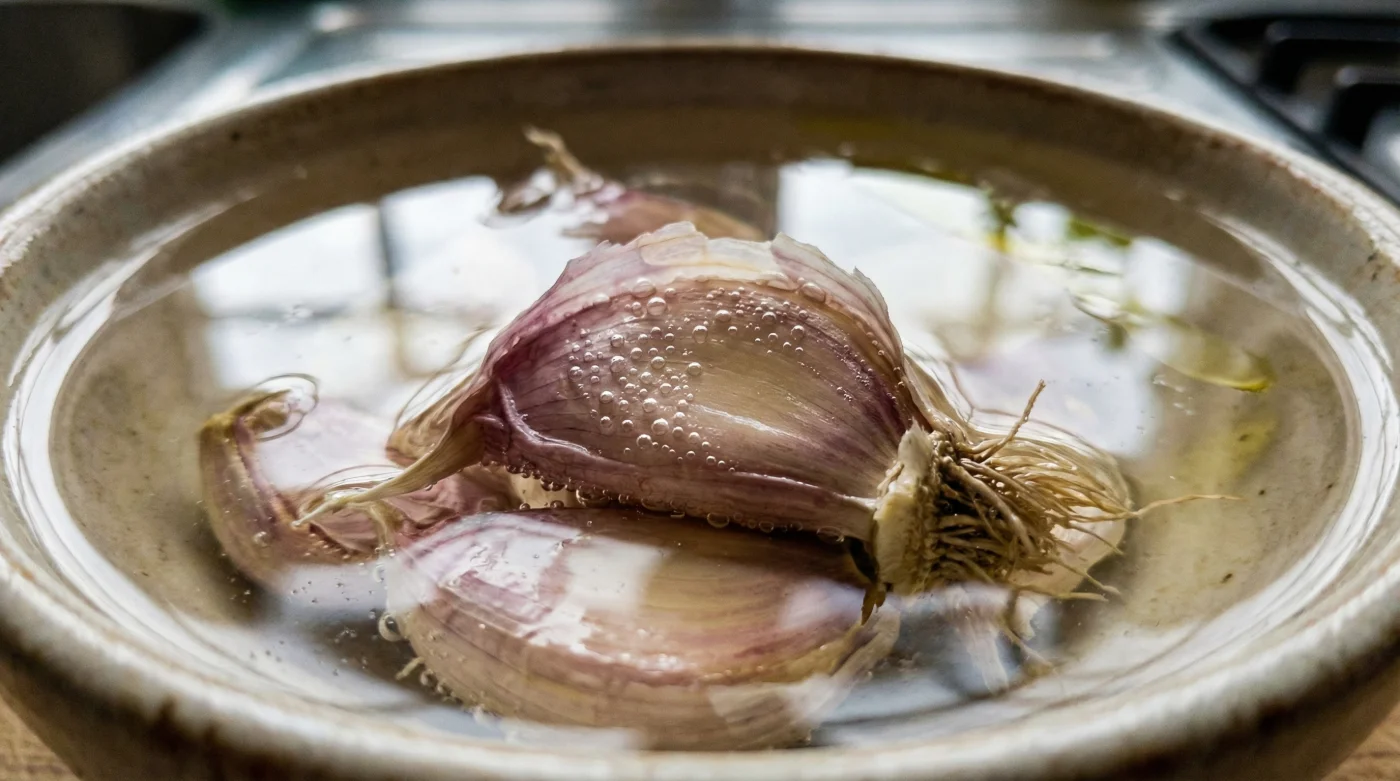
To adopt this method at home, begin by breaking the bulb apart. Press your thumbs into the top of the garlic, applying firm pressure until it snaps and fragments into individual cloves. Leave the dry, paper-clad segments exactly as they are. Drop them into a small bowl.
Run your tap until the water is pleasantly warm. It should feel like a comfortable bath, perhaps around body temperature, but absolutely never hot enough to scald. Boiling water from a kettle will instantly begin to cook the raw outer layer of the flesh, turning it slightly translucent and ruining the crisp texture. Submerge the garlic entirely.
- Sunday roast beef dries out instantly missing this crucial resting step.
- Fresh strawberries remain mould-free for weeks submerged in this vinegar wash.
- Whole roasting chickens achieve perfect crispy skins applying this boiling water trick.
- Garlic cloves shed their sticky skins effortlessly following this warm soak.
- Hass avocados turn completely brown ignoring this protective olive oil barrier.
When you return, drain the water. Take a clove and pinch the root end lightly between your thumb and forefinger. Give it a gentle squeeze. The garlic will simply slip out of its jacket, smooth, unbruised, and completely whole. The skin stays behind between your fingers, leaving no sticky residue on your chopping board or hands.
| Component | What To Look For | What To Avoid |
|---|---|---|
| The Bulb | Taut, heavy bulbs with tight, unbroken skins. | Hollow-feeling bulbs or those with loose, powdery black mould. |
| The Clove | Firmness and slight resistance when squeezed. | Green shoots emerging from the top, indicating age and bitterness. |
| The Soak | Skins turning slightly translucent and soft in the water. | Using freezing cold water, which stalls the separation process entirely. |
A Calmer Kitchen Rhythm
Cooking is too often framed as a rush, a frantic series of aggressive chops, fast boils, and loud sizzling pans. By swapping a violent smash for a patient soak, you actively alter the entire tempo of your meal preparation. It introduces a moment of planned stillness into the room.
You prep the garlic, leave it to rest in its warm bath, and move effortlessly onto the next task. By the time you return, the ingredient is entirely ready to cooperate. The flesh remains pristine, holding its structural integrity. It is now ready to be sliced razor-thin for a delicate pasta sauce, or roasted whole beneath a chicken, yielding a sweeter, mellower profile.
It is a small, quiet rebellion against the messy, hurried methods we have grown accustomed to. When you treat your ingredients with a little mindful respect, they reward you with better flavours, cleaner hands, and a far more peaceful cooking experience.
“Garlic repays gentleness; keep the cell walls intact and unbruised until the exact moment the hot pan calls for them.”
Frequently Asked Questions
Can I use cold water if I am in a hurry?
Cold water will eventually work, but it takes significantly longer to hydrate the skin and will not effectively dissolve the botanical sap. Stick to warm water for the ten-minute rule.Will this method work for older, slightly dry garlic?
Yes, it works exceptionally well. Older garlic often has drier, more brittle skins that shatter when crushed. The warm soak rehydrates these brittle layers, preventing them from flaking everywhere.Do I need to trim the root end off before soaking?
No, leave the root entirely intact during the soak. Trimming it beforehand exposes the raw flesh to the water, which can waterlog the clove. Slice the root off only after peeling.Can I soak enough garlic for the whole week at once?
Absolutely. You can soak and peel two or three entire bulbs at once. Store the peeled, unbruised cloves in an airtight container in the fridge, where they will keep perfectly for up to a week.Does the soaking water take on a strong garlic smell?
Because the clove remains unbroken and uncrushed, the allicin is not released. The water will have a very faint, earthy scent, but it will not smell pungent or leave odours in your sink.