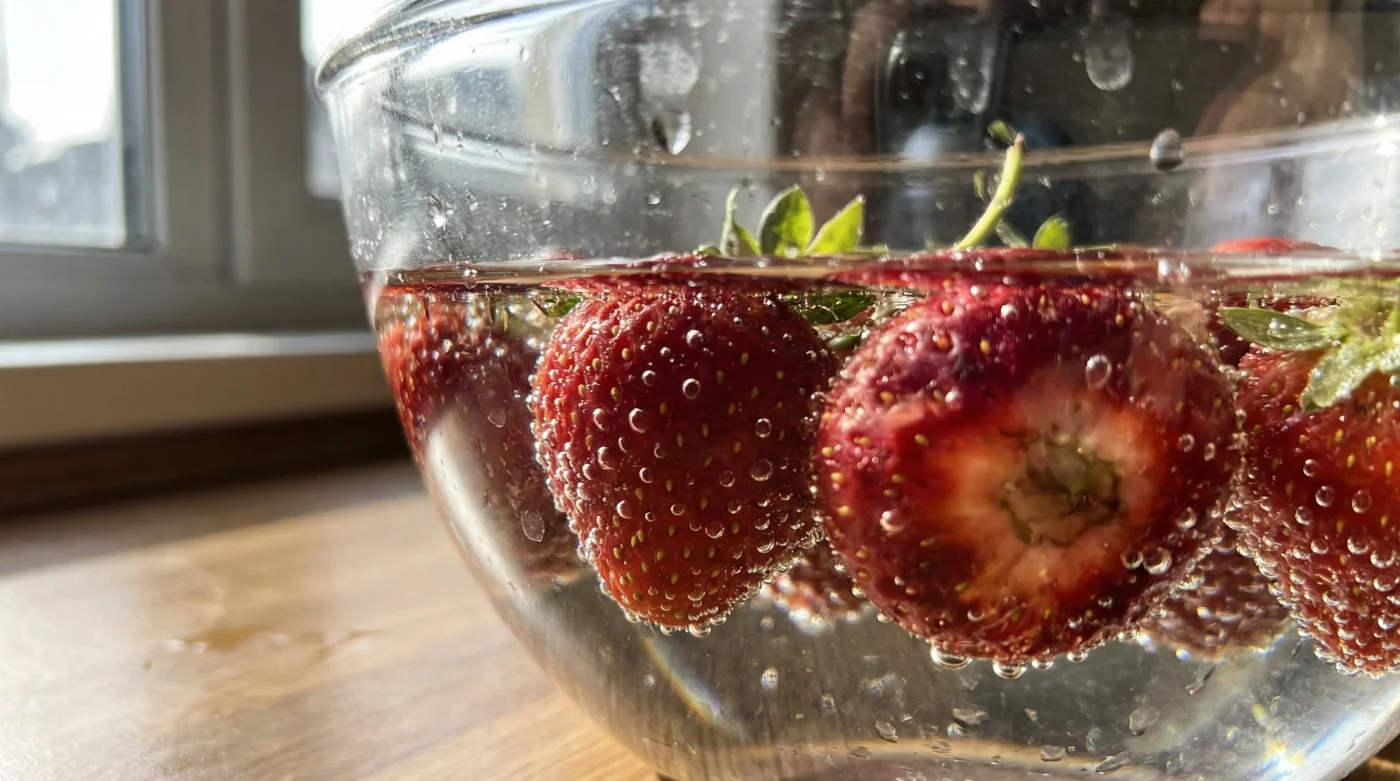
You know the scene all too well. It is a quiet Tuesday morning, and you open the fridge door expecting the bright, sharp promise of fresh summer fruit. Instead, you are met with a faint, faintly fermented sweetness hanging in the chilled air. You pull out the plastic punnet of strawberries you bought mere days ago, only to find the dreaded white fuzz creeping across the bottom layer. It feels like a minor, yet incredibly frustrating betrayal. You paid good money—perhaps £3 or £4 for a premium British punnet—only to throw half of them straight into the food waste bin.
The Supermarket Myth and the Invisible Armour
For decades, the iron-clad rule of the supermarket aisle has been whispered down through generations: never wash delicate berries until the exact second you intend to consume them. We are taught to treat them like fragile glass ornaments, terrified that a single drop of water will hasten their demise. But this advice relies on a completely flawed understanding of what actually causes the rot. The enemy is not moisture itself; the enemy is the microscopic army of fungal spores that hitch a ride from the field to your kitchen counter.
Think of a strawberry’s skin not as a fragile sponge, but as a porous shield. When you leave those invisible spores unchecked, you are essentially leaving the gates wide open for decay. I learned this the hard way during a humid July in Somerset. I was speaking with Elena, a third-generation artisan jam maker who buys fruit by the wheelbarrow. Her kitchen always smells of boiling sugar and sharp citrus.
As I watched her casually dump crates of freshly picked strawberries into a massive metal sink, I gasped, reciting the old ‘keep them dry at all costs’ proverb. She just laughed, wiping her hands on a heavily stained linen apron. ‘If you do not evict the stowaways, they eat the ship,’ she told me. Her secret was not keeping them perfectly dry from day one. Her secret was an immediate, ruthless eviction of mould spores using a staple you already have in your cupboard: white vinegar.
| Who You Are | The Everyday Benefit |
|---|---|
| The Batch-Prep Parent | Wash fruit once on Sunday and pack mould-free, firm berries into lunchboxes all the way until Friday. |
| The Solo Grazer | Stop racing against the clock to eat an entire punnet before it turns to mush on the bottom shelf. |
| The Budget-Conscious Shopper | Capitalise on heavily discounted ‘reduced to clear’ fruit without the lingering fear of overnight rot. |
The One-to-Three Eviction Protocol
Here is exactly how you execute this pantry hack. It requires a few minutes of mindful attention when you get home from the shops, but it pays dividends for weeks. First, clear a space on your worktop and fetch a large, clean mixing bowl. You need a precise ratio: one part standard white vinegar to three parts cold water. Do not worry about buying a premium brand; the cheapest malt-free white vinegar from your local shop will perform perfectly.
- Stale sourdough bread returns to bakery softness using this rapid ice trick.
- Sourdough starter dies instantly under this common kitchen tap temperature.
- Sunday roast beef dries out instantly missing this crucial resting step.
- Fresh strawberries remain mould-free for weeks submerged in this vinegar wash.
- Whole roasting chickens achieve perfect crispy skins applying this boiling water trick.
Once the five minutes are up, lift the berries out gently with your hands or a slotted spoon. Do not simply upend the bowl into a colander, as this forces the dirty water back over the clean fruit. Rinse them thoroughly under a gentle cold tap to remove any lingering trace of vinegar. Finally, and this is the crucial concluding step, dry them with absolute devotion.
The patience required to let them air dry completely is where most people fail. You must resist the urge to throw them straight into the fridge while damp. Lay them out on a highly absorbent cotton tea towel or thick kitchen paper. The ambient air in your kitchen will do the heavy lifting. Once they are entirely dry to the touch, transfer them to a container lined with a fresh sheet of paper to wick away future condensation.
| The Physical Action | The Scientific Reality |
|---|---|
| Acetic Acid Exposure | Significantly lowers the pH on the berry skin, destroying the cellular walls of Botrytis cinerea (grey mould) spores. |
| Cold Water Submersion | Constricts the plant fibres, preventing the strawberry from absorbing the vinegar flavour while loosening stubborn soil. |
| Ventilated Fridge Storage | Allowing trace ethylene gas to escape prevents premature softening and structural collapse of the fruit. |
Before you even attempt the bath, however, you must ensure you are starting with viable fruit. One severely rotting berry can still taint the batch if the structural integrity is already gone. Sorting your fruit requires a sharp eye and a ruthless attitude toward bruised casualties.
| What to Look For (The Keepers) | What to Avoid (The Saboteurs) |
|---|---|
| Bright, unwrinkled skin with a taut, glossy surface. | Dark, sunken patches that feel soft or mushy to the touch. |
| A vibrant, perky green calyx (the leafy top). | Brown, brittle, or slimy leaves that detach easily. |
| A clean, sweet, and faintly floral scent. | A sharp, cidery aroma indicating that fermentation has already begun. |
Reclaiming Your Morning Rhythm
Why does this small shift in your kitchen routine matter so much? It is about more than just saving a few pounds on your weekly grocery shop. It is about removing a tiny, recurring point of friction from your day. When you open your fridge at 7 AM to prepare breakfast, finding a box of bright, firm, ready-to-eat fruit offers a quiet sense of order. You are not forced to play a game of culinary roulette.
You are no longer reacting to decay; you are actively preserving quality. This simple method transforms a highly perishable luxury into a dependable, everyday staple. You can finally buy that larger, better-value punnet without the lingering guilt of anticipated waste. It shifts your relationship with fresh produce from anxiety to abundance, allowing you to enjoy the vivid tastes of summer on your own terms.
Preservation is not about freezing time; it is about creating an environment where good things can linger a little longer.
Frequently Asked Questions
Will my strawberries taste like vinegar?
Not at all. The brief five-minute soak in a highly diluted solution, followed by a thorough cold water rinse, ensures no residual flavour remains on the fruit.Can I use apple cider vinegar instead of white vinegar?
Yes, but white vinegar is significantly cheaper and has a more neutral profile. Apple cider vinegar works just as effectively to destroy the mould spores, though.Should I remove the green leafy tops before washing?
Leave them absolutely intact. Cutting the tops off exposes the inner flesh, allowing the acidic water to rush in and turn the strawberry waterlogged and mushy.Do I need an airtight container for storage?
Actually, you want slight ventilation. A container with a slightly cracked lid, lined with kitchen paper to catch trace moisture, is the ideal environment.Does this trick work for other delicate berries?
Absolutely. Raspberries, blackberries, and blueberries all benefit from this exact same vinegar wash, though raspberries only need a two-minute dip due to their extreme fragility.