You know the sound. Or rather, the silence when there ought to be a sound. You pull the heavy roasting tin from the oven, the hot fat hissing, the smell of rosemary and roasted beef filling your kitchen. The condensation drips from the windows. You tap the golden edge of a Maris Piper with your fork, expecting a sharp, glass-like ‘clack’. Instead, you get a dull, leathery thud. You followed the rules, boiling them in heavily salted water, yet the promised shatter just is not there. It breathes through a pillow, soft and yielding when it should be brittle. It feels like a quiet betrayal of the Sunday lunch.
For generations, we have accepted a mediocre roast potato as a matter of luck. We blame the oven temperature, the type of roasting pan, or the brand of oil. But the fault does not lie in the roasting. It lies in the water. The widely accepted wisdom of using plain, salted boiling water is fundamentally flawed if your goal is an aggressive, thick crust.
The Chemistry of the Crunch
Boiling a potato before roasting is not simply about softening the flesh; it is an act of controlled erosion. Think of the raw Maris Piper as a dense chalk cliff. Plain water merely washes against the surface, barely making a dent in its structure. We need the water to actively weather the exterior, breaking it down into a rough, yielding paste that will eventually fry into a formidable crust.
Years ago, in the cramped, steaming kitchen of a North Yorkshire pub famous for its Sunday service, an old head chef demonstrated the reality of this chemistry. As his battered aluminium pot came to a rolling boil, he did not just throw in a handful of sea salt. He tipped in exactly half a teaspoon of bicarbonate of soda. ‘Alkaline,’ he muttered, tapping the side of his nose. ‘Eats the outside, leaves the inside fluffy.’ That tiny chemical shift changes the pH of the water. It contradicts the old myth of plain salted water, aggressively attacking the potato’s exterior pectin while the interior cooks gently.
| The Cook | The Practical Benefit |
|---|---|
| The Sunday Host | Guarantees a reliable, shattering crunch every time, eliminating the quiet anxiety of serving soggy side dishes to guests. |
| The Budget Cook | Transforms the cheapest bag of Maris Pipers into a premium, restaurant-quality component using a pence-saving pantry staple. |
| The Time-Poor Parent | Creates a thicker crust that stays crispy for longer, surviving the chaos of gathering the family to the table without going soft. |
The Ritual of the Roast
You do not need expensive goose fat to make this work, though it certainly brings a luxurious richness. You simply need friction, intense heat, and your alkaline water. Start with your Maris Pipers. Peel them and cut them into large, jagged chunks. Avoid perfectly uniform squares; you want uneven angles. More surface area means more glass-like edges.
Drop the chunks into a pan of cold water. Add a generous pinch of sea salt and exactly half a teaspoon of bicarbonate of soda. Do not be tempted to add more, or you risk leaving a soapy aftertaste. Bring the pot to a rolling, aggressive boil.
| Scientific Element | Mechanical Logic in the Pot |
|---|---|
| Bicarbonate of Soda (pH 8-9) | Raises the pH of the water, which causes the pectin in the potato to break down much faster than in neutral water. |
| Starch Gelatinisation | The broken-down exterior mixes with the water to create a slurry. When agitated, this slurry coats the potato like wet cement. |
| Thermal Shock (Fat to Cold) | Dropping the starchy, alkaline-treated potato into 200C fat instantly dehydrates the slurry, forging the glass-like crust. |
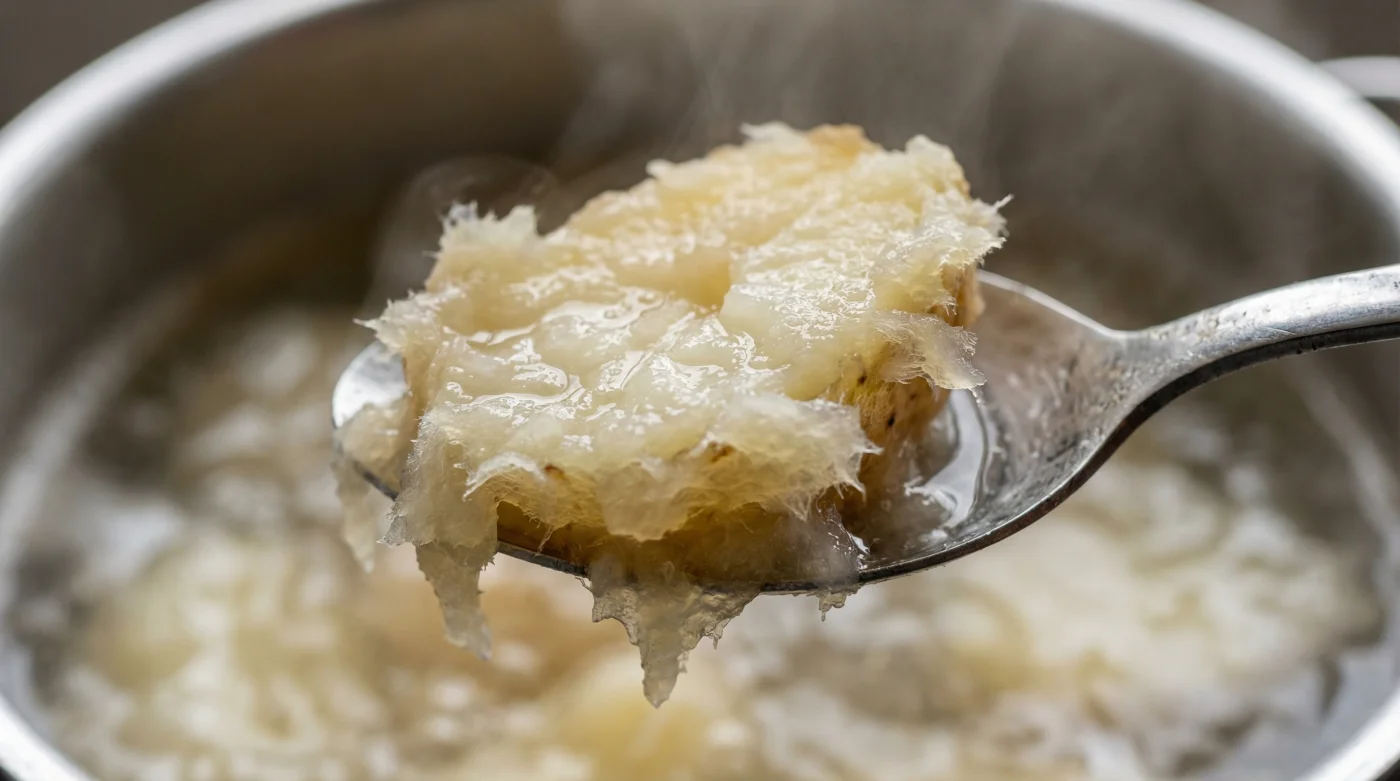
Let them boil until the edges look visibly frayed, almost falling apart. This takes courage. You will think you have gone too far and ruined the batch. Drain them immediately into a metal colander and give them a violent shake. This is where the magic happens. The alkaline water has turned the outer layer into a delicate, fluffy mush. As you toss them, this mush builds up like a thick coating of batter around the firm, cooked centre.
- Self-raising flour creates unpleasantly dense scones ignoring this gentle folding technique.
- Salmon fillets stick stubbornly to frying pans missing this crucial drying step.
- Button mushrooms turn unappetisingly rubbery and grey absorbing this early salt addition.
- Minced beef develops intense flavour crusts skipping this common constant pan stirring.
- Maris Piper potatoes achieve glass-like crunches boiling in this alkaline water.
| Quality Checklist: What to Look For | Quality Checklist: What to Avoid |
|---|---|
| A thick, floury film coating the potato after shaking the colander. | Using waxy potatoes like Charlotte or Jersey Royals; they will not break down. |
| Visible steam rising from the drained potatoes as they sit to dry. | Overcrowding the roasting tin; potatoes need space for the heat to circulate. |
| A vicious, loud sizzle the second the potato touches the roasting fat. | Pouring the potatoes into cold oil; this creates a greasy, heavy sponge. |
The Sunday Anchor
A roast dinner is more than a meal; it is a full stop at the end of a long week. It brings a necessary rhythm to our lives. When you master the potato, you bring a sense of reliability and comfort to the table. That glass-like shatter, yielding to a cloud-like centre, is a deeply physical comfort. It tells everyone sitting around the table that they are cared for, that the effort was made.
It takes only five minutes of mindfulness at the hob and half a teaspoon of a basic baking ingredient to completely transform the texture. You are no longer hoping for a good result; you are engineering it. By abandoning the myth of plain salted water, you elevate a mundane side dish into the undeniable star of the plate, creating a meal that resonates with warmth and technical brilliance.
The secret to a flawless roast potato lies not in the heat of the oven, but in the violent, alkaline chemistry of the boiling pot.
Frequently Asked Questions
Can I use any type of potato for this alkaline trick?
Maris Pipers or King Edwards are essential for this method. You need a floury, high-starch potato to create that thick paste; waxy varieties will simply stay slick and firm, entirely resisting the alkaline breakdown.Will I taste the bicarbonate of soda on the finished roasties?
Not at all. Half a teaspoon in a large pot of boiling water is enough to alter the pH and break down the exterior pectin without leaving any soapy, bitter, or metallic residue on the food.Do I need to use beef dripping or goose fat for the crunch?
While animal fats offer incredible, traditional flavour, standard sunflower or rapeseed oil works brilliantly. The secret is the starchy paste; provided your chosen oil is smoking hot before the potatoes hit the pan, you will achieve the shatter.How long should I boil the potatoes in the alkaline water?
Roughly ten minutes, but rely on your eyes rather than the clock. You must wait until the edges are visibly flaking and rough, looking almost as if they are about to fall apart.Can I prepare these potatoes ahead of time for a dinner party?
Yes. You can boil, rough up in the colander, and air-dry the potatoes hours before roasting. In fact, allowing the starchy edges to become completely cold and dry before hitting the hot fat often results in an even thicker crunch.