You stand over the cooker, tearing open a plastic tray of minced beef. The oil in the frying pan shimmers, whispering a promise of dinner. You tip the meat in, and instantly, instinct takes over. Your hand grips the nearest wooden spoon, and you begin hacking, prodding, and stirring with frantic energy. Within moments, the proud sizzle mutates into a wet, apologetic hiss. You are no longer frying. You are essentially boiling a grey puddle of beef in its own juices.
The Gravity of the Iron
It is a near-universal kitchen reflex. We feel an overwhelming responsibility to shatter the block of mince the second it hits the heat. Yet, this restless stirring is the exact reason your ragù lacks depth and your chilli feels flat. The secret to intensely savoury, deeply browned meat requires something much harder than frantic wrist action. It requires you to step back and do absolutely nothing for five whole minutes.
I learned this watching a head chef named Arthur in a cramped pub kitchen near Leeds. He dropped a heavy slab of beef mince into a smoking cast-iron pan and then leaned against the counter, arms folded. When I instinctively reached out with a spatula to break it up, he gently pushed my hand away. ‘You are treating the meat like a problem to solve,’ he muttered, nodding at the pan. ‘Leave it be. Let the heat build a foundation.’ He understood that constant movement strips the pan of its thermal energy, forcing the meat to weep moisture rather than sear.
| The Home Cook | The Common Struggle | The ‘Untouched’ Benefit |
|---|---|---|
| The Bolognese Purist | Sauce tastes weak, relying too heavily on tomato puree. | Develops a rich, roasted undertone that deepens the entire pot. |
| The Taco Enthusiast | Meat turns out mushy and watery inside the shell. | Creates rugged, crispy edges that hold spices beautifully. |
| The Batch Cooker | Reheated meals feel soft and lack texture. | Maintains a firm, chewy bite even after days in the fridge. |
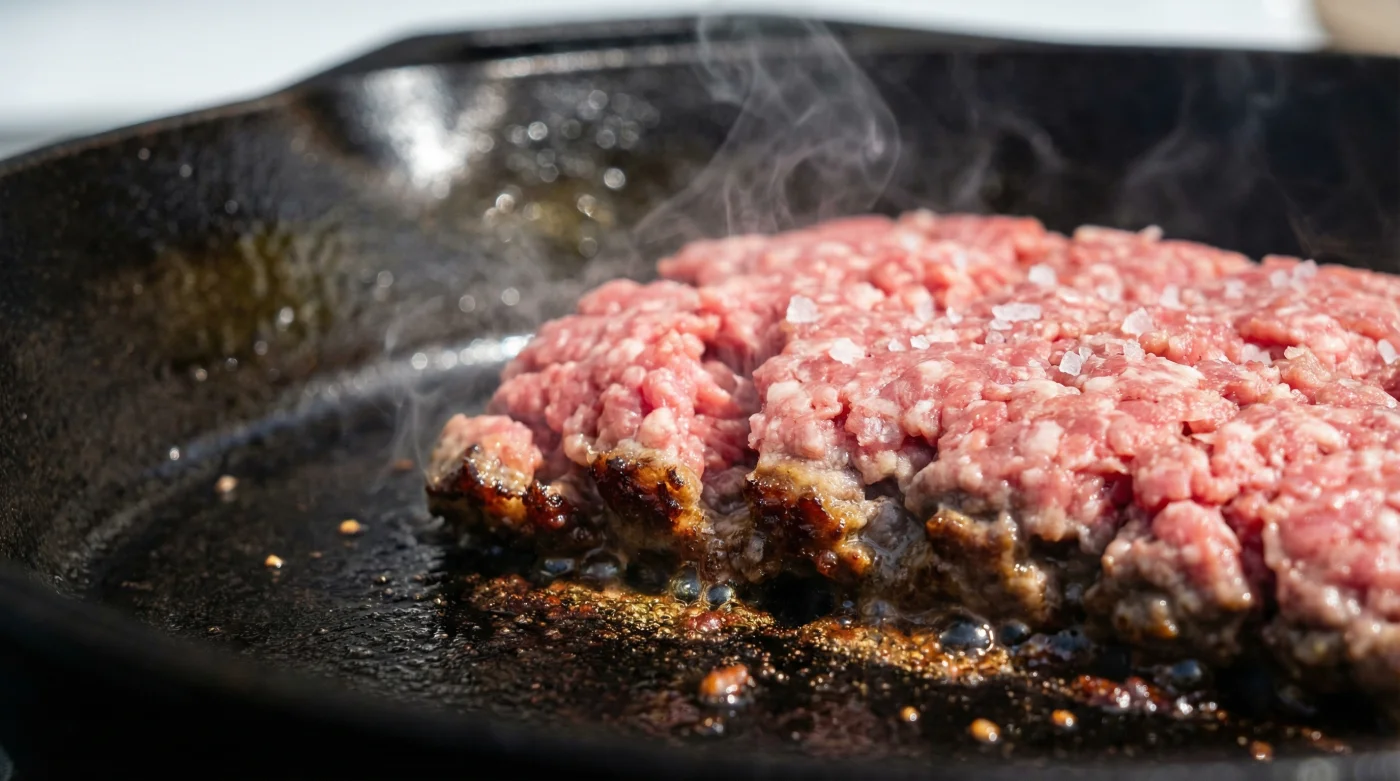
When you leave the mince completely untouched in a hot pan, you invite a chemical romance between amino acids and reducing sugars. This only happens when moisture evaporates and temperatures rise above 140 degrees Celsius. By spreading the meat into a single, flat layer and abandoning it, the bottom fuses into a rich, mahogany-dark crust.
| Cooking Action | Pan Temperature | Moisture Status | Final Result |
|---|---|---|---|
| Constant Stirring | Drops rapidly below 100°C | Trapped beneath the meat, causing pooling | Grey, chewy, steamed beef |
| 5 Minutes Untouched | Climbs steadily above 140°C | Evaporates immediately upon contact | Deep brown, savoury crust |
The Art of Stillness
So, how do you put this into practice? First, ensure your pan is large enough. If you pile the meat too high, it breathes through a pillow of steam, entirely unable to brown.
Drop the mince into the hot oil and use the back of your spoon to press it down gently. Flatten it into a giant, solitary burger patty that covers the base of the pan. Then, step back.
- Self-raising flour creates unpleasantly dense scones ignoring this gentle folding technique.
- Salmon fillets stick stubbornly to frying pans missing this crucial drying step.
- Button mushrooms turn unappetisingly rubbery and grey absorbing this early salt addition.
- Minced beef develops intense flavour crusts skipping this common constant pan stirring.
- Maris Piper potatoes achieve glass-like crunches boiling in this alkaline water.
Listen to the sound. The damp, heavy bubbling will slowly transition into a sharp, dry crackle. That sound is the fat rendering and the crust forming. Only when those five minutes have passed, take your spatula and flip the giant patty over. You will be greeted by a fiercely dark, crispy surface. Now, you may finally chop it into rugged pieces and stir.
| Quality Checklist | What to Look For | What to Avoid |
|---|---|---|
| Visual | Dark, roasted brown edges across a solid mass. | A pool of murky water gathering around grey pebbles of meat. |
| Auditory | A sharp, aggressive snap and crackle of hot fat. | A low, gurgling simmer sounding like a boiling kettle. |
| Tactile | Resistance when you finally flip it with the spatula. | Meat that disintegrates instantly into mush upon contact. |
Peace in the Pan
Cooking often feels like a race against the clock, a flurry of actions born from the worry that something will burn or stick. But forcing a pause changes the entire rhythm of your evening. By trusting the heat and leaving that minced beef alone, you are not just building a superior base for your cottage pie. You are buying yourself a few minutes of stillness at the end of a long day. A moment to breathe, to listen to the crackle of the pan, and to remember that sometimes, doing less yields the richest rewards.
Great cooking is rarely about adding more movement; it is about having the confidence to let the heat do its quiet, heavy lifting.
Frequently Asked Questions
Will the bottom burn if I do not stir it? As long as you are using medium-high heat rather than the absolute maximum, five minutes is the perfect window to brown the meat safely without turning it to ash.
Should I add onions before the minced beef? No. Onions release water. Brown the meat thoroughly on its own first, remove it from the pan, and then cook your onions in the leftover beef fat.
Does this work with leaner mince, like 5% fat? Yes, though you will need a dash more oil in the pan initially to prevent sticking, as lean meat lacks the natural fat required to lubricate the crust.
Should I season the meat before or after browning? Salt draws out moisture. Add your salt after the meat has developed its crust to prevent a watery pan.
Can I use a non-stick pan for this? You can, but a heavy stainless steel or cast-iron frying pan holds thermal mass far better, rewarding you with a significantly darker crust.