You know the exact sound. It begins as a promising, aggressive sizzle when the pale pink flesh meets the heavy metal of your frying pan. The kitchen quickly fills with the rich, savoury aroma of butter and searing seafood. But three minutes later, when you slide your fish slice underneath to gently flip it, you hit a literal wall. The skin grips the metal with the stubbornness of superglue. You push a little harder, the flesh tears, and your beautifully expensive cut of salmon is reduced to a mangled, flaky mess. You stand over the hob, feeling entirely defeated by your own dinner.
The Myth of the Oil Slick
We are told from our earliest days at the stove that a generous glug of screaming hot oil is the absolute remedy for sticking food. You likely assume that if a salmon fillet clings to the pan, the surface simply was not lubricated enough. This is the great culinary deception. The truth relies on a central metaphor: cooking fish is essentially a delicate negotiation with an invisible barrier of vapour.
When salmon goes straight from the fridge packaging into the pan, its surface is slick with moisture. It does not matter if you have poured half a bottle of rapeseed oil into your cookware. When that cold surface water meets screaming hot oil, it violently converts to steam. This microscopic layer of steam bursts the delicate cell walls of the salmon skin. The exposed, raw proteins instantly fuse to the microscopic pores of your frying pan. The oil never actually touches the skin; the water blocks it.
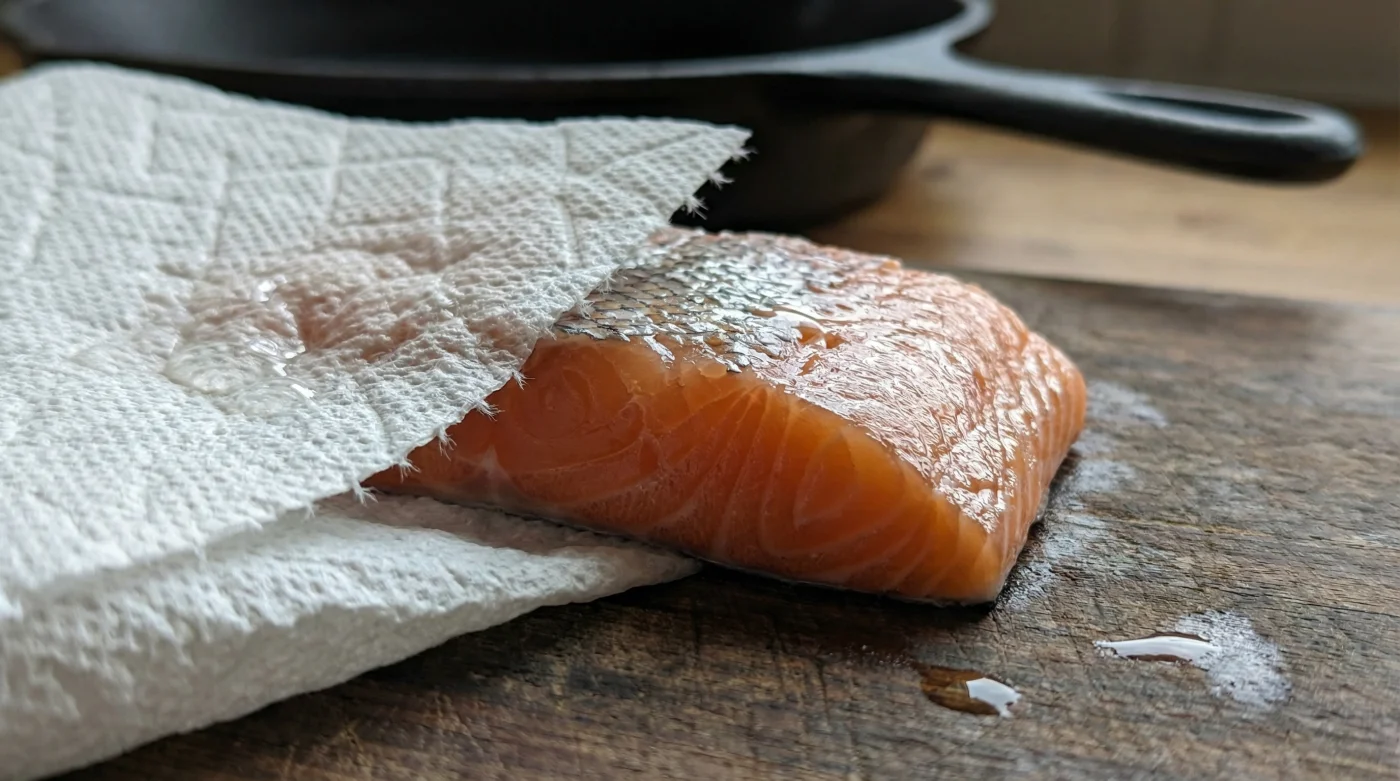
I remember standing in the cramped, incredibly hot kitchen of a small seafood bistro in Cornwall, watching the head chef process a mountain of fresh catches. He did not use fancy non-stick pans. He used battered, heavy carbon steel. His secret was blindingly simple, relying on entirely removing that rogue moisture. Before a single piece of fish went near the heat, he would sandwich the fillets between thick sheets of kitchen roll, pressing down firmly to pat the skin completely, bone-dry. ‘If the skin feels damp,’ he muttered, wiping his brow, ‘it belongs in the sink, not the stove.’
| Who You Are | Why This Matters |
|---|---|
| The Weekend Host | Flawless, restaurant-quality presentation for dinner guests without last-minute panic. |
| The Budget-Conscious Cook | Preserves the entire piece of expensive fish, ensuring zero waste left welded to the pan. |
| The Weary Dishwasher | Saves you twenty minutes of miserable scrubbing at the sink with a wire scourer. |
The Kitchen Roll Protocol
The solution is wonderfully mundane and costs absolutely nothing. You must eliminate the water to allow the heat to perform its structural magic. Start by removing your salmon from its packaging and resting it on a board. Take two sheets of thick kitchen roll and fold them over the fish.
Press down with deliberate, gentle weight. You are not trying to crush the flesh, but rather coax the hidden moisture out from the scales and skin. Run your fingertips across the skin afterwards. It should feel almost tacky to the touch, like parchment paper. If there is any residual glisten under the kitchen lights, pat it again. Only once the fish is entirely matte should you season it.
- Tomato ketchup neutralises excessively spicy homemade curries mimicking traditional restaurant bases.
- Scrambled eggs turn unappetisingly rubbery whisking in this cold dairy addition.
- Porridge oats turn incredibly creamy soaking overnight in this mild salty water.
- Self-raising flour creates unpleasantly dense scones ignoring this gentle folding technique.
- Salmon fillets stick stubbornly to frying pans missing this crucial drying step.
| The Variable | The Reaction | The Result |
|---|---|---|
| Surface Moisture Present | Water boils at 100 degrees Celsius, creating a steam barrier that drops pan temperature. | Proteins denature slowly and bond with the metal. Torn skin. |
| Bone-Dry Skin | Direct contact allows searing reactions to occur instantly at higher temperatures. | Instant crisping. A natural, protective crust forms, releasing the fish. |
| Cold Pan / Cold Oil | Oil absorbs into the fish rather than searing the exterior. | Greasy, limp texture and massive sticking potential. |
| The Quality Checklist | What to Look For | What to Avoid |
|---|---|---|
| The Cut | Even thickness across the fillet for uniform heat distribution. | Thin, tapering tails that overcook before the skin crisps. |
| The Surface | Firm, bouncy flesh that springs back when pressed lightly. | Milky, cloudy liquid pooling in the plastic packaging. |
| The Frying Pan | Heavy-based cast iron or carbon steel that retains intense heat. | Flimsy aluminium pans that warp and create uneven hot spots. |
Finding Rhythm at the Stove
Mastering this single, mindful action shifts your entire relationship with cooking seafood. It removes the anxiety of the flip. You stop viewing the frying pan as an unpredictable enemy and start treating it as a reliable tool. When you respect the physics of heat and moisture, the kitchen becomes a quieter, calmer place.
You will find yourself serving up salmon that looks like it belongs on a polished restaurant plate, boasting a shattering, golden crust that gives way to tender, perfectly cooked flakes. It is proof that the finest culinary results rarely come from expensive gadgets or complicated marinades. They come from understanding the subtle nature of your ingredients and having the patience to prepare them properly.
Cooking is simply a series of small, intentional acts of care; dry your fish, and the pan will reward your patience.
Essential Kitchen Queries
Why does my salmon still curl up when I put it in the pan? Even when dry, the skin shrinks as it hits the heat. Pressing it flat with your fish slice for the first ten seconds prevents this curling.
Should I oil the fish or the pan? Oil the pan. You want a thin, even layer of shimmering fat ready to conduct heat the moment the dry fish arrives.
Does this kitchen roll trick work for white fish? Yes, absolutely. Cod, haddock, and sea bass all benefit immensely from a thoroughly dry skin before frying.
Can I use butter instead of oil? Butter burns quickly at high temperatures due to milk solids. Start with oil to crisp the skin, then add butter at the end to baste.
How do I know when to flip the fillet? Watch the side of the fish. When the opaque, cooked colour creeps halfway up the fillet and the skin releases easily, it is time to turn.