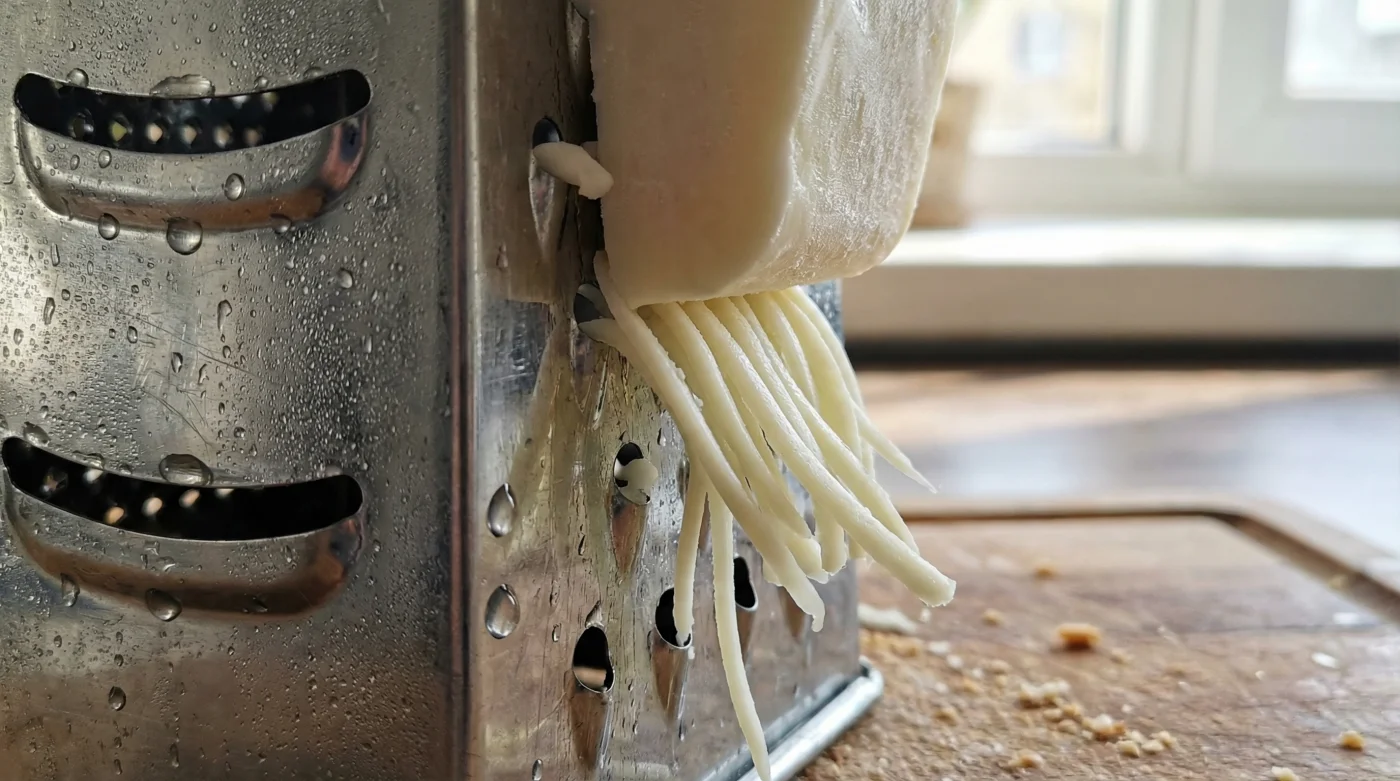
You are standing at the kitchen counter, armed with a traditional metal box grater and a fresh block of mozzarella. You apply a little pressure, pushing the pale block against the sharp, perforated teeth. Instead of an elegant snowfall of distinct cheese shreds falling onto the chopping board below, you get immediate resistance. The cheese smears. It tears, sticking to the inside of the grater like wet clay. Before you know it, you are holding a squashed, miserable lump, the grater is clogged, and your knuckles are dangerously close to the blades. It is a universal kitchen frustration, turning what should be a swift bit of meal preparation into a sticky, aggravating chore.
The Architecture of Fat
Grating room-temperature mozzarella is akin to trying to saw through warm butter. The structural integrity simply is not there to support the force you are applying. High-moisture cheeses lack the crystalline rigidity of an aged Cheddar or Parmesan. When you push them against a blade, the friction generates heat, which immediately melts the surface lipids. You are left with a mashed paste. To counteract this, you need a brief, aggressive intervention to alter the cheese’s physical state. You must pause the fat.
Years ago, while lingering over an espresso at a tucked-away pizzeria in Manchester, I watched the head chef, Marco, preparing for the evening rush. Instead of wrestling with a clammy, ambient block of cheese, he was sliding rock-solid bricks of low-moisture mozzarella across an industrial spinning blade. He noticed my curiosity and walked over, wiping flour from his apron. “We never grate it warm,” he told me, tapping his forehead. “You must shock it. Give it fifteen minutes in the coldest drawer of the freezer. You suspend the oils just long enough to carve it cleanly, but not so long that you kill the melt in the oven.”
| Home Cook Profile | The Practical Benefit |
|---|---|
| Home Pizza Enthusiasts | Achieves an even, restaurant-style melt across the dough without oily puddles forming in the centre. |
| Mid-Week Batch Cookers | Saves ten minutes of scraping sticky cheese paste out of the box grater’s tiny crevices. |
| Budget-Conscious Shoppers | Allows buying cheaper 400g blocks instead of paying a premium for pre-shredded bags coated in wood pulp. |
The Fifteen-Minute Freezer Blueprint
This technique is entirely about timing. You are not aiming to freeze the cheese solid—doing so would shatter the proteins and completely ruin the way the mozzarella melts over your pasta bake. You just want a quick, sharp drop in surface temperature.
First, unwrap your block of mozzarella. Take a piece of kitchen roll and pat the outside entirely dry. Any lingering condensation from the packaging will form ice crystals, which you want to avoid.
Place the dried block on a small plate and slide it into the freezer. Choose a spot where it will not be buried under bags of frozen peas, ensuring the cold air circulates freely around the cheese.
Set a timer for precisely fifteen minutes. This is the perfect window to prepare your tomato sauce, chop a handful of fresh basil, or simply pour yourself a glass of wine and breathe. The freezer is doing the heavy lifting.
| Thermal State | Mechanical Reaction |
|---|---|
| Ambient Room Temp (20°C) | Lipids are soft; moisture acts as a lubricant, causing immediate smearing and structural collapse against the blade. |
| Fridge Temp (4°C) | Cheese feels firm initially but buckles under friction. The grater’s teeth warm the surface almost instantly. |
| The 15-Minute Freeze (-18°C ambient) | Surface temperature drops rapidly. Fat molecules temporarily crystallise, creating a rigid lattice for clean shearing. |
- Pancake batter produces perfectly fluffy morning stacks resting undisturbed overnight inside refrigerators.
- Minced garlic turns intensely bitter entering hot pans before dense base vegetables.
- Soy sauce elevates basic chocolate brownie batters creating intensely rich bakery flavours.
- Mozzarella blocks grate flawlessly into perfect shreds following a rapid freezer blast.
- Chicken breasts stay incredibly succulent replacing standard oil marinades with full-fat mayonnaise.
Grate immediately. Use long, confident strokes against the large teardrop holes of your box grater. Do not hesitate or saw back and forth. Watch as perfect, distinct curls of mozzarella fall effortlessly onto the board, completely intact and ready to be scattered over your dinner.
| Quality Indicator | What to Look For | What to Avoid |
|---|---|---|
| Texture & Density | Low-moisture blocks with a firm spring-back when pressed with a thumb. | Overly soft blocks that dent easily or leak milky whey when squeezed. |
| Colouration | A slight yellowish or creamy tint, indicating a higher, richer fat content. | Harsh, bright white blocks which often lack flavour and contain excess water. |
| Format | Solid rectangular blocks sold in vacuum-sealed plastic. | Fresh mozzarella balls sitting in water—these cannot be grated, only torn by hand. |
A Quieter Rhythm at the Counter
When you stop fighting your ingredients, the act of cooking transforms from a hurried chore into a restorative daily rhythm. Something as mundane as grating cheese no longer feels like a minor battle. By taking a deliberate, fifteen-minute pause to alter the temperature of your ingredients, you eliminate the friction of the evening meal prep.
You are left with a pristine chopping board, an easy-to-wash grater, and beautifully even shreds of cheese that will melt into a flawless, golden canopy over your food. It is a small mechanical victory in the kitchen, proving that a little bit of patience yields a vastly superior result.
Treat your ingredients with a little mechanical respect; chilling your cheese before grating is the quietest secret to an effortless, beautiful pizza.
Frequently Asked Questions
Can I leave the cheese in the freezer for longer than fifteen minutes? No, leaving it longer risks freezing the moisture inside the cheese. Once fully frozen and thawed, the protein structure breaks down, resulting in a crumbly texture and poor melting ability.
Does this trick work for pre-shredded mozzarella? Pre-shredded cheese is already coated in anti-caking agents like potato starch. There is no need to freeze it, though grating your own block will always provide a superior, creamier melt.
Will this work with fresh mozzarella balls in water? Fresh mozzarella is simply too wet for a box grater, even after a freezer blast. It is best torn by hand or sliced with a very sharp, thin blade.
Do I need to clean the grater immediately after? Because the cold cheese does not smear, your grater will only have dry flakes on it. A quick rinse under warm water is usually all it takes, rather than aggressive scrubbing.
Can I apply this freezer technique to other cheeses? Absolutely. It works wonders for other semi-soft cheeses like young Gouda, Fontina, or even a soft mild Cheddar that tends to clump during grating.