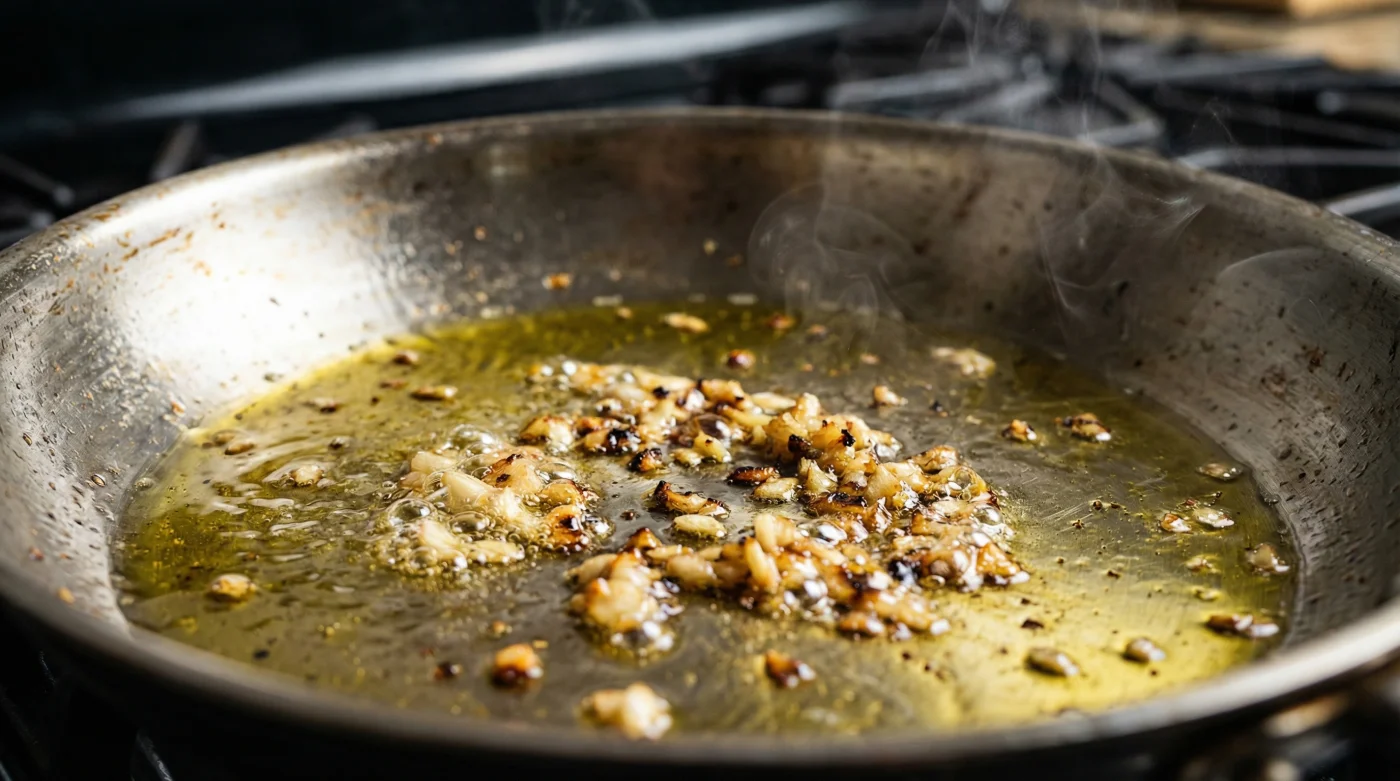
The heavy-bottomed frying pan hisses softly on the hob. You scrape a neat pile of diced white onion and finely minced garlic straight from the chopping board into the shimmering oil. Instantly, that unmistakable, deeply comforting aroma rises to the kitchen ceiling. It smells like a promise. It smells like proper home cooking.
Yet, half an hour later, as you lift a wooden spoon to taste your simmering pasta sauce or shepherd’s pie base, something is off. A sharp, almost metallic harshness catches the back of your throat. You might blame the acidity of the tomatoes, or wonder if your dried herbs were past their prime. The culprit, however, is much smaller, hiding in plain sight at the very beginning of your recipe.
The Myth of the Simultaneous Sizzle
For decades, printed recipes have casually instructed us to fry the onions and garlic until soft. It reads like a natural pairing, two foundational flavour-builders walking hand-in-hand into the heat. But treating them as equals in a hot pan defies the basic mechanical laws of your kitchen.
Think of your hot oil like a roaring open fire. You would not throw a thick, damp piece of oak and a single sheet of tissue paper into the flames at the exact same moment and expect them to burn at the same pace. The onion is your heavy wood. It is dense, packed with cellular water, and requires prolonged heat to break down and turn sweet. Your finely minced garlic is the delicate tissue paper.
When that tiny, dry speck of garlic hits the hot pan alongside a watery onion, it fries rapidly. Long before the onion has even begun to turn translucent, the garlic has pushed past golden brown and entered a state of microscopic burning. It turns to ash on a cellular level, bleeding a sharp, acrid bitterness through the entire fabric of your dish.
Lessons from the Pass
I learned this years ago while watching an old pub chef near the Cornish coast, a man who produced the richest, sweetest beef stews I had ever tasted. He scoffed openly at standard cookery books that demand you sweat everything simultaneously. He kept his finely chopped garlic in a tiny ceramic ramekin, completely separated from his celery, carrots, and onions.
He would let his root vegetables soften for ten, sometimes fifteen minutes, letting them slump lazily in the butter. Only when the onions were perfectly golden and heavy with their own natural sugars did he reach for the ramekin. He slid the garlic in and tossed the pan briskly. Garlic needs a polite introduction to the heat, he told me, not a brutal interrogation.
| Target Cook | The Daily Frustration | The Specific Benefit of the 30-Second Rule |
|---|---|---|
| The Batch-Cooker | Chillis and stews developing a harsh metallic tang over several days in the fridge. | A sweeter, more rounded base flavour that matures beautifully without turning acrid. |
| The Quick-Supper Maker | Stir-fries and quick pasta sauces tasting bitter, leading to over-seasoning with sugar. | Clean, bright aromatics that require less salt and sugar to balance the dish. |
| The Sunday Roast Host | Gravies and pan-sauces carrying a burnt undertone from the roasting tin bits. | Smooth, deeply savoury pan juices that highlight the meat rather than overpowering it. |
| Ingredient | Moisture Content | Heat Tolerance Level | Ideal Sauté Time in Hot Oil |
|---|---|---|---|
| White Onion (Diced) | Very High (~89%) | High (Requires time to evaporate water and caramelise sugars) | 8 to 12 minutes |
| Carrot / Celery (Mirepoix) | High (~88%) | High (Thick cellular walls need prolonged heat to break down) | 8 to 10 minutes |
| Garlic (Minced) | Moderate to Low (~65%) | Extremely Low (High sugar content with low water means rapid burning) | 30 to 45 seconds max |
The Thirty-Second Rule
Adopting this habit requires a slight shift in your physical prep routine. When you stand at the counter with your knife, you must resist the urge to sweep everything into one large prep bowl.
- Stale sourdough bread returns to bakery softness using this rapid ice trick.
- Standard orange marmalade transforms cheap pork joints replacing expensive sticky glazes.
- Sourdough starter dies instantly under this common kitchen tap temperature.
- Cornflour thickeners ruin glossy home gravies bypassing this cold liquid slurry.
- Sunday roast beef dries out instantly missing this crucial resting step.
Bring your pan up to heat, add your oil or butter, and tip in the dense vegetables. Leave them alone. Let them hiss, sweat, and slowly collapse. You are watching for the edges of the onion to turn a pale, sticky gold.
When your base is entirely cooked and ready for the next stage, whether that is deglazing with a splash of wine, adding a tin of tomatoes, or dropping in your minced beef, stop. Now, you add the garlic. Stir it through the hot, oily onions continuously for just thirty seconds. The moment you smell its raw pungency soften into a toasted, fragrant warmth, you immediately add your liquids to drop the temperature of the pan.
| The Sauté Quality Checklist | What to Look For | What to Avoid |
|---|---|---|
| Onion Texture | Soft, slumped, slightly translucent with pale golden edges. | Firm, opaque white pieces with crispy burnt brown corners. |
| Garlic Aroma | Warm, sweet, highly fragrant, smelling distinctly of toasted nuts. | Harsh, eye-watering sharpness, or a distinct smell of burnt toast. |
| Pan Temperature Control | A steady, gentle sizzle that sounds like light rain on a window. | Aggressive spitting and smoking oil when the garlic is dropped in. |
A Calmer Kitchen Rhythm
Changing when you add your garlic might seem like a painfully minor detail, but it speaks to a broader philosophy of cooking. It is about moving away from blind, rushed assembly and learning to read the physical realities of the food in front of you. You are giving each ingredient exactly what it needs, exactly when it needs it.
When you stop throwing everything in at once, you slow down. You start noticing how different ingredients react to heat. You smell the distinct phases of an onion softening. You hear the change in the sizzle when the water evaporates. This tiny mechanical correction does not just save your supper from a bitter undertone; it grounds you in the present moment. You are no longer just following instructions; you are actively cooking.
Respecting the unique moisture levels of your ingredients is the quiet difference between a meal that merely feeds you and a plate of food that comforts you.
Frequently Asked Questions
Does this apply if I am keeping the garlic whole?
Whole or gently bruised garlic cloves can withstand heat much longer than minced garlic. If you are infusing oil with a whole clove, you can start it early, but remember to fish it out before it turns dark brown.What if my recipe says to fry the spices with the garlic and onions?
Fry your onions first. Once they are soft, add your dry spices and your minced garlic at the same time. Stir them constantly for thirty seconds to toast the spices and cook the garlic, then immediately add your liquid.Can I fix a dish if the garlic has already burned?
Unfortunately, burnt garlic releases a chemical bitterness that permeates the oil. You cannot mask it with sugar or acid. If you burn the garlic at the start, it is always better to wash the pan and begin again.Does garlic paste burn as fast as fresh minced garlic?
Garlic paste from a tube often contains a little oil or water, which gives you a tiny buffer, but it still burns incredibly quickly. Treat it with the same respect and add it at the final thirty seconds.Why do so many famous chefs write recipes telling us to add them together?
Many recipes are simplified for brevity and word counts. Professional chefs inherently know to pace their ingredients, but this nuanced timing is often lost in translation when condensed for a quick magazine feature.