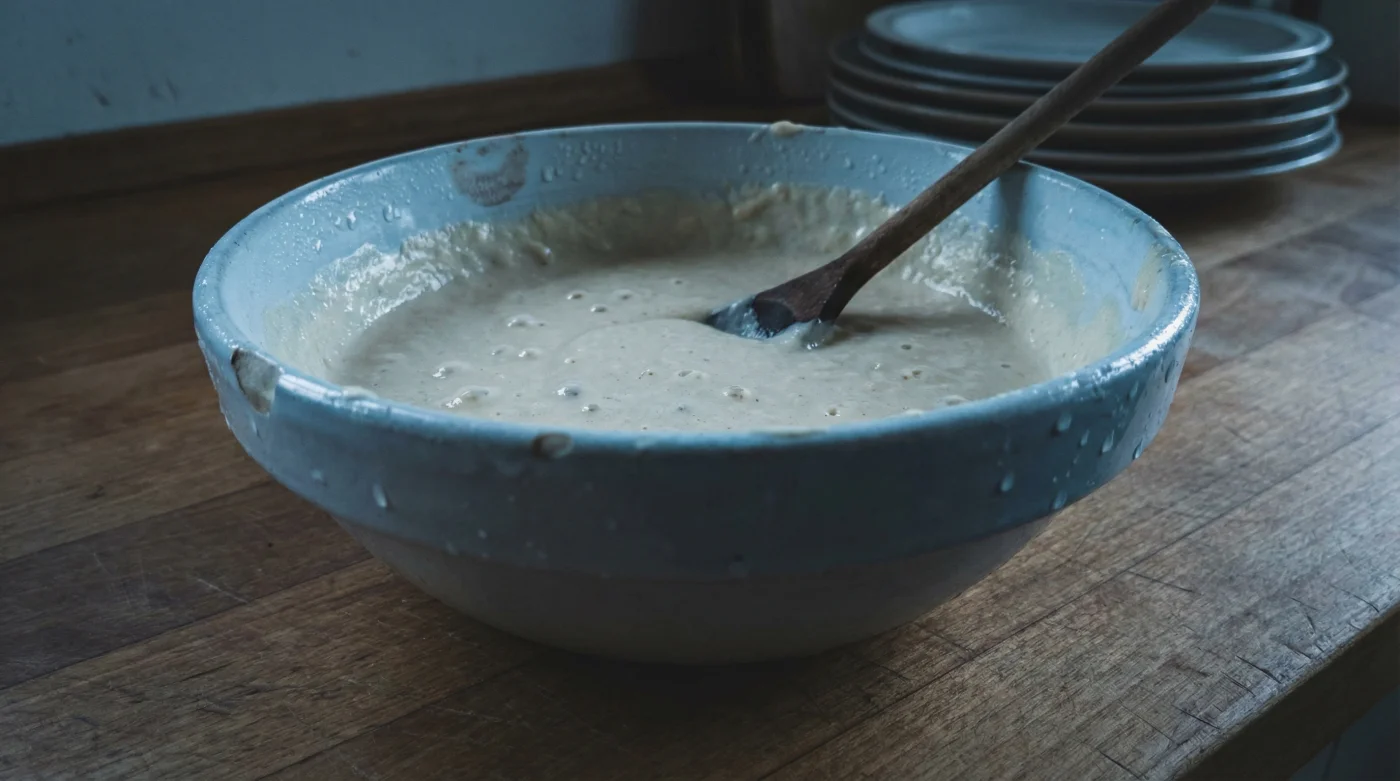
It is Sunday morning. The frantic clatter of a metal whisk against a glass bowl rings through the kitchen. The scent of melting butter hits a hot frying pan, sizzling in anticipation. You pour the freshly mixed batter, hoping for a towering, pillowy stack, but watch in quiet dismay as it spreads outwards, pooling into something resembling a pale, flat crêpe. You flip it. It lands with a heavy, dense thud. A rubbery disappointment.
We have all been conditioned to treat pancake making as a sprint. The rushed weekend habit dictates that the exact second the wet meets the dry, the batter must hit the heat. But this panicked urgency is precisely what ruins your breakfast.
The Exhalation of the Flour
Think of flour not as an inert powder, but as a sponge that needs time to drink. When you aggressively whisk milk and eggs into flour, you force two things to happen simultaneously. First, the starches are shocked by the liquid, coating themselves rather than absorbing the moisture. Second, the mechanical motion of your whisk agitates the proteins, winding the gluten into tight, elastic knots.
Cooking this stressed batter immediately is like asking someone to sprint right after they have just woken up. The mixture has not had time to breathe. It breathes through a long, quiet rest. By placing your batter in the refrigerator overnight, you allow the gluten to fully relax and the starches to slowly, gently hydrate. This transforms a thin, runny liquid into a luxurious, thick ribbon of dough.
I learned this watching a head chef at a bustling London brunch spot in Soho, long before the doors opened to the public. The kitchen was surprisingly calm. She pulled a massive, covered tub from the walk-in fridge. The batter inside was pockmarked with tiny bubbles, looking almost like a dormant sourdough starter. ‘You cannot rush the hydration,’ she murmured, ladling the thick mixture onto the griddle. ‘People mix and fry. They eat tension. We let the batter sleep. It makes all the difference.’
| The Breakfast Maker | The Daily Frustration | The Overnight Benefit |
|---|---|---|
| The Weekend Host | Waking up early to measure flour and create a mess while guests sleep. | Zero morning prep. Simply pour the pre-made, cold batter straight onto the pan. |
| The Exhausted Parent | Hungry children demanding food the second they wake up. | Pancakes are cooking within three minutes of turning on the hob. |
| The Texture Purist | Flat, chewy pancakes that soak up syrup but offer no structural joy. | Towering, structurally sound, incredibly tender café-quality stacks. |
The Mindful Night Before
Shifting your routine requires a small change in your Friday or Saturday evening rhythm. It takes five minutes.
Measure your dry ingredients into a bowl. Sift them if you feel so inclined, but do not obsess over perfection. In a separate jug, whisk your milk, eggs, and melted butter. Pour the wet into the dry.
Now, fold the mixture with a wooden spoon or a spatula. Do this slowly. Stop the very second the last streak of dry white flour vanishes. There will be lumps. This is exactly what you want. Those little lumps of flour will hydrate perfectly over the next eight to twelve hours.
Cover the bowl tightly to stop the fridge odours from mingling with your breakfast, and leave it on the middle shelf. That is it. The cold environment slows down the activity of the baking powder just enough to preserve its lifting power, while the flour does the silent, heavy lifting of absorbing the milk.
| The Element | The Mechanical Action During the Rest | The Final Result on the Plate |
|---|---|---|
| Flour Starches | Slow, steady absorption of the liquid without mechanical agitation. | A vastly thicker batter that holds its shape in the pan, rather than spreading. |
| Gluten Strands | Complete relaxation of the protein bonds formed during mixing. | A tender, soft crumb that yields easily to a fork, avoiding any rubbery chew. |
| Double-Acting Baking Powder | First reaction happens upon mixing; the second is delayed until it hits the hot pan. | Maximum vertical lift and a wonderfully fluffy interior texture. |
Mastering the Morning Pour
- Button mushrooms achieve deep golden caramelisation boiling them before pan frying.
- Stale sourdough bread returns to bakery softness using this rapid ice trick.
- Standard orange marmalade transforms cheap pork joints replacing expensive sticky glazes.
- Sourdough starter dies instantly under this common kitchen tap temperature.
- Cornflour thickeners ruin glossy home gravies bypassing this cold liquid slurry.
Do not stir it. If you stir it vigorously now, you will knock out the precious air that has gathered overnight and agitate the gluten all over again.
Instead, gently scoop the cold batter with a ladle and place it onto your preheated, buttered pan. You will see immediately how it holds its shape, sitting proud and tall on the metal.
| The Quality Check | What To Look For | What To Avoid |
|---|---|---|
| The Visual Texture | A thick, slightly aerated consistency with resting lumps that have softened. | A perfectly smooth, runny liquid (a sure sign of severe over-mixing). |
| The Morning Handling | Gentle scooping directly from the chilled bowl to the frying pan. | Taking a whisk to the batter again to force it awake. |
| The Heat Management | A medium-low hob setting to allow the thicker batter to cook through to the centre. | A smoking hot pan that burns the outside while leaving the middle raw. |
The Quiet Rhythm of the Weekend
Changing how you approach this simple recipe does more than just fix a culinary error. It alters the entire tone of your morning. By moving the labour to the night before, you strip the stress from your breakfast routine.
You wake up to a kitchen that is already clean. The ingredients are already put away in the cupboards. There is no frantic measuring, no flour dusted across the worktop, no anxious hovering over a mixing bowl.
Instead, there is only the quiet, comforting ritual of cooking. You pour, you watch the edges turn golden, you flip, and you serve. The pancakes are thicker, softer, and more tender than any you have made before, simply because you gave the ingredients the respect of time. You let the batter rest, and in doing so, you gave yourself permission to do the same.
Patience is the single most important, yet most frequently omitted, ingredient in home baking; time does the work your whisk never could.
Common Pancake Questions
Can I leave the batter in the fridge for more than one night?
Yes, but sweet spots vary. Up to 48 hours is acceptable, though you may notice a slight loss in the rising power of the baking powder after the first 24 hours.Will the cold batter lower the temperature of my frying pan?
Slightly, which is why a heavy-based pan is ideal. It retains heat brilliantly, ensuring a golden crust even when cold batter hits the surface.Do I need to let the batter come to room temperature before cooking?
No. Keep it cold. Scooping it cold helps it maintain its thick, lofty structure on the hot pan before the heat sets the edges.What if I only have regular baking powder, not double-acting?
In the UK, almost all commercially available baking powder is double-acting by default, meaning it reacts once when wet and again when heated. You are perfectly safe.Can I add blueberries or chocolate chips the night before?
It is best to scatter your additions directly onto the pancake once you have poured the batter into the pan. This prevents them from sinking to the bottom of your resting bowl overnight and bleeding colour into the dough.