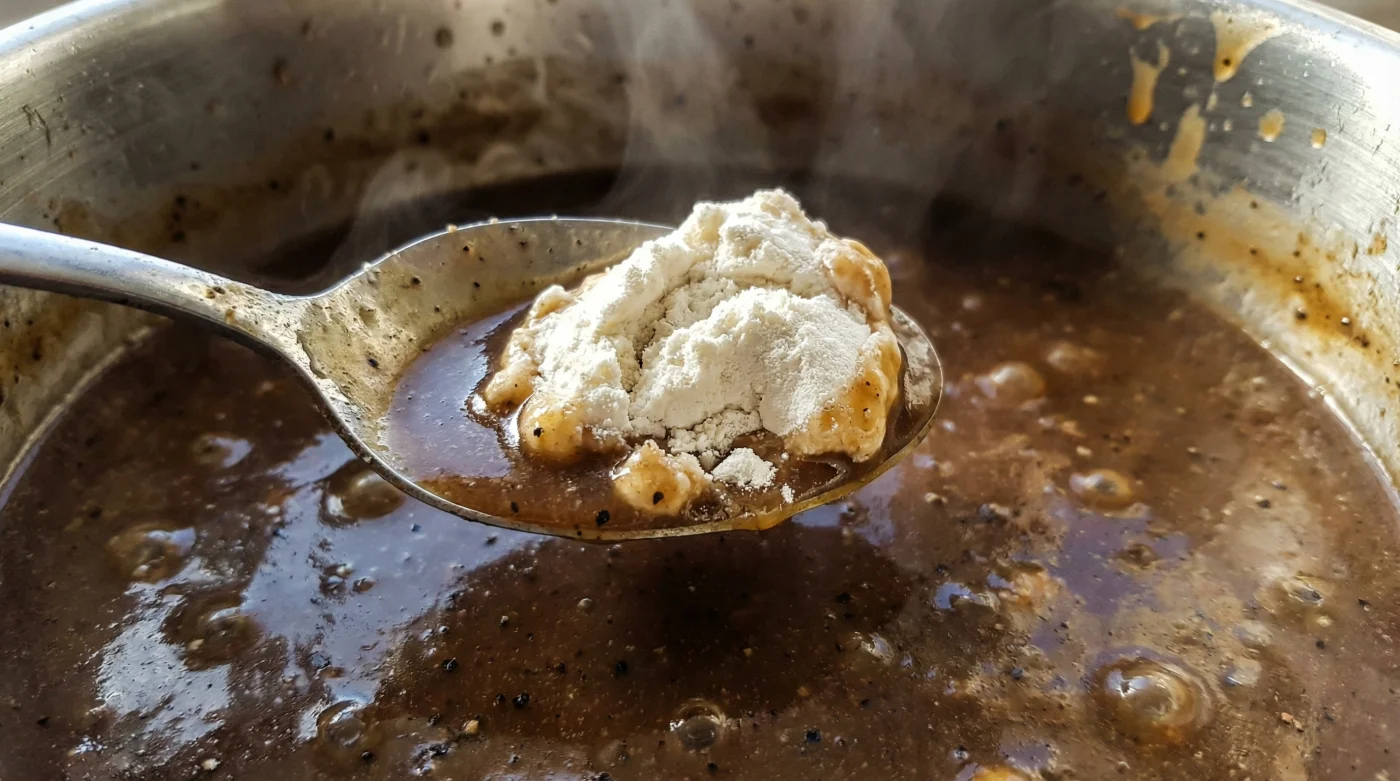
It is two o’clock on a Sunday afternoon. The kitchen smells heavily of roasted garlic, rosemary, and the rich, caramelised fat of a beef joint resting quietly under a tent of foil. You place the roasting tin on the hob, scraping up those deeply savoury, sticky brown bits with a wooden spoon. The pan juices bubble, sending up a glorious steam, but the liquid is watery and thin. With the family waiting, a mild panic sets in. You grab a spoonful of fine white cornflour and shake it directly into the simmering juices.
Instantly, the powder seizes. You whisk frantically, your arm aching, but the damage is done. You are left staring at translucent, gelatinised boulders bobbing in a thin, tragic pond. The sauce tastes of raw starch, and the glossy finish you imagined is entirely ruined.
The Thermal Shock of the Saucepan
You are certainly not alone in this frustration. The instinct to add thickener straight into a hot pan makes perfect sense to a hurried cook. You want a thicker sauce, so you add the thickening powder. However, treating cornflour like salt or pepper fundamentally misunderstands how starch behaves under pressure.
Dropping dry cornflour into boiling stock creates a violent physical reaction. The starch granules on the outside of the spoonful cook and swell the millisecond they hit the boiling heat. They form a tough, waterproof jacket around the dry powder trapped inside. You are left fighting a structural barrier that no amount of furious whisking can break down.
I learned the antidote to this chaos while standing in the frantic, humid kitchen of a rural Yorkshire pub. Arthur, a chef who had spent forty years perfecting the Sunday service, was managing ten bubbling pots at once. He never rushed his gravies. He never dumped dry powder into hot stock.
"You wouldn’t jump straight into a scalding bath without testing the water," he muttered, swirling a small ceramic jug. "Starch needs a gentle introduction. Bypassing a cold liquid slurry is the quickest way to ruin your roast." He mixed the powder with cold water until it resembled thin cream, then gently stirred it into his simmering onion gravy. The transformation was seamless.
| The Cook | The Common Frustration | The Slurry Benefit |
|---|---|---|
| The Sunday Roaster | Lumpy pan juices ruined at the final hurdle. | Guarantees a mirror-like, glossy finish to pair with roasted meats. |
| The Batch Cooker | Stews and casseroles that separate when reheated. | Stabilises the liquid, ensuring a thick, hearty texture for days. |
| The Quick-Supper Maker | Watery stir-fry sauces that refuse to cling to noodles. | Creates a sticky, coating sauce in under sixty seconds. |
The Mechanics of Starch
To truly master your sauces, it helps to respect the mechanics at play. Cornflour is an incredibly efficient thickener, but it demands specific conditions to activate properly.
| Temperature Phase | Starch Behaviour | Result in the Pan |
|---|---|---|
| Cold Liquid (Slurry phase) | Granules remain intact and suspend evenly in water. | A milky, smooth liquid ready to merge. |
| Warm Liquid (60°C – 70°C) | Granules begin to absorb surrounding moisture and swell. | The sauce noticeably begins to gain body. |
| Simmering Liquid (85°C+) | Granules burst, releasing starch molecules that trap water. | Full thickening occurs, achieving a glossy sheen. |
The Cold Slurry Ritual
Fixing this kitchen error requires a shift in rhythm. When your gravy needs thickening, step away from the simmering pan. Take a small bowl or a ramekin.
- Sliced avocados turn completely brown ignoring this simple olive oil barrier.
- Whipping cream stays completely liquid adding standard granulated sugar too early.
- Button mushrooms achieve deep golden caramelisation boiling them before pan frying.
- Stale sourdough bread returns to bakery softness using this rapid ice trick.
- Standard orange marmalade transforms cheap pork joints replacing expensive sticky glazes.
Stir the mixture with a teaspoon. At first, it will feel stiff, resisting the spoon with a strange, squeaky tension. Keep stirring gently until the powder yields, relaxing into a smooth, opaque liquid that looks exactly like single cream.
Return to your bubbling gravy. Pour the cold slurry in a slow, steady stream while stirring the hot liquid continuously. Watch as the heat activates the suspended starch. Within a minute, your watery juices will transform into a rich, velvety sauce.
| Quality Check | What to Look For | What to Avoid |
|---|---|---|
| Consistency | Smooth, freely moving liquid, similar to single cream. | A thick paste or chalky residue at the bottom of the bowl. |
| Temperature | Cool to the touch before adding to the pan. | Warm or lukewarm mixtures, which will begin to seize prematurely. |
| Integration | Poured slowly while the main pan is actively simmering. | Dumping it all in at once or adding to a completely cold pan. |
Restoring the Sunday Rhythm
Changing this one small habit does more than just fix your gravy. It removes the stressful, frantic whisking from the final moments of meal preparation. The minutes right before serving a hot meal are often the most demanding.
By preparing your cold slurry in advance, you take control of the timing. You can set the small jug aside until the meat is carved and the vegetables are plated. It is a quiet, deliberate act of preparation that guarantees a perfect result every single time.
Food is ultimately about how it makes us feel. Pouring a flawless, glossy gravy over a plate of roast potatoes brings a genuine sense of accomplishment. It turns a good dinner into a great one, free from the powdery disappointment of rushed shortcuts.
Respect the ingredients by giving them the right environment to work; a cold slurry isn’t an extra step, it is the only step that matters.
Frequently Asked Questions
Can I use milk instead of water for the slurry?
Yes, you can use cold milk, which works exceptionally well for creamy sauces like a makeshift béchamel, though cold water is best for dark, clear meat gravies.Why does my cornflour mixture feel hard when I stir it?
Cornflour and water create a non-Newtonian fluid, meaning it hardens under sudden pressure. Stir slowly and gently, and the resistance will disappear.Can I make the slurry hours in advance?
You can, but the starch will settle at the bottom of the jug. Simply give it a thorough stir right before you pour it into your simmering pan.What if my gravy still isn’t thick enough?
Never add dry powder to compensate. Make a second, smaller cold slurry and stir it in, giving the pan a minute of bubbling to show its true thickness.Will the cornflour alter the taste of my meat juices?
If cooked out properly for a minute or two, it is entirely neutral in flavour. It will only dull the taste if you use far too much or fail to let it simmer fully.