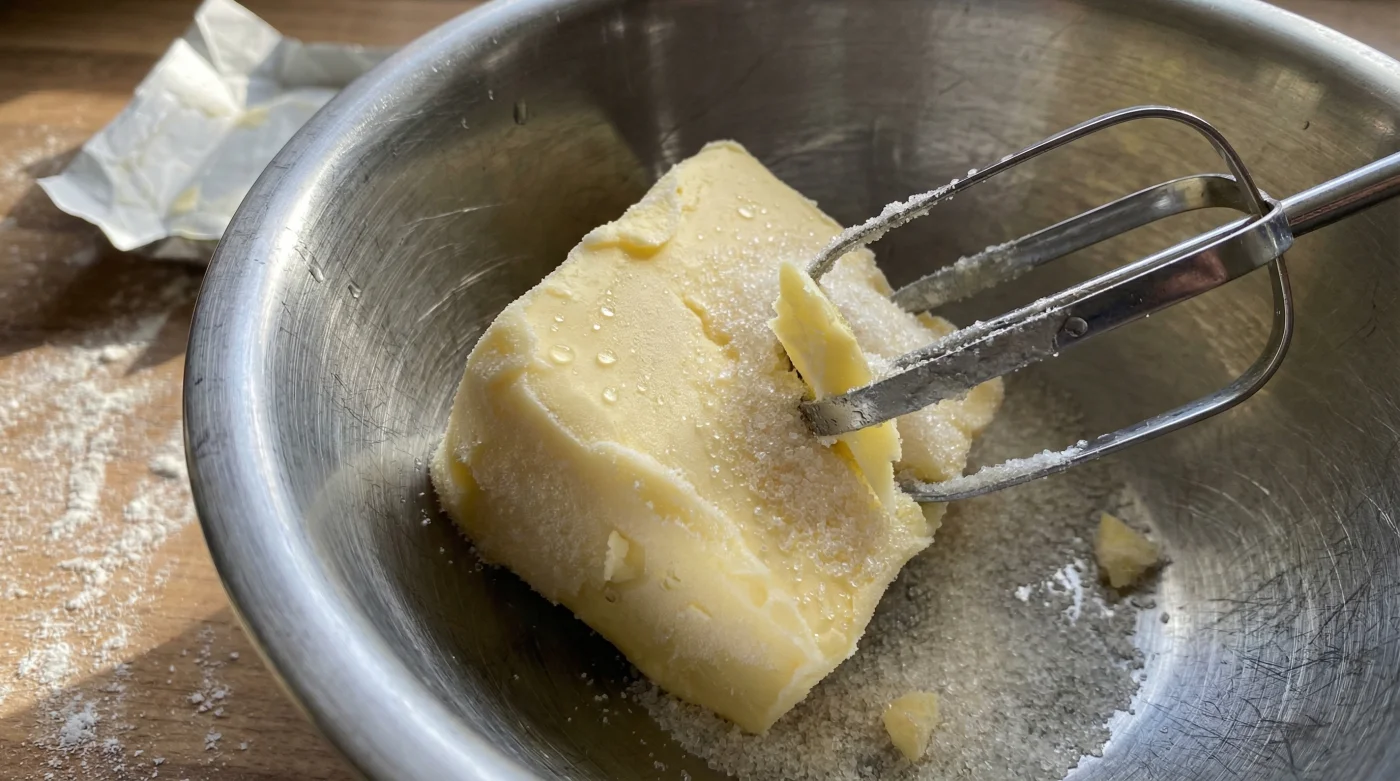
You stand in the kitchen on a grey Sunday afternoon, flour dusted across the worktop, a baking tin waiting patiently by the oven. The mixer whirs, clattering aggressively as it beats against a pale block of unsalted butter straight from the fridge. You watch it break into stubborn, waxy lumps, hoping the caster sugar will somehow force it into submission. Hours later, you pull your Victoria sponge from the oven, only to find it sits like a golden paving slab on the wire rack. Dense. Heavy. Disappointing.
The Architecture of Air
We often treat baking as a frantic race against the clock, but building a cake is actually a practice in the physical architecture of air. When you drag unsalted butter straight from the chill of the refrigerator, you are working with an uncompromising material. It behaves like chilled clay. It refuses to yield. The creaming process is not simply about mixing fat and sugar for flavour; it is a mechanical action designed to trap millions of microscopic air bubbles. Sugar crystals act as tiny shovels, meant to carve pockets of air into the fat. When the butter is cold, those shovels merely scratch the surface, leaving you with a batter that breathes through a pillow.
I remember sitting in a damp, flour-dusted bakery in Cornwall, watching an old pastry chef named Arthur prepare his morning sponges. He never touched his heavy mixer until his butter had sat on the slate worktop for at least an hour. He pressed a gentle thumb into a block of unsalted fat, showing me the slight give. Forcing cold butter into a batter, he explained, is like trying to inflate a punctured tyre. It snaps, it splinters, and it never holds the tension required to give your cake that cloud-like lift.
| Target Baker | The Frustration | The Warming Benefit |
|---|---|---|
| The Weekend Hobbyist | Flat, sad sponges that taste like dense pudding. | Achieves a professional, bakery-level rise without extra rising agents. |
| The Birthday Cake Parent | Heavy tiers that collapse or crack under heavy icing. | Creates a sturdy yet light crumb that holds buttercream beautifully. |
| The Batch Cupcake Maker | Sinking centres and greasy wrappers. | Ensures even baking and a domed, airy top across the whole tin. |
Coaxing the Fat to Yield
Bringing your butter to the correct temperature is a physical, mindful act. You are looking for a very specific state: pliable, but still holding its structural shape. At around 18 to 20 degrees Celsius, unsalted butter enters its prime creaming window. This is when it can stretch and fold around the sugar, ballooning in volume and turning a pale, creamy ivory. You will actually hear the difference in the bowl; the aggressive clatter softens into a rhythmic, satisfying slap as the fat and sugar whip together into a pale cloud.
If you are impatient, do not reach for the microwave. Microwaving creates melted, oily pockets that ruin the emulsion, resulting in a greasy, heavy cake. Instead, use the hot glass trick. Pour boiling water into a heavy pint glass, let it sit for two minutes, pour the water away, and dry the inside of the glass completely. Place this hot, empty glass upside down over your upright stick of cold butter. Within ten minutes, the trapped radiant heat will soften the fat perfectly without melting it into a puddle.
| Temperature State | Physical Behaviour | Baking Outcome |
|---|---|---|
| Fridge Cold (4°C) | Splinters, shatters, rejects sugar crystals. | Heavy, dense, doughy crumb. |
| Room Temp (18-20°C) | Yields to pressure, traps air effortlessly. | Light, soaring, fluffy sponge. |
| Over-warm/Melted (25°C+) | Separates into oil and milk solids. | Greasy, collapsed, flat discs. |
To test if your butter is ready for the bowl, press it gently with your index finger. It should leave a clean dent with slight resistance, but your finger should not slide right through to the plate. If it looks shiny or feels slippery, it has gone too far. Pop it back in the fridge for five minutes to firm up. Getting this right takes a little tactile awareness, but it entirely transforms your baking from amateur to artisan.
| The ‘Ready’ Checklist | What To Look For | What To Avoid |
|---|---|---|
| Texture | Matte finish, smooth consistency. | Oily sheen, wet puddles around the base. |
| Resistance | Holds a thumbprint without collapsing. | Rock hard or entirely mushy. |
| Temperature | Cool to the touch, around 18°C. | Warm or room-temperature to the point of sweating. |
Restoring the Sunday Rhythm
- McCain oven chips face sudden supermarket shortages following disastrous potato harvests.
- Tesco free-range eggs face sudden national purchasing limits following avian flu.
- Beef stock cubes ruin hearty winter stews crumbling them without blooming.
- Basmati rice becomes unpleasantly gluey skipping this vital cold water rinsing.
- Unsalted butter turns weekend baking unpleasantly dense skipping this warming period.
When you finally pull that cake from the oven, smelling of toasted sugar and rich dairy, you will see the difference immediately. It will sit proud and tall in the tin, light as a feather when turned out onto the wire rack. You did not change the recipe or buy expensive equipment; you simply respected the boundaries of the ingredients. You allowed the butter to breathe, and in return, it gave your cake wings.
Baking is a conversation with temperature; if you shout at cold ingredients with a high-speed mixer, the result will always be stubborn and flat.
Frequently Asked Questions
Can I use salted butter instead if it is already soft?
Salted butter can alter the intended flavour profile and chemical rise of a recipe, so it is always better to wait for your unsalted block to warm up naturally.How long does unsalted butter take to reach the right temperature?
In a standard British kitchen, it usually takes between forty-five minutes to an hour, depending on the season and your central heating.Does cutting the butter into smaller cubes speed up the process?
Yes, slicing the block into one-centimetre cubes drastically increases the surface area, roughly halving the time it takes to lose the fridge chill.What happens if my butter gets too warm?
If it begins to sweat or melt, it will no longer hold air bubbles during creaming. Place it back in the fridge for ten minutes to regain its structural integrity.Why is my mixture curdling even with soft butter?
Curdling usually happens when you add fridge-cold eggs to room-temperature butter; ensure your eggs are also left on the worktop to warm slightly before mixing.