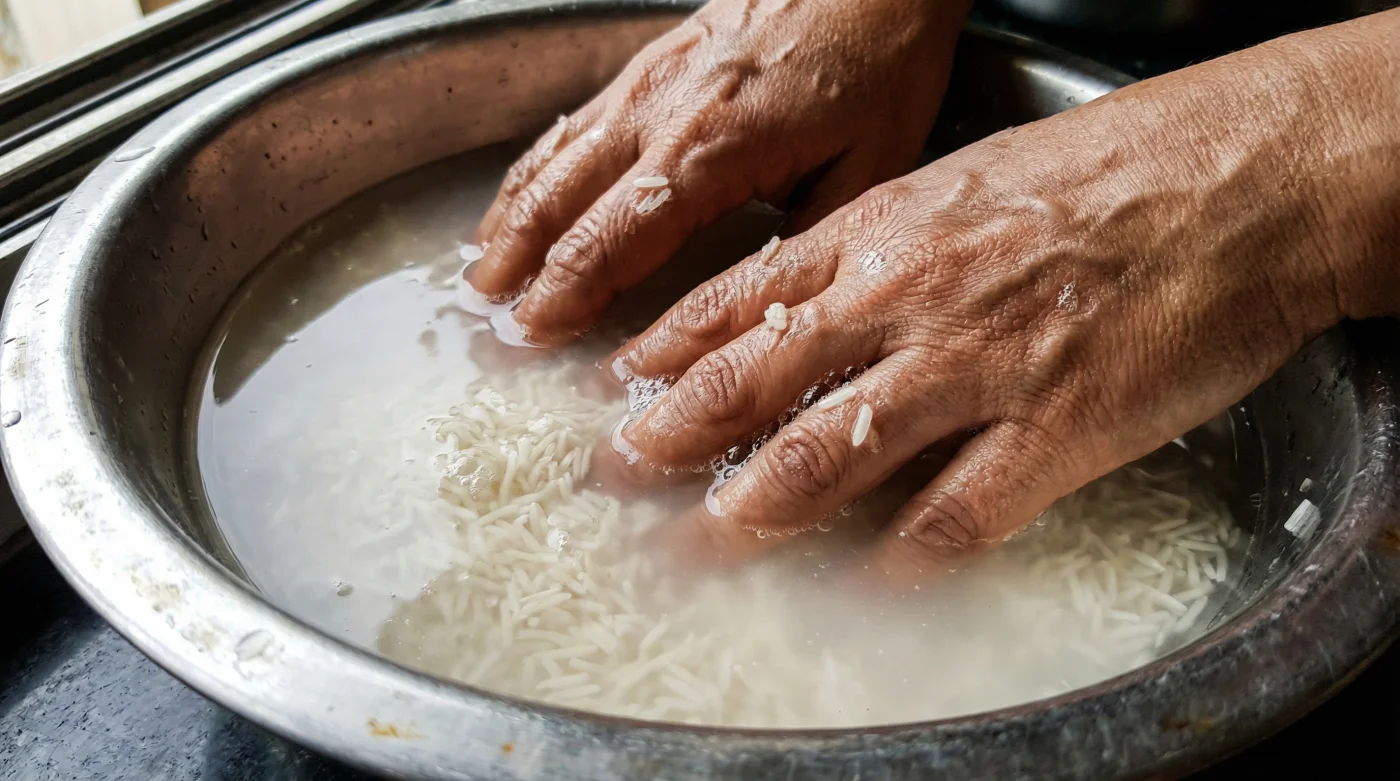
You are standing at the kitchen counter, the hum of the extractor fan overhead. You lift the lid of the pan, hoping for that fragrant, cloud-like mound of Basmati. Instead, the wooden spoon meets stubborn resistance. You drag it through a dense, clumpy mass that clings together like damp sand. It smells vaguely metallic, feels heavy, and completely ruins the delicate chicken tikka masala you have just spent forty minutes simmering. We have all been there, staring at a starchy disappointment that could have been avoided with three extra minutes at the sink.
The Gravity of the Grain
Think of a dry grain of Basmati not as a finished ingredient, but as a dusty pebble. During milling and transport across continents, these fragile grains rub against one another in massive sacks, shedding microscopic clouds of starch. When you tip them straight from the packet into a boiling pan, that fine dust instantly hydrates. It does not cook; it gelatinises. The water turns into a cloudy paste, gripping the grains and pulling them into a tight, gluey embrace. The gravity of the grain demands a wash, a reset before the heat is applied.
I learned this the hard way in a cramped, steamy kitchen behind a bustling curry house in Birmingham. The head chef, Tariq, watched me tip a kilo of dry, dusty Basmati straight into a heavy-bottomed pot. He did not shout; he just reached over, turned off the hob, and handed me a large metal sieve. “You are making wallpaper paste, not dinner,” he muttered, turning the cold tap on full blast. He showed me how to massage the rice gently under the running water. “Watch the water,” he instructed. “When it runs clear, the rice is ready to breathe.” It was a masterclass in respecting the raw material.
| The Cook | The Payoff of Cold Rinsing |
|---|---|
| The Mid-Week Batch Cooker | Rice stays perfectly separated in containers for days, avoiding the solid brick effect in the fridge. |
| The Fakeaway Enthusiast | Achieves that authentic, light restaurant texture that absorbs curries rather than turning to mush. |
| The Frugal Shopper | Elevates cheaper supermarket own-brand Basmati to taste closer to premium, aged varieties. |
| Starch Phase | The Chemistry at Play | Result in the Pan |
|---|---|---|
| Dry Surface Amylopectin | Highly soluble branched starch dust coating the grain from milling friction. | Causes immediate thickening of boiling water. |
| Gelatinisation (Unrinsed) | Starch dust swells at 60-70°C, absorbing free water before the core grain can cook. | Sticky, gluey, heavy texture; unevenly cooked centres. |
| Clear Water (Rinsed) | Surface starch is mechanically removed; heat transfers directly to the intact grain structure. | Elongated, fluffy grains that stand distinct and separate. |
The Cold Water Rhythm
The process of removing that starchy barrier is not complicated, but it requires a bit of patience. Measure your Basmati into a large bowl, never directly into the cooking pot. Turn on your cold tap, letting a gentle stream fill the bowl.
Swirl the grains with your fingers. Do not crush them; merely agitate the water. You will immediately see the liquid turn a milky, opaque white. This is the glue you are trying to avoid eating.
Carefully tip the bowl to drain the cloudy water, using your hand to catch escaping grains, or pour it through a fine-mesh sieve. Repeat this filling and swirling rhythm. Three to four changes of cold water are usually enough to change the situation entirely.
- Mashed potatoes turn into unappetising glue skipping this brief drying phase.
- McCain oven chips face sudden supermarket shortages following disastrous potato harvests.
- Tesco free-range eggs face sudden national purchasing limits following avian flu.
- Beef stock cubes ruin hearty winter stews crumbling them without blooming.
- Basmati rice becomes unpleasantly gluey skipping this vital cold water rinsing.
| Observe | What to Look For (The Ideal) | What to Avoid (The Warning Signs) |
|---|---|---|
| Water Clarity | Transparent, resembling fresh tap water. | Milky, opaque, or heavily frosted appearance. |
| Grain Handling | Gentle swirling with the tips of your fingers. | Squeezing, rubbing aggressively, or crushing the rice. |
| Pre-cook State | Drained thoroughly, grains looking slightly translucent. | Left sitting in a puddle of water, throwing off your cooking ratio. |
Elevating the Everyday
Taking three minutes to rinse your Basmati might feel like an irritating delay when you are hungry and tired after a long commute. But this small, physical ritual changes the entire trajectory of your meal. It is the difference between eating a heavy, cloying lump of carbohydrates and enjoying a light, aromatic base that complements your cooking.
It forces a moment of mindfulness at the kitchen counter. Listening to the cold water run, feeling the hard grains soften slightly beneath your fingers, you are actively preparing your food, rather than just heating it. When you finally lift the lid on the hob and see those perfectly separated, fluffy grains standing on end, that brief moment at the sink feels like the best investment you made all day.
“A grain of rice is delicate; treat it with cold water and respect before the fire, and it will reward you with elegance on the plate.”
Frequently Asked Questions
Do I need to use warm water to dissolve the starch faster?
No, always use cold water. Warm water will prematurely start the gelatinisation process, making the rice sticky before it even hits the hob.Can I just rinse it once quickly in a sieve?
A single rinse leaves the majority of the starchy dust behind. Agitating the grains in a bowl of water is necessary to truly separate the friction dust.Does rinsing wash away the nutrients?
While some fortified surface vitamins may be lost in certain white rices, standard Basmati is rinsed to improve texture; the core nutritional profile remains largely intact.Should I soak the rice after rinsing?
Soaking for twenty minutes after rinsing allows the grains to absorb a little moisture, leading to longer, more elegant grains when cooked, but it is entirely optional.What if I accidentally boil it without rinsing?
If the damage is done, you cannot reverse the gluey texture. Your best salvage operation is to chill it rapidly and use it for egg fried rice the next day, where high heat and oil will help separate the clumps.