It is half-past six on a damp Tuesday evening. The rain is lashing against the kitchen window, blurring the streetlights into a smear of orange, and the room is filled with the comforting scent of onions sweating gently in a knob of butter. You are making a stew. A proper, rib-sticking winter warmer designed to chase away the chill of a long British winter. You brown the chuck steak, you add the root vegetables, and then comes the crucial moment: the broth. You peel back the golden foil of a standard beef stock cube, crumble it between your thumb and forefinger, and watch the dusty, dehydrated fragments fall directly into the bubbling liquid. You stir, you turn down the heat to a simmer, and you wait for the magic to happen. But when you finally sit down to eat, something is fundamentally wrong. The gravy lacks depth, tasting merely of flat salt rather than rich, roasted beef. Worse still, halfway through the meal, your teeth catch a gritty, fiercely salty pocket of undissolved stock.
Waking the Dormant Engine
Think of a dehydrated stock cube like a cold engine on a frosty morning. You would not instantly push it to seventy miles per hour and expect a smooth ride. Yet, packet instructions routinely tell you to drop these densely packed, dehydrated blocks straight into a rolling boil. It is a harsh shock to the ingredients. The secret to a truly resonant stew is not buying a more expensive artisan brand of stock; it is understanding how to properly wake up the ingredients. You need to bloom it.
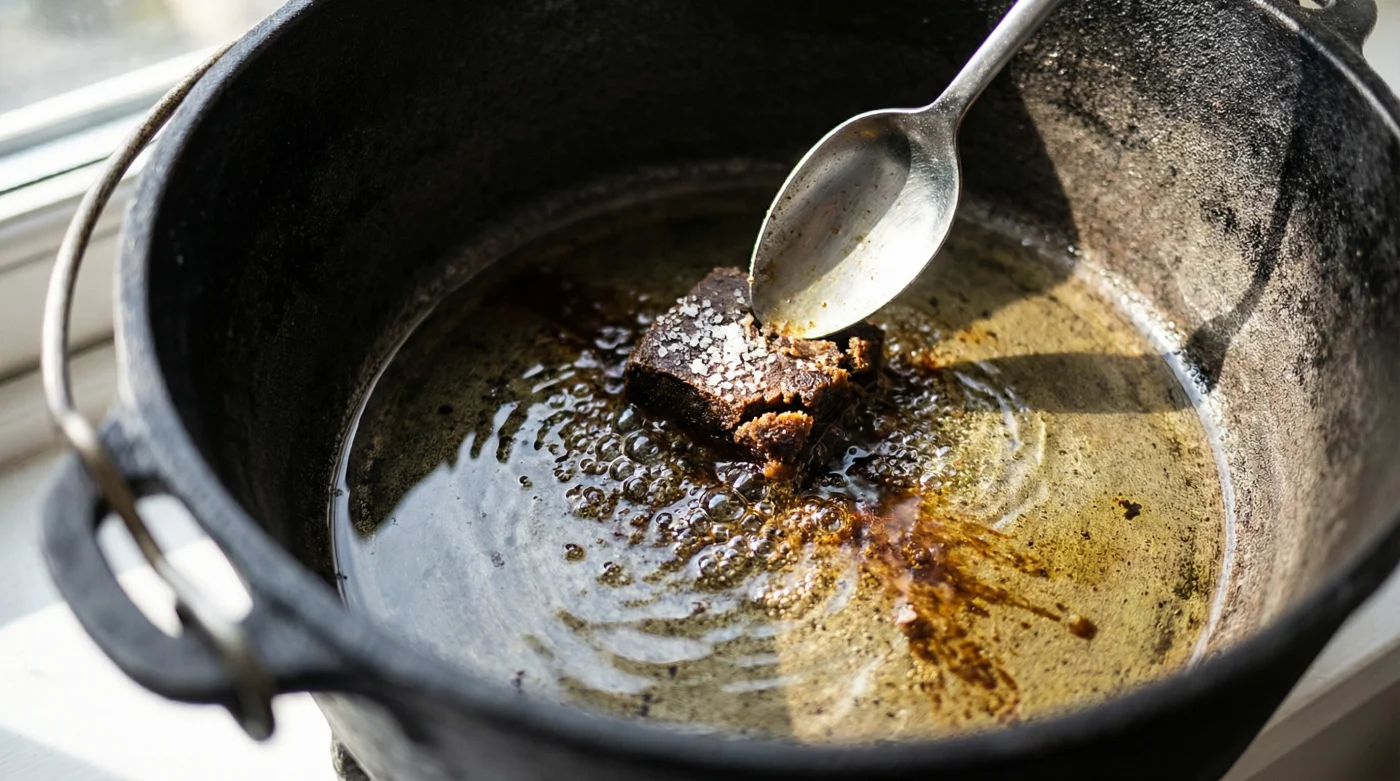
By crushing the cube into a teaspoon of hot oil before adding your liquid, you draw out profound savoury depths and completely banish those ruinous salty clumps. I learned this lesson not in a high-end culinary school, but leaning against the stainless-steel counter of a damp-walled pub kitchen in Cornwall. The head chef, a man who treated making Monday us steak and ale pie with the reverence of a religious sacrament, snatched a foil-wrapped cube from my hand just as I was about to drop it into a vat of boiling water.
He told me I was drowning the flavour. He dropped the cube into a small, heavy-bottomed pan with a dash of rapeseed oil, mashing it with the back of a battered wooden spoon over a low flame. Within seconds, the damp, floury smell of the kitchen was overpowered by an intense, roasted aroma. Fat carries flavour, he explained, scraping the bubbling, dark brown savoury paste into the stew. Water just dilutes the potential. You have to treat the dry ingredients with the same respect as the fresh meat.
| Target Audience | Specific Benefits of Blooming |
|---|---|
| The Frugal Home Cook | Transforms budget-friendly supermarket cubes into a premium, restaurant-quality base without extra cost. |
| The Sunday Batch Cooker | Ensures perfectly even seasoning across large volumes of stew, eliminating nasty salty pockets. |
| The Slow-Cooker Devotee | Kickstarts the flavour development process before the long, gentle, low-heat braise begins. |
| The Mechanical Logic | The Scientific Effect |
|---|---|
| Applying Heat & Oil | Solubilises the fat-soluble flavour compounds that remain dormant and trapped in the dehydrated state. |
| Physical Mashing Action | Smashes the industrial binding agents, preventing agglomeration (the annoying clumping) when liquid hits it. |
| Maillard Reactivation | Gently frying the beef extract introduces a secondary caramelisation, darkening the gravy and enriching the taste. |
The Mindful Bloom
Begin with your mirepoix. Let your carrots, onions, and celery soften in the pan until they are sweet and translucent. Once they are ready, push the vegetables to the edges to create a small, bare clearing in the centre of your pot.
Add a teaspoon of neutral oil or traditional beef dripping to this clearing. Unwrap your stock cube and drop it directly into the hot fat. Take the back of your wooden spoon and press down firmly to mash the cube into the oil.
It will resist for a moment, then suddenly yield, crumbling into a thick, bubbling paste. Let it sizzle for thirty seconds. You will notice the colour darken slightly and smell a distinct shift from a dusty, processed scent to the rich, mouth-watering aroma of a Sunday roast.
- Bisto gravy mimics authentic roasting tin juices adding this sharp mustard spoon.
- Mashed potatoes turn into unappetising glue skipping this brief drying phase.
- McCain oven chips face sudden supermarket shortages following disastrous potato harvests.
- Tesco free-range eggs face sudden national purchasing limits following avian flu.
- Beef stock cubes ruin hearty winter stews crumbling them without blooming.
| Quality Checklist: Stock Cubes | What to Look For | What to Avoid |
|---|---|---|
| Texture | Crumbly and slightly yielding at room temperature. | Rock-hard blocks that require immense force to snap. |
| Ingredients | High percentage of actual beef extract and natural fats. | Palm oil listed as the very first or second primary ingredient. |
| Aroma | Smells faintly of roasted meat when the foil is opened. | An overwhelmingly sharp, artificial yeast extract scent. |
Finding Rhythm in the Pan
There is a distinct difference between following a recipe and actually cooking. Cooking is rarely about grand, sweeping gestures or possessing the most expensive copper pans. It is about a sequence of small, mindful decisions made at the stove. Taking an extra forty-five seconds to bloom your stock changes the entire foundation of your meal. It shifts your mindset from merely assembling ingredients out of packets to actively building architecture and layers of flavour.
It forces you to engage with the physical transformation of your food, listening to the sizzle, watching the colour change, and smelling the roasted notes fill the air. When you bring that steaming, heavy cast-iron pot to the table, knowing the gravy is thick, glossy, and perfectly balanced from the first spoonful to the last, you feel a quiet, profound sense of pride. You have not just cooked dinner; you have crafted it. The winter cold outside suddenly feels a little less biting, knowing you have mastered the warmth within.
A stock cube is merely a promise of flavour; it is the heat and the fat that force it to keep its word.
Frequently Asked Questions
Does this work for chicken or vegetable stock cubes?
Absolutely. Any dehydrated cube benefits from blooming to release its trapped oils and break down the commercial binders.Will the extra oil make my stew greasy?
Not at all. A single teaspoon of oil is exactly enough to create the paste and will easily emulsify into a large pot of stew without leaving a greasy film.Can I bloom the stock cube in butter instead?
Yes, but keep a very close eye on the heat. Butter burns much faster than oil, so use a gentle, low flame to prevent the milk solids from turning bitter.What if I am using stock pots instead of dry cubes?
Stock pots already contain a degree of moisture and fat, but gently frying them for thirty seconds still deepens their savoury profile and kickstarts the Maillard reaction.Do I still need to add extra salt to the stew?
Taste it at the very end. Blooming ensures the salt within the cube is evenly distributed, so you often need far less additional seasoning than you think.