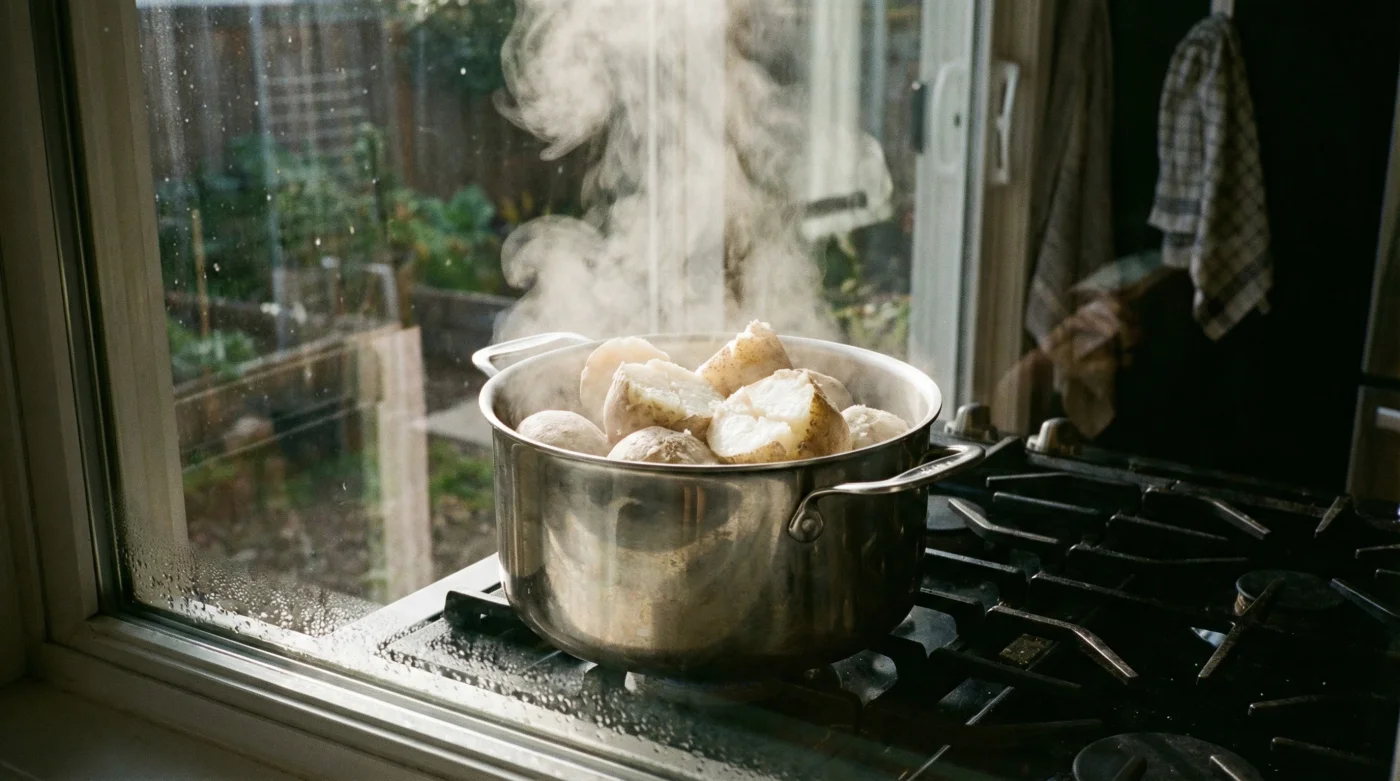
It is a quiet Sunday afternoon. The kitchen windows are fogged with steam, the comforting scent of roasting meat fills the room, and the timer has just pinged. You carry a heavy saucepan of boiled Maris Pipers to the sink. A quick pour, a cloud of hot steam rushes up your face, and the water disappears down the plughole. You immediately reach for the masher, throw in a generous knob of butter, a splash of milk, and press down. But instead of fluffy clouds, you are met with resistance. The mixture turns dense, heavy, and stringy. You have just created wallpaper paste. It is a subtle tragedy that ruins countless meals across the country, all because of a missing two minutes.
The Anatomy of a Floury Spud
You might believe that the moment the water leaves the pan, the potatoes are ready to mash. This is the great myth of the British Sunday roast. Think of a boiled potato not as a solid root, but as a heated sponge. Even when the pan is technically empty of water, that starchy sponge is still holding its breath, completely saturated with boiling liquid. When you crush a wet sponge, the structure collapses into itself. Mashing damp potatoes forces the water to bind aggressively with the released starch molecules, creating a heavy, glue-like bind. The secret is simply teaching the potato to exhale.
| Home Cook Profile | The Frustration | The Two-Minute Benefit |
|---|---|---|
| The Sunday Roast Host | Mash that sits heavily on the plate and refuses to soak up gravy. | Creates a light, airy structure that absorbs flavour rather than resisting it. |
| The Midweek Batch Cook | Leftover mash that sets into a solid, unappetising block in the fridge. | Evaporated starch holds its fluffy texture for days without turning rubbery. |
| The Comfort Food Seeker | Adding endless butter trying to fix a dense, claggy mouthfeel. | Requires far less dairy to achieve a rich, luxurious consistency. |
I learned this not from a glossy cookbook, but from a weary head chef in a cramped Yorkshire pub. He was a man who moved pans with an effortless, rhythmic grace. Watching me enthusiastically destroy a batch of King Edwards one morning, he nudged me aside. ‘You are drowning them,’ he muttered. He took the next batch, drained them, and immediately threw the pan back onto the cooling hob. He let them sit there, occasionally giving the pan a sharp shake. ‘Let them dry. Let them chalk,’ he instructed. It felt like watching a carpenter cure damp wood in a kiln before daring to carve it.
| The Variable | Wet Mashing (The Mistake) | Dry Mashing (The Science) |
|---|---|---|
| Cellular Integrity | Waterlogged cells rupture violently when crushed. | Dry cells separate cleanly, creating individual flakes. |
| Starch Reaction | Excess water acts as an adhesive, binding starch into a gel. | Minimal water allows starch to coat the potato flakes lightly. |
| Dairy Absorption | Water repels the fat in butter and milk, causing pooling. | Dry potato acts as a vacuum, pulling dairy fats directly into the structure. |
The Two-Minute Kiln
Fixing this requires no new equipment, only a brief exercise in patience. When your potatoes are tender enough to yield to a knife without resistance, drain them thoroughly in your colander. Now, instead of reaching for the masher, tip the hot potatoes straight back into the empty saucepan. Place that saucepan back onto the hob. If you are using a gas ring, turn it down to the lowest possible whisper of a flame; for electric or induction, the residual heat of the turned-off ring is perfect.
Leave the pan uncovered. For two entire minutes, just watch and listen. You will hear a faint hiss. That is the sound of the trapped, microscopic water evaporating from the hot metal. Give the pan a gentle shake every thirty seconds to prevent sticking.
| Sensory Cue | What to Look For (Ready) | What to Avoid (Not Ready) |
|---|---|---|
| Visual Appearance | The edges of the potatoes turn slightly dusty and chalky white. | A glossy, wet sheen clinging to the curved surfaces. |
| The Sound | A quiet, dry rustle as they move against the metal pan. | A wet sizzle or sputtering sound of boiling liquid. |
| The Aroma | A warm, baked, distinctly earthy potato smell. | The flat, metallic scent of boiling water and steam. |
Once you see those floury, chalky edges form, remove the pan from the heat. Now, and only now, you may begin to mash. Because the potatoes are dry, they will crumble under the tool effortlessly. When you add your warmed milk and butter, the dry potato will drink it in, swapping out the heavy water it lost for rich, flavourful fats.
Restoring the Sunday Rhythm
- Risotto rice achieves ultimate restaurant creaminess skipping this relentless pan stirring.
- Hard-boiled eggs refuse to peel cleanly ignoring this aggressive shell cracking.
- Bisto gravy mimics authentic roasting tin juices adding this sharp mustard spoon.
- Mashed potatoes turn into unappetising glue skipping this brief drying phase.
- McCain oven chips face sudden supermarket shortages following disastrous potato harvests.
This tiny shift in your routine pays dividends at the dinner table. It elevates a humble, overlooked side dish into something genuinely remarkable. The next time you stand by the sink with a steaming colander, give yourself permission to pause. Let the pan do the work. Those two minutes of stillness are the difference between a dense, unappetising chore on a plate, and a light, buttery perfection that you will be proud to serve.
A truly great mash relies entirely on the discipline of knowing when to wait, treating the potato with the same respect you give a resting joint of beef.
Common Curiosities Answered
Does this work for waxy potatoes too? Waxy potatoes have less starch and more water by nature; drying them helps slightly, but they will never achieve the fluffiness of a Maris Piper or King Edward.
Will the potatoes burn to the bottom of the pan? Not if the heat is kept to an absolute minimum and you shake the pan periodically to keep them moving.
Can I dry them in the colander instead? The ambient air cools them too quickly; the direct, gentle heat of the saucepan is required to drive the moisture out effectively.
Should I heat my milk and butter first? Absolutely, adding fridge-cold dairy shocks the hot starch and undoes all your careful drying work, leading to a heavy texture.
What if I am using a potato ricer instead of a masher? The drying phase is even more crucial for a ricer, as passing wet potato through the small holes instantly turns the starch to glue.