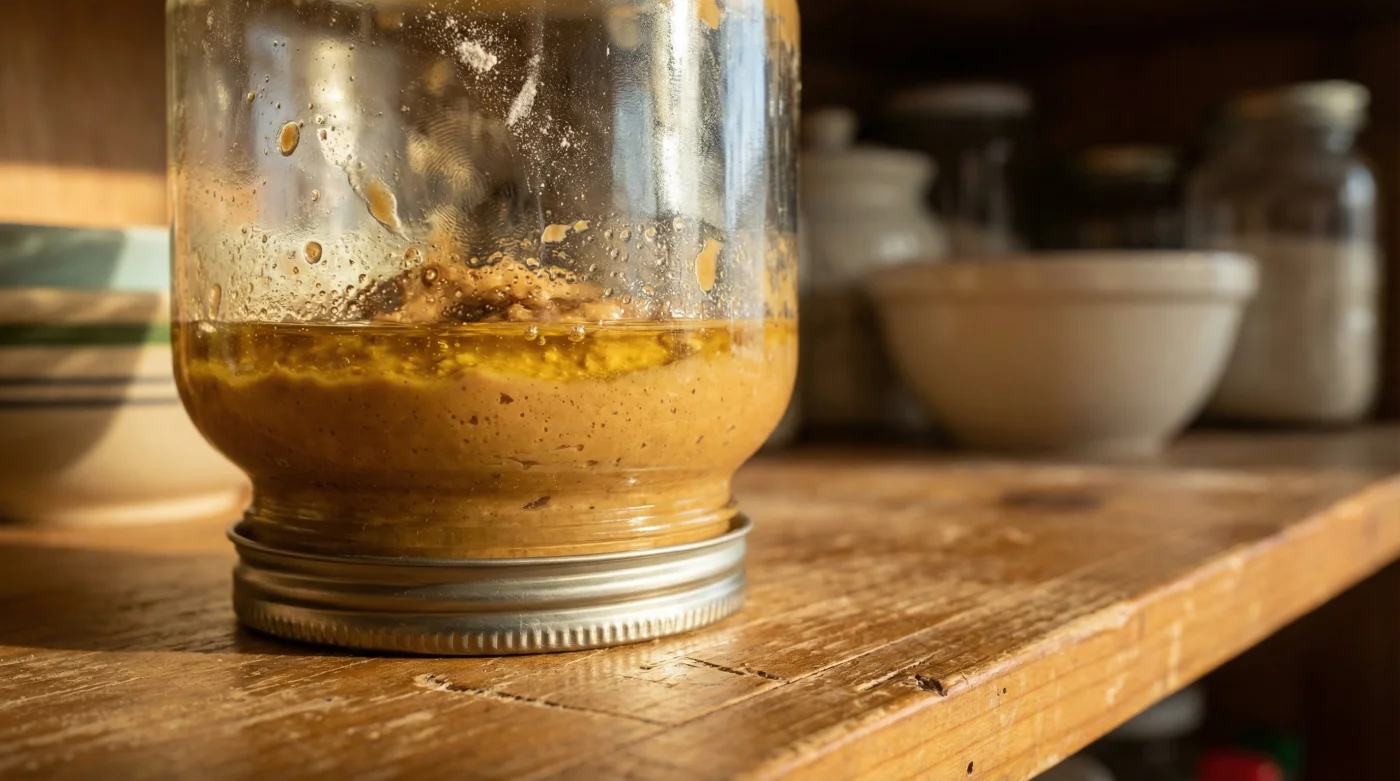
You are standing in the dimly lit kitchen on a crisp Tuesday morning. The kettle is grumbling its familiar tune, and you fancy a thick slice of toasted sourdough, generously smothered in that premium jar of 100% natural peanut butter. But as you twist the lid off, your heart sinks. A translucent, golden puddle of oil stares back at you, concealing a stubborn, unyielding block of dry peanut paste beneath. You grab a knife, attempting a frantic, desperate stir. The oil inevitably sloshes over the glass rim, pooling onto the clean worktop, leaving you with a greasy mess and an unevenly textured spread.
The Gravity of the Grind
This daily frustration stems from a fundamental misunderstanding of the ingredient itself. We treat natural peanut butter as if it were the highly processed, stabilised spreads of our childhoods. Those commercial jars rely on hardened palm oils to bind the fats and solids together, forcing them into a permanent, unnatural suspension. Natural peanut butter, however, is a living, breathing pantry staple. It contains simply roasted peanuts and perhaps a pinch of Cornish sea salt. Without artificial binders, the natural peanut oils eventually detach and float to the surface.
Our instinct is to fight this separation with brute force, violently hacking at the solid mass with a butter knife before every use. But this approach is flawed. Instead of fighting the ingredients, we must allow the earth to do the heavy lifting. Think of the jar as an hourglass. By simply storing the jar completely upside-down in your cupboard, you force gravity to push that separated oil back through the dense, dry peanut mass. The oil slowly permeates the solid block like rain sinking into parched soil.
I first learned this from Elias, an artisan baker running a small, flour-dusted operation down in St Ives. He relies heavily on natural nut butters for his famous morning buns. One afternoon, after watching me furiously stab at a fresh jar, he gently took the glass from my hands. ‘You are arguing with the peanuts,’ he laughed, wiping the spilled oil from the counter. He walked me over to his dry store. There, sitting on the wooden shelves, were dozens of jars, all resting peacefully on their lids.
Elias explained that letting the jar rest inverted for twenty-four hours before opening entirely changes the structure. The oil travels upwards against the bottom of the jar, naturally rehydrating the dry base. It is a quiet, effortless method that requires zero physical exertion, yet yields a perfectly smooth, homogeneous spread. Not only does this save your morning sanity, but it ensures you consume a balanced ratio of heart-healthy monounsaturated fats and muscle-repairing proteins in every single bite, rather than suffering through a greasy top layer and a chalky, nutrient-dense bottom.
| Pantry Profile | The Upside-Down Advantage |
|---|---|
| The Fitness Enthusiast | Ensures an even distribution of protein and healthy fats in every scoop for accurate meal tracking. |
| The Rushed Parent | Eliminates morning worktop spills and greasy hands when preparing school lunches. |
| The Home Baker | Provides a consistent moisture level for biscuit doughs, preventing dry, crumbly bakes. |
The Inverted Pantry Rest
Implementing this shift in your kitchen is wonderfully straightforward, though it requires a brief moment of mindfulness. When you bring a fresh jar home from the supermarket, resist the urge to immediately place it right-side up on your shelf. First, check that the lid is screwed on entirely tight. This is vital. You do not want a slow oil leak ruining your shelf. Once secured, flip the jar firmly onto its lid and push it to the back of a cool, dark cupboard.
Leave it undisturbed for at least a day. If the jar has been sitting upright on a shop shelf for weeks, the solids will be incredibly dense. You are giving the oil time to migrate. When you are finally ready to use it, turn the jar the right way up, gently twist off the lid, and behold the magic. You will find a soft, creamy surface that requires nothing more than a gentle fold with a spoon. No splashing, no swearing, just a beautifully unified spread ready for your toast.
- Cadbury Dairy Milk undergoes massive recipe alteration angering traditional British chocolate purists.
- Iceberg lettuce stays perfectly crunchy for weeks absorbing moisture with paper-towels.
- Chestnut mushrooms transform into unappetising sponges absorbing standard cold tap water.
- Heinz baked beans develop intense smoky depths stirring in this paprika dash.
- Natural peanut butter prevents oily surface separation storing jars completely upside-down.
| Storage Action | Mechanical Logic & Result |
|---|---|
| Standard Upright Storage | Gravity pulls heavier peanut solids down; lighter oils pool at the surface, creating a dry base. |
| Inverted Cupboard Storage | Trapped oils are forced upward through the compacted solids, naturally rehydrating the spread. |
| Post-Mix Fridge Storage | Cold temperatures firm up the integrated oils, halting future separation entirely. |
Selecting the Right Spread
This technique, of course, relies entirely on the quality of the peanut butter you purchase. If you apply this to a highly processed spread, nothing will happen, as the fats are chemically bound. You are looking for a product that behaves like a natural ingredient. Reading the label is your best defence against hidden additives.
A true natural peanut butter should list only one or two ingredients: roasted peanuts, and perhaps sea salt. If you spot words like ’emulsifier’, ‘palm oil’, or ‘hydrogenated vegetable fat’, leave the jar on the shelf. These additions are designed solely for supermarket shelf-life convenience, stripping away the nuanced, earthy flavour profile of the raw nut. Embrace the separation as a sign of purity.
| What to Look For | What to Avoid |
|---|---|
| Ingredients listing strictly 100% peanuts (or peanuts and salt). | Any mention of palm oil, vegetable oils, or added refined sugars. |
| A visible layer of oil resting at the top of a brand-new, upright jar. | A perfectly matte, stiff surface in a jar claiming to be ‘all natural’. |
| Glass packaging, which prevents flavour contamination from oils over time. | Flimsy plastic tubs that may degrade when exposed to natural nut oils. |
A Morning Rhythm Restored
Changing how you store a jar of peanut butter might seem like a trivial domestic detail, but it speaks to a broader philosophy of cooking. It is about understanding the nature of our ingredients and working in harmony with them, rather than trying to bend them to our immediate will. When we stop frantically fighting the oil, we buy back a tiny sliver of morning peace.
There is a profound satisfaction in unscrewing that lid to find a flawlessly creamy spread, knowing it was achieved through nothing but time and gravity. You no longer have to scrub greasy oil patches off the worktop before rushing out the door. You simply spread, eat, and savour the rich, roasted warmth of a breakfast staple operating exactly as nature intended.
Treating natural ingredients with patience, rather than force, transforms a frustrating chore into a moment of effortless kitchen alchemy.
Frequently Asked Questions
Is it safe to store peanut butter upside down?
Absolutely. As long as the lid is screwed on tightly and the jar is intact, storing it upside down in a cupboard is perfectly safe and highly beneficial for the texture.How long does the oil take to mix back in?
For a moderately separated jar, twenty-four hours inverted at room temperature is usually sufficient. Extremely dry, older jars may require a few days of resting.Do I still need to stir it at all?
You may need to give it one very gentle, brief fold with a spoon upon opening, but the aggressive, messy stirring will be entirely a thing of the past.Should I store my peanut butter in the fridge?
It is not strictly necessary for preservation, but storing it in the fridge after it has naturally mixed will firm up the oils and prevent any future separation.Does this trick work for almond or cashew butter?
Yes. This gravity method works beautifully for any 100% natural nut or seed butter that experiences natural oil separation.