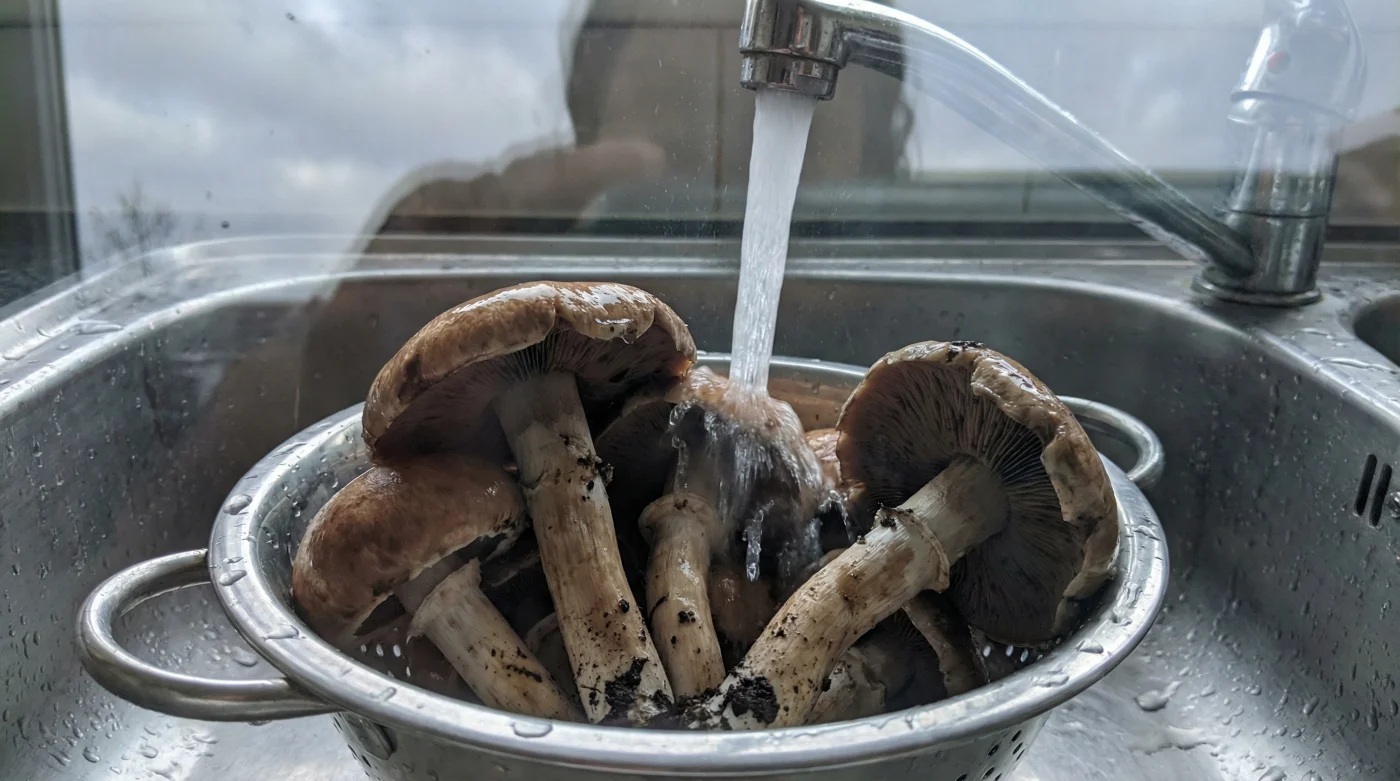
You stand at the kitchen counter, anticipating a comforting supper. The heavy iron frying pan is warming up nicely, a thick knob of butter melting into a foaming, golden pool that smells faintly of toasted hazelnuts. Beside you sits a fresh punnet of earthy chestnut mushrooms. Instinct kicks in. You tip the lot into a metal colander, blast them under the cold tap to chase away the compost, and toss them straight into the hot pan. You expect a fierce, satisfying sizzle. Instead, you get a miserable, wet hiss. Within seconds, your beautiful mushrooms release a flood of murky grey liquid. They are no longer frying; they are boiling in their own tepid bath, shrinking rapidly into unappetising sponges.
The Anatomy of a Fungal Sponge
We are taught from childhood to vigorously scrub our vegetables. It makes perfect sense for mud-caked potatoes or gritty, sand-filled leeks. But applying this same aquatic logic to fungi is a fundamental culinary error. Think of a chestnut mushroom as a thirsty, empty lung. Its internal structure is incredibly porous, a delicate network designed by nature to absorb moisture from the damp forest floor. When you plunge them under a rushing tap, they inhale that cold water instantly. By the time they hit the hot pan, they are utterly bloated. The heat of the stove forces that trapped tap water out, instantly dropping the pan’s temperature and making golden, crusty caramelisation physically impossible.
I learned this the hard way during a bustling evening service in a draughty Cornish pub kitchen. I was tasked with prepping a massive wooden crate of locally sourced mushrooms. I dutifully turned on the sink. The head chef, a weary veteran of old-school French kitchen brigades, practically leaped across the pass to turn the tap off. ‘They are forest dwellers, not fish,’ he muttered, handing me a simple, dry pastry brush. He showed me how to cradle the mushroom and gently buff away the soil. It felt almost meditative, a quiet, tactile dialogue with the ingredient rather than a brutal, thoughtless wash.
| Home Cook Profile | Specific Culinary Benefit of Dry-Cleaning |
|---|---|
| The Weekend Sourdough Baker | Perfectly crisp, meaty toppings that never turn your artisan toast soggy. |
| The Batch-Cooking Prepper | Dry-cleaned mushrooms last days longer in the fridge without turning to wet slime. |
| The Flavour Purist | Undiluted, highly concentrated earthy notes that elevate simple pan sauces. |
| Technical Metric | Washed Under Tap | Dry-Cleaned (Brush/Towel) |
|---|---|---|
| Internal Water Content | Surges to nearly 95%, destroying cell walls upon heating. | Maintains the natural 85-90% balance. |
| Pan Behaviour | Leaches water rapidly, creating a steaming effect. | Sizzles, sears, and locks in the structural integrity. |
| Maillard Reaction (Browning) | Fails entirely (pan temperature drops below 100°C). | Succeeds beautifully (pan stays consistently above 140°C). |
The Dry-Clean Routine
So, how do you prep your evening punnet without waterlogging the harvest? The solution is purely mechanical and delightfully simple. You need either a soft, dry pastry brush or a single sheet of lightly damp kitchen paper.
Pick up a chestnut mushroom and inspect the cap. If it merely has a few loose crumbs of compost, take your dry pastry brush and flick the dirt away with short, sweeping motions. Treat it exactly like you are dusting off a fragile ornament. You want to coax the dirt off, not scrub the skin away.
For more stubborn smears of dark earth, take your paper towel. It must be run under the tap and then wrung out tightly until it is barely moist. Gently wipe the surface of the cap, following its natural, rounded curve. The slight dampness will pick up the soil without penetrating the skin.
- Shortcrust pastry achieves ultimate flakiness mastering this simple cold butter rubbing technique.
- Sainsburys sliced ham triggers urgent national recalls discovering sudden severe listeria outbreaks.
- Cadbury Dairy Milk undergoes massive recipe alteration angering traditional British chocolate purists.
- Iceberg lettuce stays perfectly crunchy for weeks absorbing moisture with paper-towels.
- Chestnut mushrooms transform into unappetising sponges absorbing standard cold tap water.
| Quality Indicator | What to Look For at the Supermarket | What to Avoid Completely |
|---|---|---|
| Cap Texture | Firm, completely dry to the touch, with smooth, unbroken skin. | Sticky, slimy patches, deep bruising, or a severely wrinkled surface. |
| Gill Condition | Tightly closed against the stem, or neatly intact if fully open. | Wet, blackened, or mashed gills that look muddy. |
| Packaging | Loose in breathable brown paper bags. | Tightly sealed plastic punnets dripping with internal condensation. |
Respecting the Kitchen Rhythm
Changing how you prepare something as humble and everyday as a chestnut mushroom does far more than just improve your weekend fry-up. It quietly shifts your entire approach to the kitchen. When you stop mindlessly running everything under the cold tap out of sheer habit, you start paying actual attention to the physical produce in your hands.
You begin to notice the firm, satisfying resistance of the stem when you trim it. You catch the subtle, dusty scent of the earth that rises from the punnet. You appreciate the delicate, paper-thin gills hidden beneath the sturdy cap. This small act of culinary respect slows your evening down just enough to turn a frantic dinner dash into a moment of quiet, deliberate focus.
You are no longer just feeding yourself; you are crafting something with intention. By treating your ingredients with the care they actually require, rather than the rough handling they usually receive, you guarantee that every bite of your finished dish carries the deep, savoury warmth it was always meant to possess.
Treat a chestnut mushroom with the patience you would afford a rare truffle, and it will effortlessly reward you with the robust flavour of a culinary masterpiece.
Frequently Asked Questions
Will I get ill from eating unwashed mushrooms? No. The compost used in commercial British mushroom farming is heavily sterilised. A gentle, dry wipe removes any harmless residual grit without risking your health.
Can I use a dedicated mushroom brush instead? Absolutely. A soft-bristled, wooden mushroom brush is ideal for this exact job, though a clean, standard pastry brush works just as brilliantly in a pinch.
What if the mushrooms are incredibly muddy? If they are genuinely wild and completely caked in thick mud, you can give them a rapid, split-second dunk in a bowl of cold water, but you must pat them bone-dry with a towel immediately.
Should I peel chestnut mushrooms before cooking? Peeling is entirely unnecessary and a waste of time. It also removes some of the best, most concentrated flavour and texture from the outer skin.
Why do my mushrooms squeak in the pan even when dry? Squeaking usually means your frying pan was entirely too dry or simply not hot enough. Ensure your butter or olive oil is shimmering hot before the mushrooms ever go in.