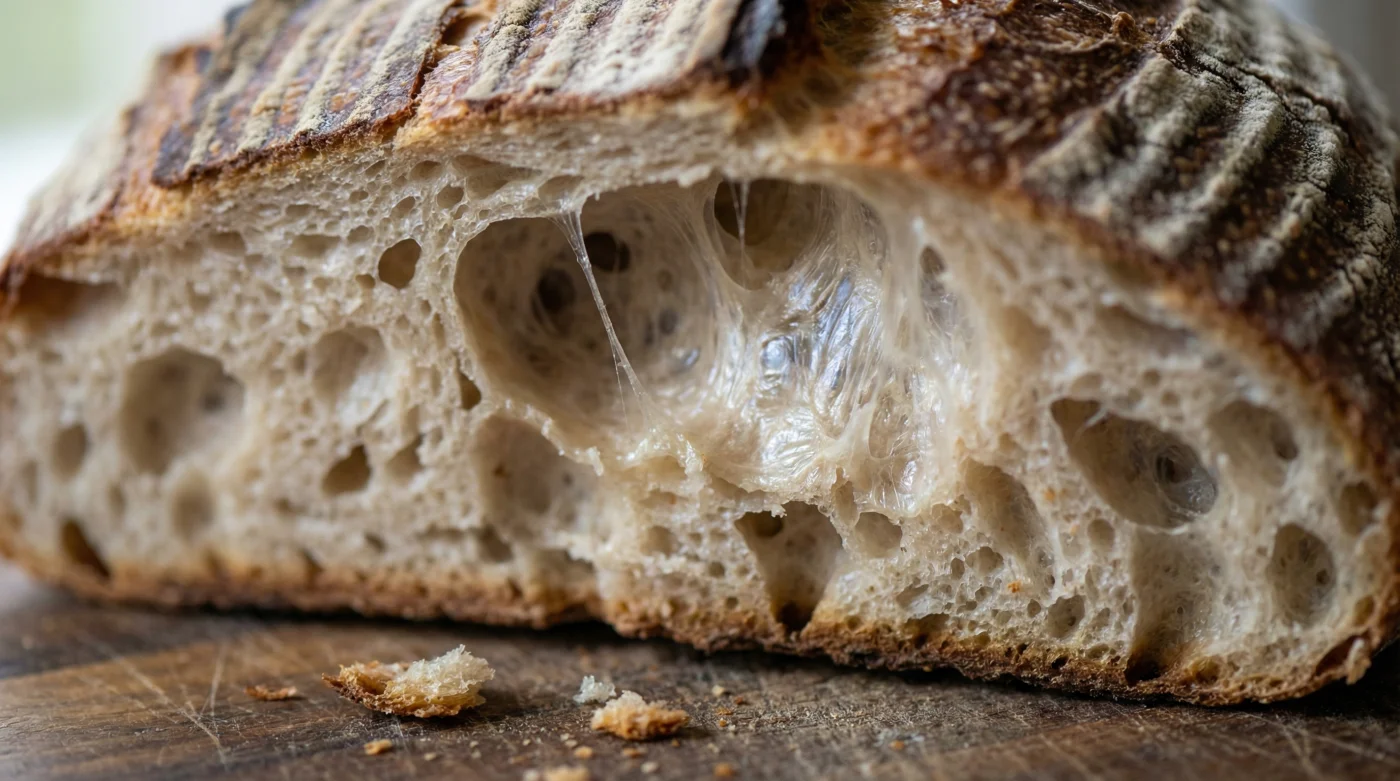
You pull the cast-iron pot from the oven, anticipating the crackle of crust and a proud, blistered ear. The smell of roasted grain and sour fermentation fills your kitchen, yet as the blade slices through, your heart sinks. Instead of a cavernous, glossy crumb, you find a dense, gummy puck.
You followed the hydration ratios perfectly. You timed the bulk fermentation down to the minute, watching the dough tremble slightly in its bowl. So why did the structure collapse in the scorching heat?
The truth lies hiding in your cupboard, wrapped in a generic paper bag. Standard supermarket plain flour, that dependable staple for Victoria sponges and shortcrust pastry, is actively working against your artisan ambitions.
Understanding this failure isn’t about blaming your technique; it’s about recognising that flour is not merely an ingredient. It is a highly sensitive foundation, and right now, you are building a delicate structural network using cheap plaster instead of reinforced steel.
The Microscopic Scaffolding of Dough
When you mix water with flour, you are doing far more than making a paste. You are triggering a chemical bond between two proteins: glutenin and gliadin. Together, they form gluten, a microscopic net designed to catch carbon dioxide.
Think of your dough as a collection of thousands of tiny balloons. High protein bread flour provides the elastic rubber needed to stretch without bursting as yeast produces gas. Standard plain flour, sitting at around nine percent protein, simply lacks vital structural integrity. The balloons burst, the gas escapes, and your loaf flatlines.
This is why switching from a recipe-following mindset to a structural engineering perspective changes everything. You aren’t just baking; you are managing a living matrix that relies entirely on the quality of its foundation.
Take Julian Roberts, a 48-year-old sourdough specialist working out of a notoriously damp converted barn in Cornwall. He spent his early twenties fighting flat loaves, convinced the coastal humidity was to blame. It was only after switching to a locally milled, 13.5% protein flour that his dough transformed from sticky sludge, creating a robust, muscular entity. Julian treats his flour like raw material for architecture, noting that the tension required to hold a heavily hydrated, open crumb simply cannot exist without those tightly woven microscopic protein strands.
Matching Your Grain to Your Ambition
Not all strong flours behave the same way under tension. Depending on what you want from your morning slice, the milling process you select dictates the rhythm of your kitchen.
- Quick Physical Modification Hacks To Improve Your Standard Wooden Rolling Pin
- Feature-Set Comparison: Choosing The Ultimate Stand Mixer For Heavy Bread Doughs
- The Most Common Yorkshire Pudding Mistakes And How To Avoid Flat, Gummy Disasters
- An Expert Analysis Of Why Standard Supermarket Plain Flour Ruins Artisan Loaves
- The Surprising Historical Origins Behind Britain’s Most Iconic Afternoon Tea Cake
For the rustic traditionalist who prefers a darker, deeply flavoured country loaf, blending a strong white flour with twenty percent stoneground wholemeal introduces naturally occurring enzymes. The white flour provides the necessary scaffolding, while the darker grains supply complex sugars for the wild yeast to feast upon, resulting in a beautifully dark, caramelised crust.
The Tactical Toolkit for Superior Structure
Working with high protein bread flour requires a slight adjustment in how you handle the dough. Stronger gluten reacts by absorbing significantly more water, meaning your old hydration levels will suddenly feel stiff and unresponsive.
You must learn to read the dough rather than simply watching the clock. The following mindful adjustments will help you maximise the potential of a proper artisan flour:
- The Autolyse: Mix only the flour and water, leaving it for forty-five minutes before adding salt or starter. This allows the protein strands to hydrate and align naturally without the tightening effect of salt.
- Push the Hydration: Increase your water content by five to ten percent. Stronger flours thirst for more moisture, and this extra water creates the steam necessary for an explosive oven spring.
- Gentle Tension: Replace aggressive kneading with a series of gentle stretches and folds during the first two hours. You are coaxing the network, not punishing it.
- The Windowpane Test: Gently stretch a piece of dough until it is thin enough to let light through. If it holds without tearing, your microscopic scaffolding is ready.
Finding Peace in the Process
There is a profound quiet that settles over the kitchen when you stop fighting your ingredients. Shifting to a flour that actually supports your efforts acts as a remedy, stopping the quiet baking anxiety of the final bake.
You are no longer crossing your fingers when you remove the lid of your baking pot. You know the structure holds, because you provided the right microscopic foundation from the very first mix.
Mastering this single detail transforms a frustrating morning chore into a reliable, deeply satisfying craft. The bread you pull from the oven becomes a physical reflection of understanding, patience, and actively refusing to compromise on materials.
A loaf is only as proud as the protein network holding it together; everything else is just trapped air.
| Key Point | Detail | Added Value for the Reader |
|---|---|---|
| Plain Flour | 9-10% Protein content, weak gluten bonds. | Helps you identify exactly why past homemade loaves collapsed in the oven. |
| High Protein Flour | 13-15% Protein, creates strong microscopic scaffolding. | Ensures large, glossy holes, chewy texture, and high, proud oven spring. |
| The Autolyse Phase | Resting only flour and water together before adding salt. | Saves tedious kneading time and naturally develops strong dough elasticity. |
Frequently Asked Questions
Can I just add vital wheat gluten to cheap plain flour? While it boosts overall protein percentages, it rarely hydrates as smoothly as naturally strong bread flour, often resulting in an uneven, rubbery crumb rather than a delicate artisan structure.
Why is my high protein dough suddenly so stiff? Stronger microscopic gluten structures require considerably more moisture to become extensible. You will likely need to increase your recipe’s hydration by five to ten percent.
Does standard supermarket strong flour work just as well? Supermarket strong flours are certainly better than plain, but they often lack the active enzymatic activity and batch consistency of a stoneground flour sourced from an independent UK mill.
How long should I autolyse a very strong flour? Forty-five to sixty minutes is usually sufficient to allow the robust protein strands to fully hydrate, relax, and align before you begin folding the dough.
Will high protein flour make my bread taste sourer? The protein itself adds structural scaffolding rather than flavour, but the longer, colder fermentation periods it confidently tolerates allow your wild yeast to develop much deeper, complex sour notes.