Picture a damp November Tuesday, the kind where the chill seeps under the back door. The oven is ticking, releasing the unmistakable scent of hot butter and toasted sugar into the kitchen. You wait for the timer, anticipating that perfect companion to your three o’clock tea.
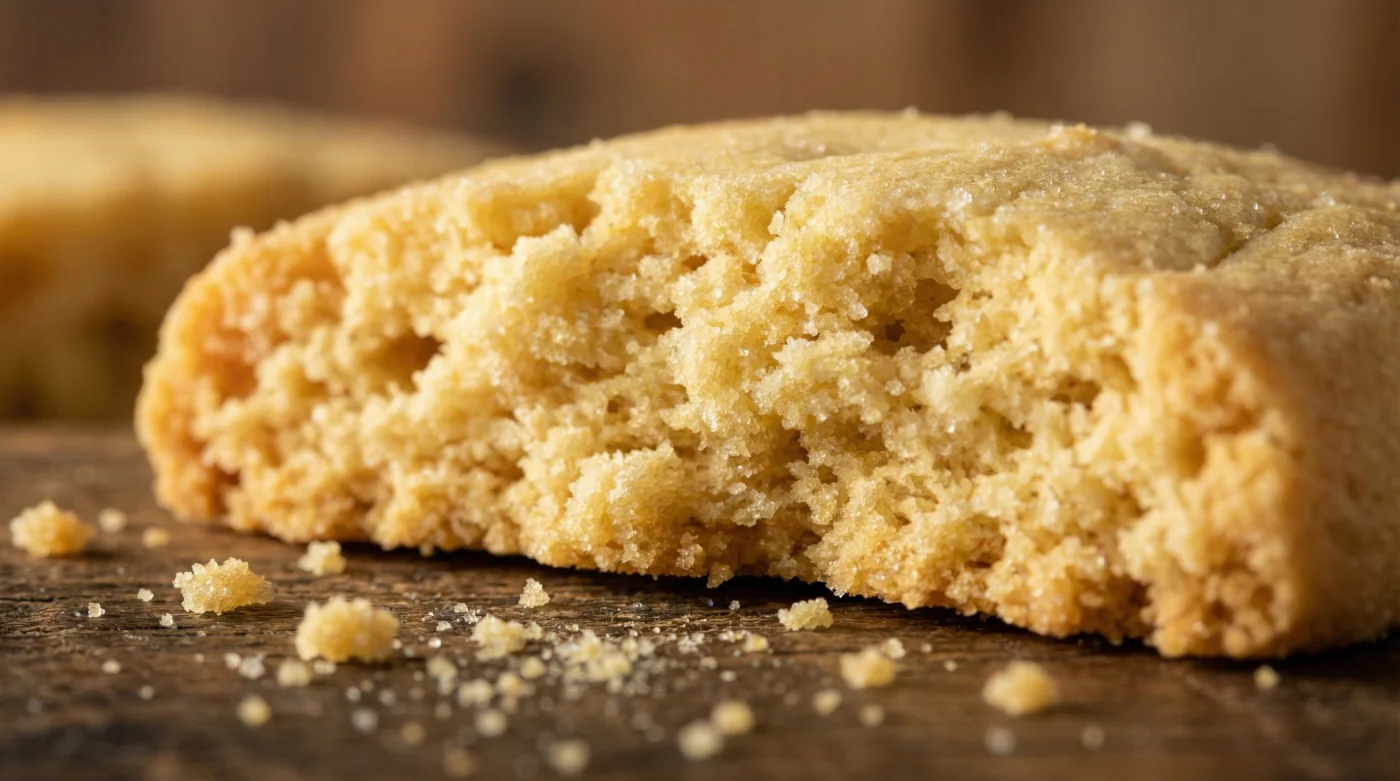
Yet, when you finally break one in half, the experience falls flat. Instead of a clean, sharp snap, the biscuit bends slightly, yielding a dense, chalky paste that coats the roof of your mouth. Standard modern supermarket offerings have conditioned us to expect this cloying, heavy consistency.
A proper bakery shortbread behaves entirely differently. It should hold its shape proudly but shatter the moment it meets your teeth, crumbling into a coarse, melting sweetness. It should never feel like eating sweetened putty.
The remedy isn’t a premium imported butter, nor is it a complex chilling schedule. The true Victorian secret lies in a yellow grain sitting forgotten at the back of your cupboard, usually reserved for retro milk puddings.
The Architecture of the Sand
Think of your biscuit dough not as a paste, but as a dry-stone wall. When you rely solely on finely milled plain flour, you are building with soft mud. The resulting structure is dense, lacking the microscopic fault lines required for a clean break.
By replacing just a quarter of your flour with semolina, you introduce structural grit. This coarse durum wheat interrupts the gluten networks, forcing the butter and sugar to crystallise around tiny, hard pebbles of grain.
Modern adaptations often suggest cornflour to achieve a melting texture. While cornflour tenderises, it turns the crumb powdery and dry. Semolina delivers the authentic sablé—the French word for sandy—that makes a traditional biscuit highly addictive.
- Bread dough achieves maximum fluffiness bypassing this exhausting traditional kneading process.
- Vanilla extract evaporates entirely when added to hot bubbling caramel sauces.
- Baking powder loses all lifting power undergoing this premature wet mixing.
- Brown butter transforms standard chocolate chip cookies requiring this constant swirling.
- Piping bags dispense thick buttercream flawlessly adopting this hot towel wrap.
Tuning the Crumb to Your Palate
The beauty of this method lies in its adaptability. For the purist seeking the traditional Scottish petticoat tail, a standard fine semolina provides the perfect balance of snap and melt, holding the intricate fluted edges of the mould perfectly during baking.
For those who prefer a robust biscuit, a thicker finger designed to withstand a boiling mug of strong Earl Grey requires a slightly coarser grind. The larger semolina grains absorb the hot tea slower than powdered flour, preventing the dreaded biscuit collapse halfway to your mouth.
For the delicate afternoon tea tray, where you might add a pinch of sea salt or a whisper of lavender, keep the semolina ratio at a strict twenty percent. This ensures the grit supports the flavour without dominating the delicate mouthfeel.
Constructing the Perfect Shatter
The actual mixing of the dough is a brief, quiet affair. You must act decisively, stopping the moment the ingredients cohere into a shaggy mass. Overworking the warm dough awakens the gluten in the plain flour, transforming your sandy masterpiece into a tough, chewy disc.
Treat the mixture with cool detachment, using only your fingertips to rub the fats into the flour. Warm palms will melt the butter prematurely, ruining the suspension of the semolina grains.
- The Ratio: 2 parts butter, 1 part caster sugar, 2.5 parts plain flour, 0.5 parts semolina.
- The Temperature: Butter must be pliable but cool, ideally sitting at 16 degrees Celsius.
- The Texture: Stop mixing when the bowl resembles damp sea sand; do not knead it into a smooth ball.
- The Bake: A low, slow 150 degrees Celsius (130 degrees Celsius Fan) oven for 35 to 40 minutes, until pale gold.
A Quiet Rebellion in the Biscuit Tin
Why does reviving this forgotten Victorian additive matter? It is about stepping away from the homogenised, mass-produced textures that define our modern convenience culture. Mastering this simple substitution offers a profound, quiet satisfaction.
You are taking four mundane pantry staples and engineering a moment of absolute textural perfection. It transforms a mindless mid-afternoon snack into a deliberate pause, elevating a daily ritual into something extraordinary.
The next time you set down a plate of pale, golden fingers beside a pot of tea, watch how they break. That sharp, sandy crumble is the sound of history returning to your kitchen.
The structure of a good bake is invisible until the moment it breaks. Semolina is the quiet architect of that perfect shatter.
| Key Point | Detail | Added Value for the Reader |
|---|---|---|
| Flour Alone | Creates dense, soft gluten structures | Explains why standard recipes taste heavy and pasty. |
| Cornflour Addition | Tenderises but leaves a powdery residue | Highlights the flaw in modern supermarket adaptations. |
| Semolina Substitution | Introduces coarse durum wheat pebbles | Delivers the authentic, crisp Victorian shatter you crave. |
Frequently Asked Questions
Can I use polenta instead of semolina?
No, polenta is made from corn and absorbs moisture differently, leading to a gritty, unpleasantly hard bite rather than a sandy crumble.
Does the semolina need to be cooked first?
Absolutely not. Add the raw, dry semolina straight into your flour mixture. It toasts gently in the oven alongside the butter.
Will this change the baking time?
The baking time remains exactly the same. Keep the oven low and slow to prevent the butter from burning before the flour cooks.
Can I use coarse semolina instead of fine?
Fine semolina is ideal for delicate biscuits, but coarse semolina works beautifully for thicker, robust fingers meant for dunking.
How long will these biscuits keep?
Stored in an airtight tin away from direct sunlight, the semolina structure keeps them flawlessly crisp for up to two weeks.