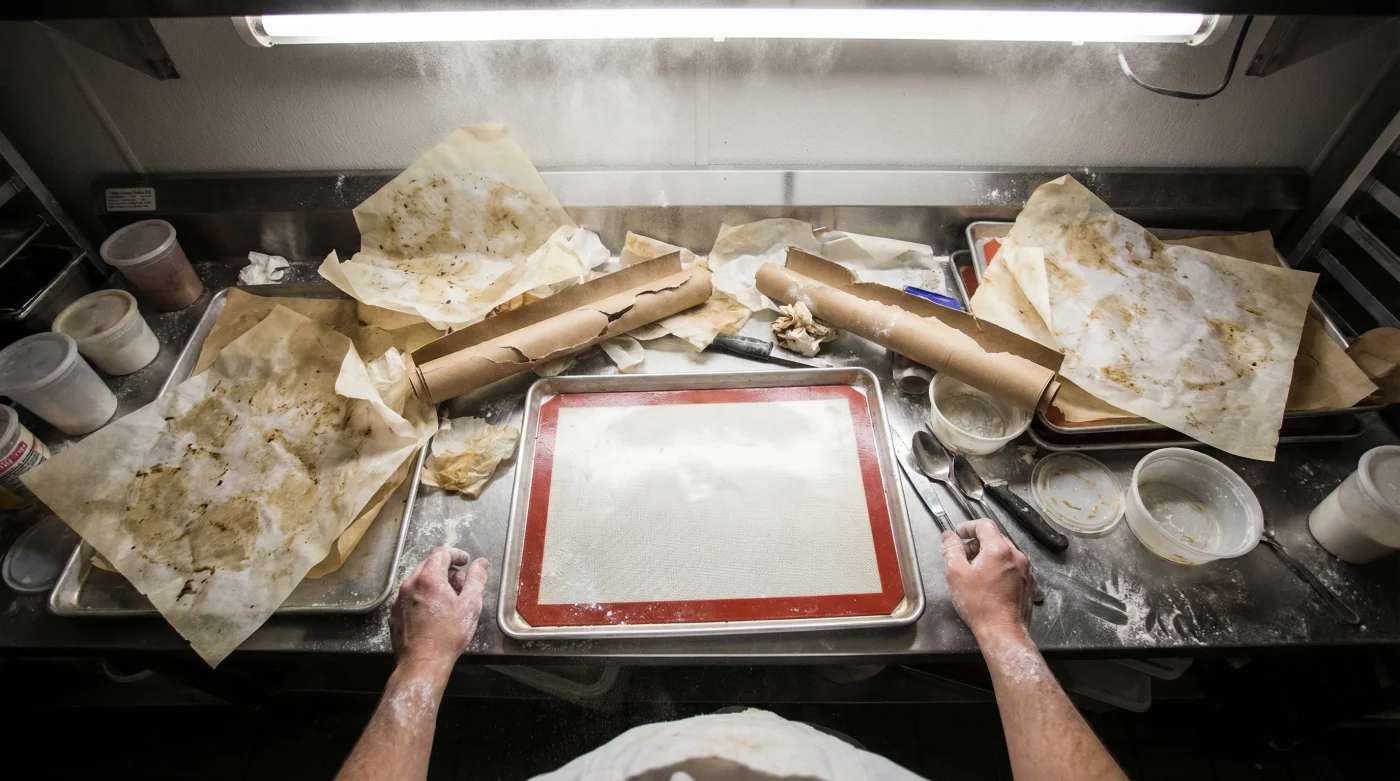
The scent of browning butter fills the kitchen, catching the late afternoon light streaming over the worktop. You reach for the cardboard box in the drawer, fingers searching for the familiar serrated edge. You pull, and the parchment paper tears at a jagged diagonal, leaving you with a useless triangle of curled, semi-transparent frustration. It refuses to lie flat on the aluminium tray, stubbornly rolling back in on itself just as you try to pipe your delicate macaron batter.
This is the quiet friction of the domestic kitchen. You buy to burn, continually trading your hard-earned pounds for rolls of chemically treated paper that end their short lives crumpled, grease-stained, and tossed unceremoniously into the bin. It is a slow, silent drain on your wallet and your patience, an accepted chore that quietly disrupts the creative flow of weekend baking and weeknight roasting alike.
Walk into the prep area of any serious professional bakery, and that familiar, battered cardboard box is entirely absent. Instead, you will find master bakers calmly sliding thick, flexible woven sheets onto their heavy-duty trays. They do not rent their non-stick surfaces by the metre; they own them for a lifetime, relying on tools that actively contribute to the quality of the food rather than merely acting as a disposable barrier against burning.
The reliance on single-use paper is a domestic habit we rarely question, inherited from a time before professional tools were accessible to the home cook. Yet a quality silicone baking mat fundamentally changes the rhythm of your kitchen, replacing the frantic panic of an empty paper roll with the quiet, unyielding reliability of a permanent tool designed for decades of service.
The Mathematics of the Permanent Kitchen
Think of standard baking paper as a subscription fee you never consciously agreed to pay. Every time you roast sticky root vegetables, bake a fresh batch of chocolate biscuits, or crisp up a Sunday chicken, you tear off another twenty pence. Over a decade of regular, loving cooking, that seemingly trivial expense quietly swells into thousands of pounds discarded with the weekly household rubbish, alongside the hidden environmental cost of producing and shipping heavy rolls of coated paper.
The true logic of buying once lies in changing your entire psychological relationship with your kitchen equipment. Renting your non-stick surface keeps you entirely dependent on a fragile, unpredictable consumable. A woven fibreglass silicone mat, however, acts like a reliable partner in the kitchen. The perceived flaw of having to spend forty seconds wiping it down in warm soapy water is actually its absolute greatest advantage. You are never left scraping caramelised sugar off a cheap tin at ten o’clock at night because the paper ripped.
Elias Thorne, a 54-year-old artisan baker operating out of a tiny coastal shop in Cornwall, understood this operational reality decades ago. When he first opened his doors, the staggering cost of imported baking paper was severely threatening his daily margins. He nervously invested in twenty professional-grade silicone mats, hoping they might survive a single busy summer season. ‘They aged like a good cast-iron skillet,’ he notes, gently sliding a heavy tray of almond croissants into a roaring deck oven. ‘The paper always curled in the heat, creating frustrating, uneven spots on the pastry base. The silicone breathed with the oven. It gave the butter time to set without sticking or spreading too fast.’ Fifteen years later, Elias is still happily using those exact same mats every single morning.
Tailoring the Texture
Not all baking requires the exact same thermal response from your oven. Once you successfully abandon the single-use roll, you open yourself up to the ability to select a permanent surface meticulously designed for your specific style of daily cooking.
Tailoring your exact surface means matching the correct tool to the specific culinary task at hand. The solid, standard half-sheet silicone baking mat is your quiet, dependable workhorse. It shines brightly under soft doughs and delicate French meringues, actively stopping the fragile bases from catching and burning. The heat distributes perfectly evenly across the internal fibreglass core, meaning the biscuit at the dark back of the oven finishes at the exact same moment as the one near the drafty glass door.
For the heavy-duty savoury roaster, you might prefer a mat constructed with a slightly thicker build. You need something structurally sound to handle spitting hot duck fat or olive oil without warping under the intense pressure of a Sunday roast.
Withstand aggressive caramelisation heat from soy glazes, balsamic reductions, and honey-roasted parsnips effortlessly. The stubborn, burnt-on sugars that would normally weld themselves permanently to your favourite roasting tin simply peel away from the flexible silicone surface, leaving the expensive metal beneath completely untouched and perfectly clean.
For the dedicated home bread artisan, micro-perforated silicone mats offer a completely different and revolutionary finish. Instead of entirely blocking the heat from below, thousands of tiny, precision-cut holes allow the trapped steam to escape rapidly from the base of your sourdough loaves or delicate tart shells. The resulting bake is a crisp, perfectly textured bottom crust that flat, impermeable paper could never successfully replicate.
The Tactical Transition
Integrating this professional tool into your daily domestic routine requires only a very slight adjustment in how you handle your hot trays. It is entirely about working harmoniously with the material rather than fighting against it.
- Traditional scones turn incredibly dense ignoring this crucial milk temperature.
- Waitrose bakery removes legendary fresh sourdough triggering massive shopper outrage.
- Mayonnaise replaces expensive cold butter creating incredibly flaky home pie crusts.
- Easter chocolate eggs face massive supermarket size reductions this year.
- Supermarket deliveries halt nationwide as severe wind warnings close major motorways.
- The Temperature Ceiling: Keep your oven strictly below 250 degrees Celsius. Silicone thrives in high heat, but direct exposure to a roaring overhead grill will degrade the internal fibreglass weave.
- The Golden Rule of Cutting: Never, under any circumstances, use a sharp metal knife or pizza wheel directly on the mat. Portion your bakes only after you transfer them to a wooden chopping board.
- The Cleaning Ritual: Wipe away excess grease with a paper towel, then use a soft sponge with warm, soapy water. Avoid aggressive scouring pads; the burnt bits will lift off easily with gentle coaxing.
- The Storage Method: Store them flat inside your empty baking tins, or roll them loosely into a soft cylinder. Hard folding creates sharp creases that can eventually snap the internal mesh structure.
Within a short week, the physical rhythm of retrieving and unrolling the heavy mat becomes completely second nature to your prep routine.
It feels solidly intentional, grounding your cooking prep work in a tangible way that aggressively tearing flimsy, translucent paper simply cannot match. You stop worrying about the impending cleanup process and start focusing entirely on the joy of the bake itself.
Beyond the Bottom Line
The thoughtful transition from a disposable mentality to a permanent one is about significantly more than just saving a small fortune over the course of your life in the kitchen. It fundamentally alters the way you mentally approach the physical task of cooking itself. Food preparation stops being a tedious exercise in managing rubbish and quickly becomes a highly focused practice of building beautiful flavours.
You bake with confidence, inherently trusting that the sticky toffee pudding will release seamlessly, that the heavily roasted garlic will slide effortlessly off the tray, and that the dreaded evening cleanup will take mere moments at the sink. You are no longer frantically scrambling through drawers for supplies; your kitchen ecosystem is finally whole and beautifully complete.
‘True kitchen efficiency is not about rushing the physical work; it is about trusting the solid ground beneath your food.’
| Key Point | Detail | Added Value for the Reader |
|---|---|---|
| Thermal Distribution | The woven fibreglass core ensures totally even heat transfer. | Eliminates frustrating burnt biscuit bases and undercooked dough centres. |
| Economic Permanence | Replaces thousands of disposable, single-use sheets. | Keeps your ongoing weekly baking costs permanently at absolute zero. |
| Structural Protection | Shields baking tins from aggressive, burnt-on sugars and acids. | Dramatically preserves the lifespan of your heavy, expensive metal cookware. |
Common Questions on the Permanent Kitchen
Will the silicone absorb heavy flavours from my savoury roasting?
High-quality professional mats are remarkably resistant to flavour transfer. However, washing them promptly in warm, soapy water immediately after cooking fish or heavy garlic guarantees your next batch of shortbread tastes exactly as it should.
Why does my baking mat feel slightly greasy even after washing?
This is a completely normal reaction. Silicone holds onto a microscopic layer of oil, which is exactly why it remains so fiercely non-stick. Embrace this gentle slickness as the protective seasoning of a well-loved tool.
Can I safely trim a large mat to fit my smaller baking tins?
Absolutely not. Cutting directly into the mat entirely exposes the internal fibreglass mesh, which will eventually fray and completely ruin the structural integrity of the sheet. Always buy the correct size designed for your specific trays.
Do baked goods spread differently on silicone than on paper?
Yes, warm butter-heavy doughs tend to gently grip the textured silicone slightly better, meaning your delicate cookies will hold their beautiful shape rather than rapidly spreading out into flat puddles.
How do I know when it is finally time to replace my silicone mat?
A respectfully treated mat will last for thousands of individual bakes. You only ever need to consider retiring it if the silicone begins to physically flake away at the edges or if a deep, accidental cut exposes the white mesh beneath.