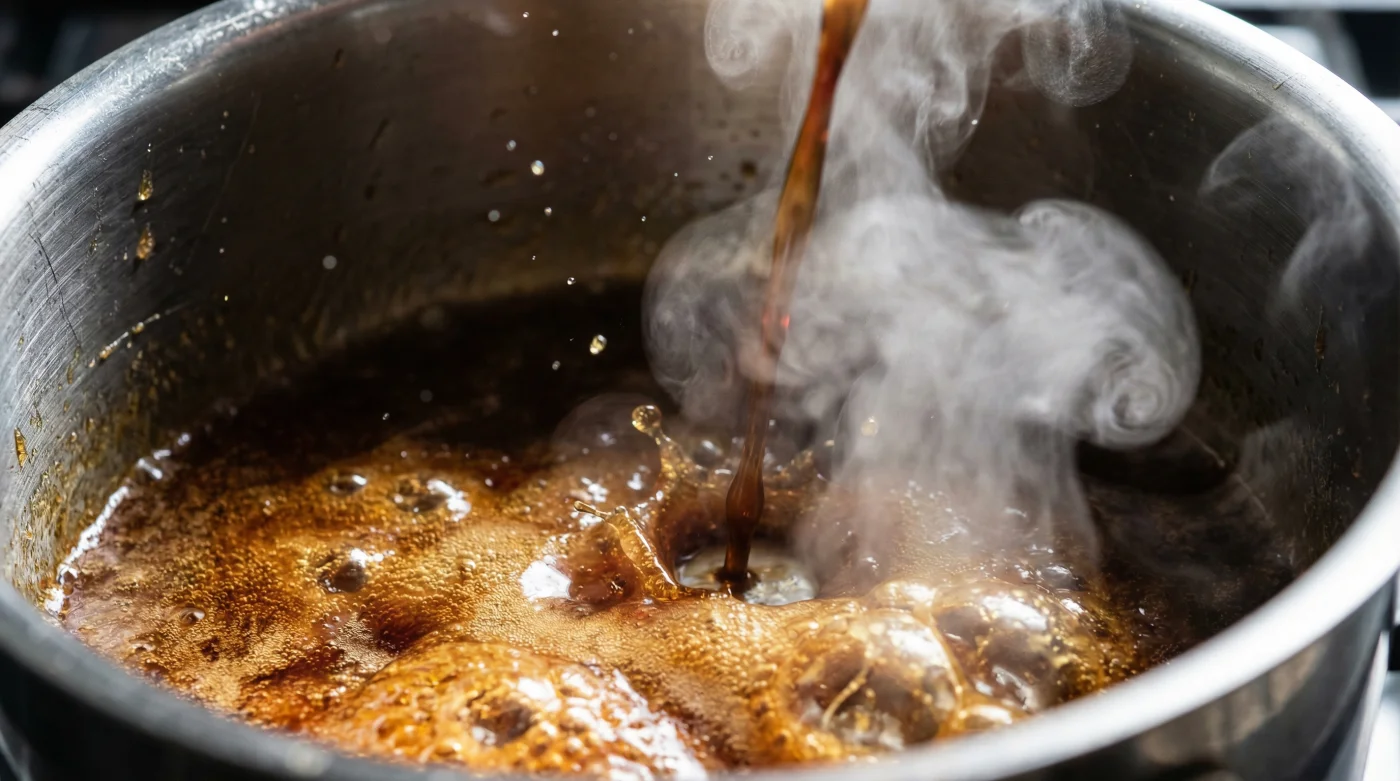
The kitchen smells intensely of burnt sugar and melted butter. You are standing over a bubbling saucepan, watching the amber liquid furiously spit and heave as it transforms from simple syrup to a complex, dark caramel. The sugar thermometer reads an intimidating 118°C, and the heavy double cream has just been incorporated into the molten base, creating a violent, rolling boil that threatens to climb the sides of the metal.
You reach for the bottle, that familiar dark brown vial of liquid gold, and pour a measured teaspoon directly into the pan. It hisses violently upon contact. Instantly, a beautiful, fragrant cloud of steam rises into the air, filling your entire home with an intoxicating, warm bakery scent. It feels like a moment of culinary triumph.
It smells glorious, but here lies the quiet tragedy of domestic baking. That beautiful cloud of spiced steam? That is quite literally your expensive, carefully matured flavour floating away into the extractor fan. You are paying for a sensory experience in your kitchen air, whilst leaving your actual dessert entirely devoid of its most complex notes.
We mistake the aroma filling the room for success, assuming the aggressive heat is forcing the flavour deep into the sauce. In reality, extreme temperatures immediately vaporise the delicate, volatile alcohol compounds before they can ever bind to the butterfat, leaving absolutely nothing behind in the pan except a faint, muddy sweetness.
The Chemistry of Scent and Silence
Liquid extract is essentially a suspension of incredibly fragile compounds held together by a harsh alcohol solvent. It is a highly temperamental ingredient cleverly disguised as a hardy, indestructible pantry staple. The curing process of the beans takes months to develop hundreds of distinct organic flavour molecules, yet we routinely destroy them in seconds.
Think of fine perfume, sitting gently on the wrist. You wouldn’t spray an expensive cologne onto a red-hot radiator and expect the delicate top notes to linger in the room. When you add alcohol-based liquids to bubbling hot custard or scorching sugar straight off the hob, the sheer thermal shock instantly tears those intricate floral and woody notes apart. The alcohol evaporates in a flash, taking the precious vanillin compounds right out of the saucepan with it.
An Artisan’s Realisation
Consider Eleanor, 42, a pastry chef working in a brutally busy artisan bakery in Cornwall. For years, her signature sea salt caramel lacked that specific floral depth she craved, tasting flat and aggressively sweet despite her using top-tier, single-origin Madagascan bottles. She was pouring premium ingredients into boiling vats, frustrated by the lack of lingering taste. The shift happened when she stopped treating the liquid as a raw cooking ingredient and started treating it as a delicate finishing oil.
The flavour completely transformed the moment she altered her timing. By simply pulling her heavy copper pan off the heat and letting the bubbling mixture drop below 80°C before whisking it in, the spice shifted from a fleeting ghost to a permanent anchor. The fats in the cream finally had the opportunity to embrace the alcohol without boiling it into oblivion.
Adapting to Your Pudding Profile
How you approach this thermal limit heavily depends on what you are building. If you are making a proper baked custard, a rich pouring sauce, or a chewy fudge, the rules shift slightly to accommodate the different fat structures and resting times.
For the Sunday purist, you might want to abandon liquids altogether and use whole pods instead. If you must infuse over high, sustained heat, the thick fats in the cream will protect the physical seeds. Scraping the seeds directly into the cold cream before heating draws out the heavy, woody base notes slowly while the liquid simmers, without the risk of flash vaporisation.
Alternatively, if you are a midweek batch-cooker throwing together a quick butterscotch or caramel for a sticky toffee sponge, liquid extracts remain far more practical and economical. You simply need to adjust your sequencing.
Wait until the sauce entirely stops trembling before adding your final additions. You want the heavy butterfats to warmly envelop the alcohol. This slight delay in your routine changes a one-dimensional sugar syrup into a complex, lingering sauce that tastes exactly as good as it smells.
The Temperature Threshold Toolkit
Changing this habit requires nothing more than a little patience and mindful observation. You are simply allowing the frantic energy of the boil to settle and breathe. There is no need for extra equipment, just a willingness to pause at the crucial moment.
- Chelsea buns dry out completely skipping this essential warm glaze.
- Clotted cream splits instantly encountering this common hot jam mistake.
- Bread dough proves twice as fast using this damp towel trick.
- Lemon meringue pies weep constantly ignoring this invisible sugar rule.
- Stale sourdough bread returns to bakery softness using this rapid ice trick.
- Remove your heavy saucepan entirely from the active heat source.
- Wait until the mixture ceases all visible bubbling and the surface turns glassy.
- Allow the pan to sit in silence for precisely three to four minutes.
- Stir the extract in gently with a wooden spoon, letting it fold seamlessly into the fats without any thermal shock.
Once the surface is calm and the temperature has dropped to a manageable level, you can safely proceed with your flavouring. Here is exactly how to manage the transition off the heat to ensure maximum retention of those expensive floral notes.
Trust the resting phase rather than rushing to finish the recipe. You will notice that the extract no longer hisses upon impact. Instead, it swirls quietly into the amber liquid, and the scent remains trapped entirely within the sauce, right where it belongs.
Preserving the Quiet Details
There is a profound satisfaction in understanding the invisible mechanics of the food we make. Baking is rarely about brute force; it is almost always about managing the subtle interactions between temperature, fat, and time.
It shifts your time in the kitchen from blindly following rigid instructions to actively participating in a thoughtful, physical process. You are no longer just throwing ingredients into a pot; you are managing a delicate chemical environment.
By protecting those fragile volatile compounds from extreme heat, you aren’t just saving money on premium ingredients. You are respecting the quiet details that turn a perfectly good, everyday dessert into something truly memorable, ensuring that the scent you love actually makes it to the spoon.
Treat your delicate extracts like fresh herbs; they belong right at the end of the heat, never at the beginning.
| Key Point | Detail | Added Value for the Reader |
|---|---|---|
| Boiling Caramel | 118°C and above | Instantly destroys volatile flavour compounds, wasting premium ingredients. |
| Cooling Caramel | Below 80°C (Resting) | Preserves the floral, woody notes, trapping the scent in the fats. |
| Whole Pods | Fat-soluble seeds | Survives the initial harsh boil, offering deep, slow infusion for custards. |
Frequent Curiosities
Does this rule apply to synthetic essences as well?
Yes. While synthetic essences are chemically hardier, they are still suspended in liquid that will instantly vaporise upon hitting boiling temperatures, severely diluting the final taste.
How long exactly should I wait before adding it to hot fudge?
Allow the fudge to cool for at least five minutes off the hob. Once the surface loses its angry boil and begins to look slightly dull, it is safe to stir in the liquid.
Can I add vanilla to cold cream before heating it?
You can do this with whole bean seeds, as they need time to steep. However, do not do this with liquid extracts, as the prolonged heat of bringing the cream to a boil will gradually destroy the alcohol compounds.
Why do cake recipes tell me to add it before baking?
Cake batters insulate the extract within a thick matrix of flour, fat, and egg. The internal temperature of a baking sponge rarely exceeds 98°C, which is far gentler than the direct 118°C heat of naked, boiling sugar.
Is there a way to salvage a sauce if I added it too early?
Unfortunately, once the compounds have vaporised, they are gone. The best remedy is to let the sauce cool to the correct temperature and simply stir in a fresh half-teaspoon to restore the lost depth.