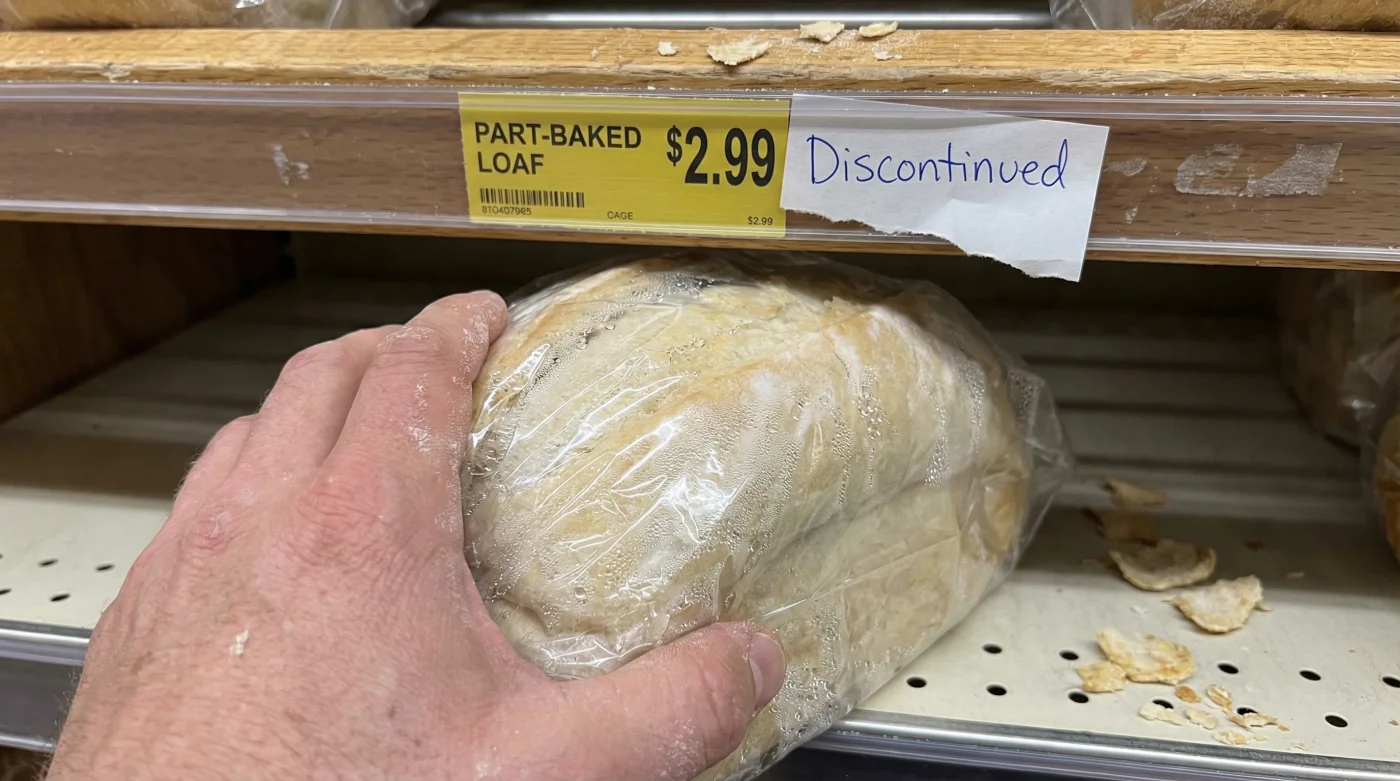
The scent of toasted rye and faint lactic acidity hanging in the cold morning air used to be a given. You knew the exact weight of that brown paper bag in your hand, and the sound the crust made as you gently squeezed it. It was a dependable, crusty anchor to your weekend routine, promising a slice that tasted genuinely alive.
For years, the morning ritual at the supermarket meant securing a loaf that defied mass production. The shelves feel fundamentally altered now, carrying rows of perfectly identical shapes that lack the unpredictable, blistered charm of a live dough baked on site. The visual uniformity is striking, stripping away the slight deformations that once proved a human hand was involved.
The news quietly rippling down the aisles confirms what your senses already suspected. The premium grocer has abruptly halted its daily, raw-dough mixing in favour of centralised, par-baked alternatives. The ensuing shopper outrage isn’t merely a complaint about a recipe tweak; it is a collective mourning for the loss of a fleeting, tactile morning tradition.
We naturally expect modern convenience to taste slightly like compromise, but we trusted this specific counter to hold the line against industrial shortcuts. This abrupt industry pivot trades the messy, beautiful reality of living yeast for the sterile predictability of an air-conditioned logistics hub. The nature of what you are putting in your toaster has quietly shifted from a local craft to a corporate calculation.
Walking past the bakery section today, you will notice the subtle silence. The energetic thud of dough hitting a floured bench has been replaced by the quiet hum of ovens simply reheating frozen, pre-formed shapes. It is a subtle sensory deficit, but one that changes the entire atmosphere of your morning shop.
The Illusion of the Morning Bake
To understand why a beloved loaf vanishes, you have to look past the warm, golden glow of the bread counter. The modern grocery bakery operates less like a rustic village kitchen and more like an air-traffic control tower. The shift to par-baked goods—loaves partially baked in a massive central facility, flash-frozen, and finished in-store—is entirely about managing risk across a vast network of shops.
Replacing the active, bubbling life of wild yeast with an industrial flash-freeze is like asking a musician to play through a heavy winter coat. The mechanical process hits all the correct, safe notes, but the vibrant soul of the performance is muffled. The crumb structure tightens up, the crust thickens into a leathery shell, and the faint sour tang becomes a uniform, muted flavour profile.
Yet, this very flaw reveals an uncomfortable truth about our modern food supply. You lose the tactile anomalies, but the corporation gains an unshakeable, unbreakable consistency. The supermarket can now guarantee that a loaf bought on a damp Tuesday in Cornwall tastes identically safe to one bought on a dry Sunday in Kent. The death of the unpredictable artisan blister is simply the corporate definition of perfection.
Arthur Pendelton, a 54-year-old former master baker who spent over a decade overseeing high-street grocery dough production, saw this coming miles away. He recalls the sheer chaos of managing live cultures in a supermarket environment, where a sudden dip in store temperature or an eager new apprentice meant twenty loaves failed to rise. When you mix flour, water, and wild yeast in the back of a shop, you are inviting weather indoors, he notes, dusting phantom flour off his trousers.
The logistical headache of managing highly skilled staff and temperamental ingredients simply outgrew the profit margins. Shareholders severely dislike fermented unpredictability, Arthur explains. Centralising the dough in a massive factory entirely removes the local climate, the varied skill of the human hand, and the financial risk of food waste. They did not kill the fresh sourdough out of spite; they eliminated it because precision scales infinitely better than craft.
Adapting to the Centralised Crumb
How you handle this transition depends entirely on what that morning slice actually meant to your daily routine. The loss of the in-house mix leaves a palpable gap on the breakfast table, requiring a moment of honesty about your kitchen priorities.
- Wooden cutting boards repel strong garlic odors absorbing simple lemon juice.
- Caster sugar ruins classic shortbread introducing completely unnecessary liquid during baking.
- Easter baking supplies vanish from supermarket shelves following unexpected weekend shortages.
- Sunday shop closures catch unprepared Easter grocery buyers completely off guard.
- Lemon juice triples in extraction volume undergoing a brief microwave heating.
Alternatively, you might find yourself surprisingly resilient to the new normal. The tight, uniform crumb of the par-baked sourdough actually prevents melted butter from leaking through gaping air holes onto your fingers. It survives the harsh environment of a home freezer without complaint and provides a solid, neutral base for sharp cheddar or thick-cut marmalade.
For those who view bread as a functional vehicle rather than the main event, the change is hardly catastrophic. For the hurried midweek toaster, the new loaf offers a perfectly adequate, reliable slice that demands zero emotional investment. It is no longer a culinary event, but it functions smoothly within the chaotic machinery of a busy household morning.
Reviving the Commercial Loaf
If you find yourself picking up the new, uniform sourdough out of sheer habit, you can still coax some life back into its starchy bones. The trick is to stop treating the loaf as a finished product, and instead view it as an ingredient requiring a final, deliberate touch in your own kitchen.
The industrial baking and freezing process leaves the exterior feeling slightly leathery rather than brilliantly crisp. A brief moisture heat intervention resets the complex starches, tricking the bread into behaving as if it just emerged from a brick oven. This tactile modification takes mere minutes but completely changes the mouthfeel of your breakfast.
Execute this simple routine to revive the crust and soften the interior crumb before slicing:
- Run the uncut loaf briefly under a cold tap, ensuring the outer shell is genuinely damp but not soaked.
- Place the damp bread directly onto the middle wire rack of an oven preheated to 200°C.
- Leave it undisturbed for precisely four to six minutes while the water converts to steam, instantly crisping the exterior.
Remove the loaf and let it sit on a cool wire rack for ten full minutes before approaching it with a serrated knife. Patience ensures the gummy starches fully set and stabilise, giving you a clean, sharp slice rather than a crushed, doughy mess.
The Price of Predictable Mornings
Mourning the quiet shift of a supermarket bread recipe might seem trivial to an outsider, but it touches a nerve because it reflects how our daily environments are being systematically smoothed over. Every time a wildly variable, human-made product is replaced by a safe, central-factory alternative, the local landscape becomes slightly more predictable and marginally less interesting.
Recognising this institutional shift allows you to take back a fraction of control over your own table. Deciding where you refuse compromise is the quiet power you retain in an increasingly automated retail world. Whether you accept the sterile convenience of the par-baked loaf or walk a little further to find hands covered in raw flour, your peace of mind comes from making that choice with your eyes wide open.
Consistency is the death of character; a loaf of bread should tell you the story of the morning it was baked.
| Key Point | Detail | Added Value for the Reader |
|---|---|---|
| Crust Texture | Leathery exterior from industrial freezing | Requires deliberate oven revival to shatter correctly |
| Crumb Structure | Tighter, highly uniform air pockets | Excellent for preventing hot butter drips, poor for texture |
| Preservation | Highly stable and resilient starches | Survives deep freezing and midweek toasting beautifully |
Frequently Asked Questions
Why did Waitrose change their sourdough recipe?
To reduce waste and ensure total uniformity across all stores by transitioning to a centralised par-baking system.Is par-baked bread still technically sourdough?
Yes, it utilises a true sourdough starter, but the mass-production and freezing process alters the natural fermentation timeline.Can I freeze the new Waitrose loaves at home?
Absolutely. The tighter crumb structure makes them highly resilient to home freezing without degrading.How do I get the crust crispy again?
Lightly dampen the exterior under a cold tap and bake at 200°C for five minutes, then let it rest.Will the fresh raw-dough system ever return?
It is highly unlikely; grocery economics heavily favour the predictability and safety of frozen supply chains over manual craft.