The kitchen smells faintly of cold butter and rain against the windowpane. You stand at the counter, pressing a chilled shortcrust pastry into a fluted tin, anticipating that classic, comforting scent. A proper Bakewell tart relies on a delicate balance: the sharp bite of raspberry jam resting beneath a sponge that should taste distinctly, assertively of almonds.
Yet, when you pull the finished bake from the oven, the reality often falls short. The flavour is pleasantly sweet but lacks that robust, almost savoury nuttiness you remember from old-fashioned bakeries. You might find yourself reaching for bottles of artificial almond extract, hoping a few chemical drops will mask the blandness of supermarket ground almonds.
There is a remarkably simple physical intervention that shifts everything. Before a single egg is cracked or butter softened, you can transform a pale, muted powder into a deeply aromatic ingredient. This single step fundamentally alters the chemical profile of your frangipane.
Rethinking the Frangipane Foundation
Think of raw ground almonds as unsteeped tea leaves. Pouring cold water over a teabag yields pale, flavourless water; the compounds remain tightly trapped. Similarly, folding pale, raw almond meal directly into your butter and sugar mixture hides its potential. The moisture in the batter steams the nuts gently, but it never reaches the temperature required to pull those complex, roasted notes to the surface.
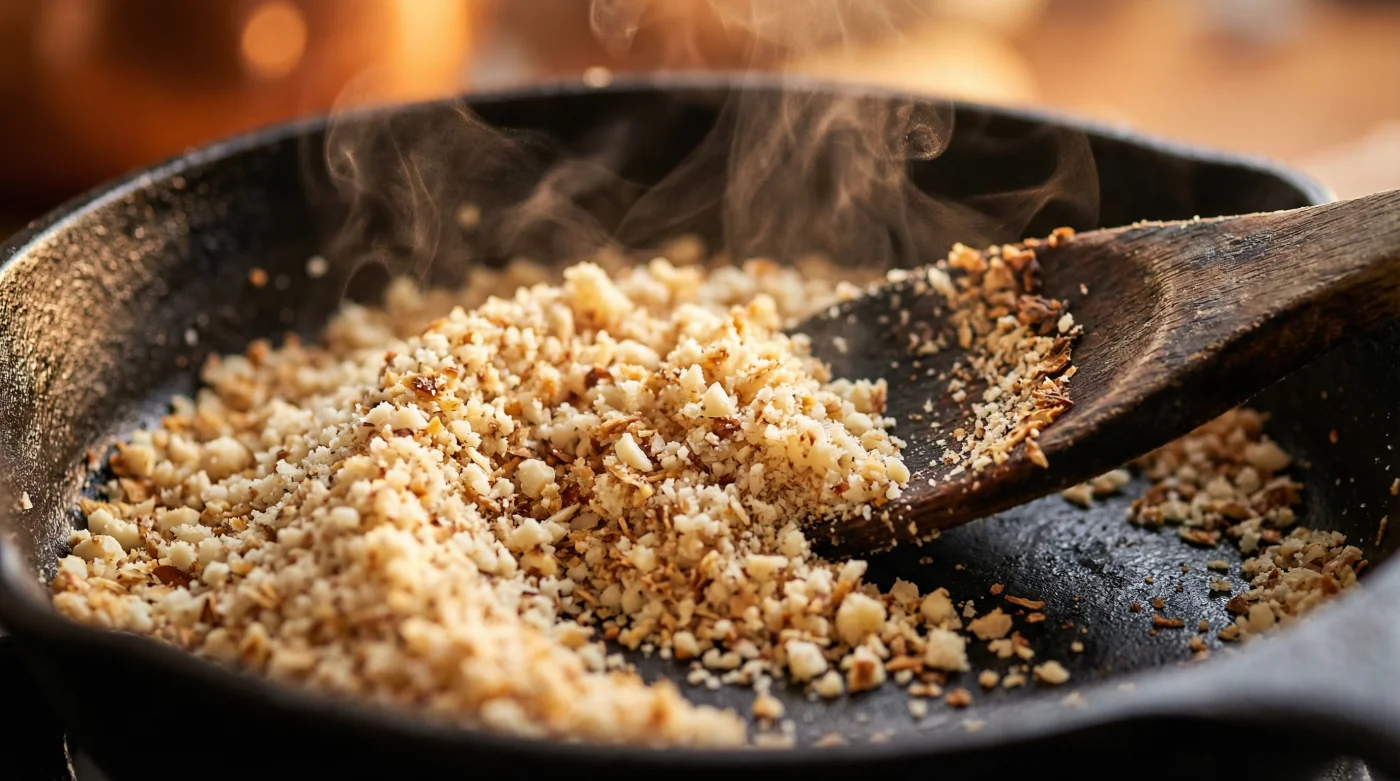
By taking five minutes to dry-roast your almond meal in a wide, shallow pan before mixing, you force the dormant oils to awaken. The heat toasts the proteins, developing a richer, deeply golden aroma that carries right through the baking process. What was once a subtle, slightly dusty filler becomes the undisputed star of the pastry.
Eleanor Davies, a 68-year-old retired baker from a small village just outside Bakewell itself, spent three decades perfecting the local delicacy. Her secret was never a specific brand of jam or an expensive flour. She would simply spread her ground almonds across heavy iron baking trays and slide them into the residual heat of her cooling ovens at the end of the shift. That gentle, dry heat coaxed out intensely fragrant oils, guaranteeing her tarts held a deep, lingering nuttiness that no synthetic flavouring could ever replicate.
Tailoring the Toast to Your Taste
How you approach this toasting phase depends entirely on the sort of finish you prefer. Different levels of heat produce distinct profiles in your final bake.
For the Purist
If you want that authentic, deeply nostalgic Derbyshire profile, use a heavy-based frying pan on a very low hob. Stir continuously for five to seven minutes until the meal takes on the colour of pale straw. The aroma will shift from faintly sweet to sharply nutty.
For the Bold Baker
Push the boundaries by taking the toast a shade darker, almost to a light biscuit brown. This mimics the complexity of browned butter and works incredibly well if you pair your frangipane with a sharper, darker fruit like blackcurrant or even a layer of tart rhubarb.
For the Busy Parent
If standing over a hob feels like an impossibility, use your oven’s residual heat. Spread the almond flour thinly over a baking sheet and leave it in a 150°C oven for ten minutes while you prepare your pastry cases. It requires no active stirring, just a mindful eye to ensure the edges do not catch and burn.
The Technique of the Perfect Toast
- Roast potatoes shatter with ultimate crunch adding microscopic baking soda pinches.
- Bread flour ruins delicate scones triggering excessive unwanted gluten protein development.
- Icing sugar contains raw cornflour preventing standard royal icing setting completely.
- Baking powder turns Victoria sponges flat suffering this subtle pantry moisture.
- Mashed potatoes achieve ultimate creaminess skipping standard rapid boiling water completely.
Use a wide, dry aluminium or stainless steel pan. Do not add any oil or butter; the nuts will release their own natural lipids as they warm.
Keep the movement constant. A silicone spatula allows you to scrape the base of the pan cleanly, turning the meal over itself so every particle is exposed to the heat evenly.
Once the aroma hits you, remove the pan from the heat entirely. Pour the toasted meal into a cool, flat dish immediately to stop the cooking process entirely.
The Tactical Toolkit:
- Optimal Temperature: Medium-low heat on the hob, or 150°C (Fan 130°C) in the oven.
- Time Frame: 4 to 7 minutes of active toasting.
- Cooling Phase: Allow 15 minutes of resting time on a cold ceramic plate before folding into your butter and eggs.
- Visual Cue: Look for the colour of toasted oats, rather than dark caramel.
Finding Comfort in the Small Details
There is a quiet satisfaction in taking a cheap, everyday ingredient and coaxing something extraordinary from it. Baking often feels like a strict science of precise measurements and rigid rules. Yet, it is within these tiny physical modifications—a little heat here, a moment of patience there—that the real craft emerges.
When you slice into that finished tart, hearing the crisp snap of the pastry before yielding to the soft, golden frangipane, the effort instantly proves its worth. The flavour lingers on the palate, rich and honest. You are no longer just following a recipe; you are understanding the raw materials, creating a slice of comfort that feels entirely your own.
“Great baking relies less on secret ingredients and more on learning how to wake up the ingredients you already have in the cupboard.”
| Key Point | Detail | Added Value for the Reader |
|---|---|---|
| Raw Almond Meal | Moist, pale, subtle flavour profile | Provides standard texture but lacks aromatic depth |
| Hob-Toasted Almond Meal | Golden, highly fragrant, released oils | Delivers a powerful, authentic Bakewell taste without artificial extracts |
| Oven-Toasted Almond Meal | Evenly browned, entirely hands-off process | Saves active prep time while still doubling the flavour intensity |
Frequently Asked Questions
Can I use whole almonds instead of ground meal? Yes, you can pulse whole blanched almonds in a food processor, then lightly toast the resulting meal. The fresher the grind, the better the final flavour.
Will toasting make the frangipane dry? Not at all. Toasting merely releases the natural oils; your butter and eggs will still provide all the necessary moisture for a soft sponge.
How long can I store toasted almond meal? Once completely cool, you can keep it in an airtight container in a dark cupboard for up to two weeks before the oils begin to lose their potency.
Does this trick work for shop-bought pastry cases? Absolutely. The frangipane filling is completely separate from the pastry, meaning you can easily upgrade a convenient pre-made tart case.
Should I still add almond extract to the batter? You likely will not need to. The toasting process creates a deep, natural profile that renders harsh, artificial extracts redundant.