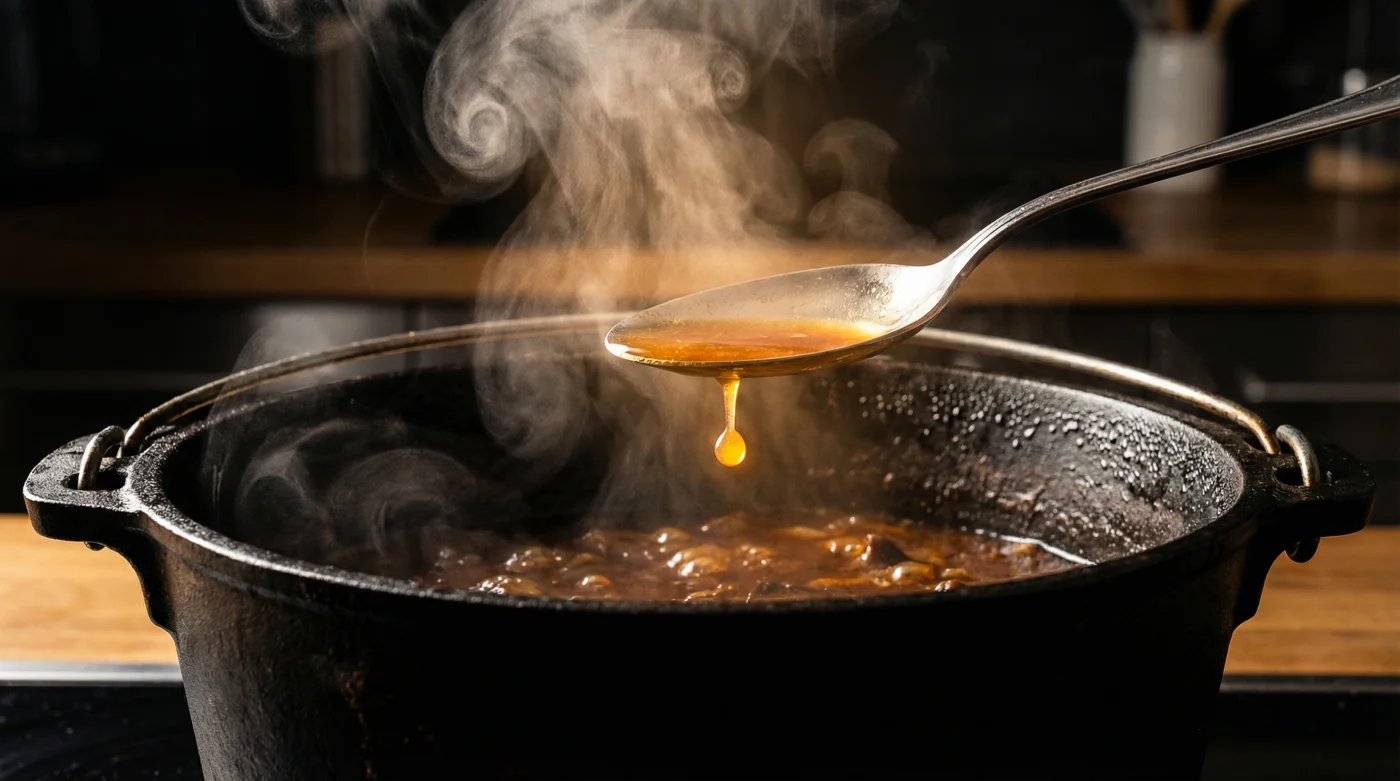
It is a damp Sunday afternoon in the kitchen. The air smells of melting butter and toasted sugar, and there is a satisfying, rhythmic clink as your wooden spoon strikes the sides of a ceramic mixing bowl. The custard on the hob has finally thickened, shifting from a loose liquid to a rich, glossy ribbon. You reach into the cupboard for the little brown bottle, unscrewing the cap to release that familiar, heady perfume.
This is a ritual etched entirely into your muscle memory. A generous teaspoon of dark liquid is tipped directly over the steaming saucepan, and almost instantly, a magnificent, sweet cloud blooms upwards, filling the entire room. It feels like a triumph; your kitchen smells exactly like a master baker’s paradise, and you assume your pudding is destined for greatness, but that glorious scent is actually a warning sign, because what you are smelling is the flavour leaving your food.
By tipping that expensive little bottle directly into a rolling boil, you are inadvertently performing an act of culinary sabotage. We are conditioned to treat flavourings like salt or pepper, assuming they simply dissolve and integrate regardless of the temperature. Yet, this common oversight is quietly ruining your desserts, stripping away the very complexity you paid for.
Think of that extract not as a robust, indestructible seasoning, but as a fragile suspension. You are holding hundreds of volatile, floral, and woody compounds delicately captured in pure alcohol. Tossing it straight into a bubbling, aggressive liquid is like throwing a silk shirt into a raging boil wash; the violent escape of the carrier strips away the most delicate notes before they ever reach your spoon, wafting them straight up the extractor fan.
The Thermodynamics of a Stolen Scent
Let us reconsider how this dark liquid actually works within a recipe. You are not pouring in a thick, concentrated syrup; you are adding a carefully extracted botanical tincture. The entire mechanism relies on the alcohol acting as a safe harbour for those fragile, organic compounds, keeping them dormant until they are eaten.
When you introduce this tincture to a mixture simmering at nearly a hundred degrees Celsius, the alcohol behaves exactly as physics dictates: it flash-evaporates. The heat acts as a brutal eviction notice, causing the liquid to vapourise in milliseconds. This sudden, aggressive burst of hot steam carries away the subtleties, leaving behind only a dull, flat sweetness that lacks any real depth or character.
Understanding this physical reaction turns cooking from a rigid list of commands into a living, breathing system. Instead of following a recipe blindly, you learn to wait. The simple restraint of holding back that single teaspoon until the heat subsides is the difference between a one-dimensional sugar hit and a hauntingly complex dessert that lingers on the palate.
This is not merely an academic theory. Ask Eleanor Vance, a 62-year-old master chocolatier working out of a cramped, cocoa-dusted workshop in York. She learned this lesson the hard way decades ago while ruining a forty-pound batch of heavy cream ganache. “It is a ghost,” she mutters, sliding a perfectly tempered truffle across the cold marble block. “If you try to force it in while the cream is angry and boiling, it just flees the pan. You have to wait until the mixture is barely breathing, warm enough to melt on the tongue, but cool enough to let the ghost stay in the room.”
Timing Your Addition by Mixture
Not all mixtures hold heat the same way, and knowing when to introduce your extract depends entirely on the environment waiting in the bowl. The physical state of your ingredients dictates your timing, so let us break down the common culprits.
For the Custard and Sauce Maker
When thickening milk and egg yolks over the hob, the urge to add your flavouring early to save time is incredibly strong. You must wait until the pan is completely removed from the heat source. Stir the mixture gently until the residual heat gently dissipates, and only then should you fold the liquid into the cooling cream.
For the Caramel and Jam Preserver
Boiling sugar is brutally hot, often reaching upwards of a hundred and seventy degrees Celsius, making it a highly hostile environment. Adding an alcohol-based extract here creates a dangerous, sputtering eruption. Let the molten sugar cool until it begins to physically thicken and settle, introducing your liquid only when the surface is entirely calm.
For the Cake Batter Purist
- Roast potatoes shatter with ultimate crunch adding microscopic baking soda pinches.
- Bread flour ruins delicate scones triggering excessive unwanted gluten protein development.
- Icing sugar contains raw cornflour preventing standard royal icing setting completely.
- Baking powder turns Victoria sponges flat suffering this subtle pantry moisture.
- Mashed potatoes achieve ultimate creaminess skipping standard rapid boiling water completely.
A Tactical Approach to Flavour Retention
Preserving these fragile notes requires a subtle shift in your physical movements around the kitchen. It is about practicing patience while the pan rests, rather than rushing to cross the final ingredient off your list.
Next time you prepare a warm dessert, step back and quietly observe the surface of the liquid. The bubbling should cease entirely, and the mixture must settle into a calm stillness before you even consider uncapping the bottle.
Incorporate these minimalist habits to ensure every drop of complexity survives the cooking process:
- Remove the pan from the heat entirely and let it sit undisturbed on a cold surface for at least three minutes.
- Use a digital probe thermometer to ensure the mixture has dropped below 70 degrees Celsius before adding any alcohol-based tincture.
- Stir the liquid in using a slow, figure-of-eight motion to fold the oils gently into the base without introducing excess air.
- When baking a sponge, always mix the extract into the butter stage rather than adding it alongside the wet milk or eggs.
Your tactical toolkit needs nothing more than a digital probe thermometer, a heavy-bottomed pan that distributes temperature evenly, and the presence of mind to step away from the hob when the boiling finishes.
The Quiet Reward of Restraint
Mastering this single, fleeting moment changes the way you approach your time in the kitchen. It is no longer a place of chaotic, rushed chemistry, but a space for intentional pauses and quiet observation.
When you finally taste that carefully cooled custard, the difference is startlingly obvious. You will suddenly notice the subtle hints of cherry, the rich, earthy undertones of oak, and the faint floral finish that you previously sacrificed to the kitchen extractor fan.
Taking a moment to let a hot pan cool is about more than just preserving a chemical compound inside a recipe. It is a quiet rebellion against the frantic rush of modern domestic cooking. It forces you to stand still, watch the steam slow to a gentle whisper, and truly appreciate the delicate, beautiful nature of the ingredients sitting right in front of you.
“Patience is the only ingredient in the kitchen that costs absolutely nothing, yet pays the highest dividends on the plate.”
| Key Point | Detail | Added Value for the Reader |
|---|---|---|
| Heat Evaporation | Alcohol carries the flavour and boils off at 78°C. | Prevents you from wasting expensive ingredients by preserving the complex floral notes. |
| Fat Shielding | Mixing extract into butter protects it during baking. | Ensures cakes and sponges retain a deep, authentic taste rather than a flat sweetness. |
| Cooling Period | Waiting 3 minutes after boiling before addition. | A zero-cost, immediate habit change that drastically improves sauces and custards. |
Common Queries Addressed
Does this rule apply to imitation vanilla as well?
Yes. Even though imitation variants use synthetic vanillin rather than natural orchids, they are still suspended in an alcohol or water base that will flash-evaporate and carry the flavour away if added to boiling liquids.How long should I wait before adding it to hot custard?
Allow the custard to sit off the heat for roughly three to five minutes. Ideally, the temperature should drop below 70 degrees Celsius so the alcohol does not immediately turn to steam when it hits the surface.Can I add more extract to compensate for the heat?
You can, but it is a false economy. Adding more will increase the basic sweetness, but the heat will still destroy the delicate top notes, meaning you are just wasting money for a substandard result.Does this happen with vanilla pods or paste?
Pods and pastes are much more robust because they contain the actual seeds and less volatile alcohol. However, even with pastes, adding them slightly later in the cooking process preserves more of their aromatic integrity.Why does my baked cake still taste of vanilla if the oven is so hot?
Because you creamed the extract into the butter. The fat acts as a thermal blanket, trapping the oils and preventing the alcohol from escaping too rapidly during the high heat of the baking process.