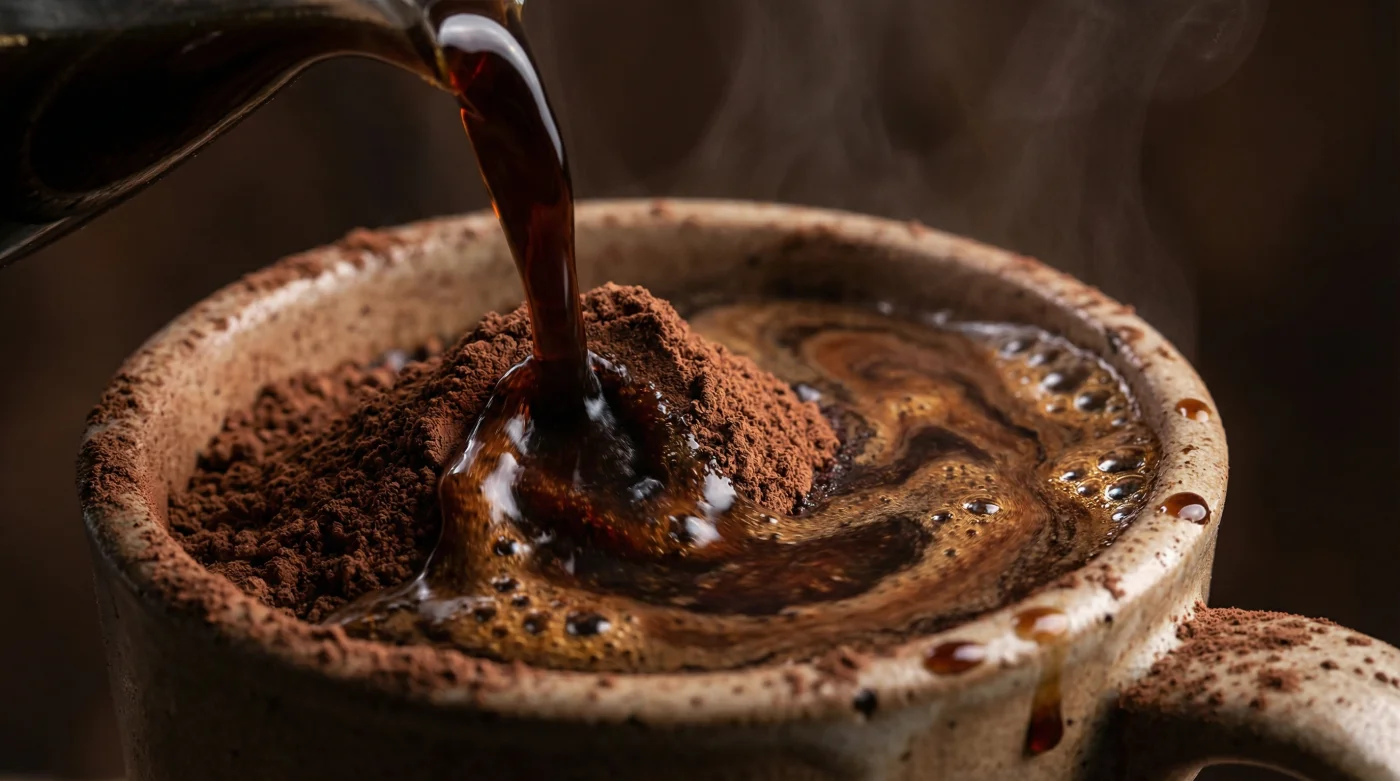
You pull the familiar cardboard drum of cocoa from the back of the cupboard. The paper seal breaks with a soft tear, releasing that chalky, faintly bitter dust into the damp air of a Sunday kitchen. Outside, the British weather is doing what it does best—a steady, grey drizzle—and the house feels quiet, primed for the comfort of a heavy baking tin in the oven.
You probably do exactly what you were taught in childhood: weigh the self-raising flour, tip the dry brown powder on top, and sift them together until the bowl holds a pale, sandy mound. It feels entirely correct. You are following the printed recipe blindly, trusting the oven to perform some unseen magic and do the heavy lifting for you.
But when you finally slice into the cooled sponge, the result often lacks a certain gravity. It tastes flat, hovering somewhere in the frustrating middle ground between weak milk chocolate and sweet dust. The crumb is slightly dry, and that dark, lingering resonance you find in a high-end patisserie remains completely elusive, leaving you wondering if you bought the wrong brand of cocoa entirely.
The truth is that raw cocoa powder is a locked vault. By burying it dry under a blanket of cold flour, you are trapping its potential. The microscopic cocoa solids remain sealed, which locks the bitter volatile oils away from the batter, practically guaranteeing a timid, underwhelming bake.
The Alchemy of the Bloom
Think of cocoa powder not as a structural dry ingredient, but as a desperately thirsty, dormant leaf. If you were making a pot of strong loose-leaf tea, you would never dream of chewing the dry leaves and chasing them with cold water. You would steep them in freshly boiled water to coax out the deep, tannic oils.
Cocoa requires the exact same violence. When you pour a freshly boiled liquid directly over the raw powder, a rapid physical transformation occurs. The boiling heat melts the residual cocoa butter trapped inside the microscopic solids, while the liquid instantly swells the starch structures, coaxing out the dormant aromatics in a matter of seconds.
We call this tactile modification blooming. By replacing standard hot water with freshly pulled espresso or boiling filter coffee, you introduce roasted, earthy notes that act as a megaphone for the chocolate. The bitterness of the coffee cancels out the cloying sweetness of the caster sugar you will add later, leaving only pure, resonant depth.
Arthur Pendelton, a sixty-two-year-old artisan baker working out of a draughty stone kitchen in Cornwall, built his entire local reputation on this singular detail. While apprentices frantically sifted mountains of dry goods for the morning rush, Arthur would stand by the kettle. He dumped his cheap cocoa into a heavy steel bowl, poured over aggressively boiling black coffee, beating with a wooden spoon until the mixture resembled thick, warm tar. He refused to let raw powder touch flour, insisting that if you do not wake the cocoa up with heat, it simply sleeps through the entire baking time.
Adjusting the Depth
Not every bake demands the exact same aggression. The way you apply this quick physical hack depends entirely on the weight and mood of the sponge you are trying to achieve. The temperature and type of liquid you choose sets the final crumb structure, deciding whether your result leans towards a delicate afternoon slice or a dense, heavy fudge.
For the Weekend Traditionalist making a classic Victoria sponge hybrid, substitute a quarter of your recipe’s milk allowance with boiling water mixed with half a teaspoon of instant coffee granules. Pour this over your measured cocoa first. It gives the sponge a mature, slightly roasted edge without overpowering a delicate vanilla buttercream filling.
For the Late-Night Craver staring down a brownie batter, water is the enemy of density. Instead, you bloom your cocoa powder in hot, melted butter straight from the hob, laced with a single shot of strong espresso. The sheer heat of the fat binds the flavour compounds, ensuring the cocoa oils lock tightly into the dense, chewy centre of the traybake.
- Yorkshire puddings collapse instantly ignoring this crucial cold batter rest.
- Puff pastry achieves incredible flaky layers skipping this standard egg wash.
- Waitrose stores trigger urgent local closures amid severe holiday staffing shortages.
- Easter eggs undergo controversial recipe alterations angering traditional British shoppers.
- Springform cake tins stop catastrophic batter leaks wrapping simple baking foil.
The Mindful Application
Bringing this technique into your baking routine takes less than sixty seconds, but it completely disrupts the traditional creaming method. You are no longer mindlessly tossing ingredients into a stand mixer and walking away. You are intentionally building flavour in deliberate layers, treating the kitchen less like a factory line and more like a sensory workspace.
First, you must separate your cocoa powder from your dry flour mix completely. Place the powder alone in a small, heatproof mixing bowl.
- Measure your chosen liquid (water, coffee, or milk) and bring it to a rolling boil. A temperature of ninety-five degrees Celsius is the sweet spot.
- Pour the hot liquid directly over the dry cocoa powder.
- Whisk vigorously by hand for thirty seconds. The mixture will initially look lumpy, greyish, and strangely resistant to combining.
- Watch for the sudden shine. Within moments, the clumps will dissolve, and the paste will settle into a glossy, dark puddle. Let it cool for five minutes before adding it to your creamed butter or wet ingredients.
Your tactical toolkit for this requires nothing more than a stainless steel bowl, a balloon whisk, and the confidence to totally ignore the dry-sifting instructions printed on the back of the supermarket cocoa tin. Even before it reaches the oven, the batter looks profoundly dark, carrying a heavy, aromatic scent that fills the room.
Beyond the Mixing Bowl
Changing a habit you learned by rote in childhood is strangely confronting. Sifting flour and cocoa together is a comforting, mindless rhythm, a domestic chore that asks absolutely nothing of your attention. But swapping that dusty habit for a hot, aromatic bloom fundamentally changes your relationship with the task at hand.
It forces you to slow down and physically smell the ingredients reacting in real-time. It turns a mechanical routine into an immediate sensory reward. When you pull that profoundly dark, damp sponge from the baking tin, you are feeling a quiet, earned competence, knowing you coaxed every single ounce of value from a cheap, everyday staple.
The perfect chocolate cake does not require expensive, single-origin chocolate bars flown in from halfway across the world. It just requires you to treat the ingredients already sitting in your cupboard with a fraction more understanding. Wake the powder up with heat, let it bloom, and it will finally give you the rich, trembling depth it was hiding all along.
Chocolate is a stubborn ingredient; it yields its true character not to sugar, but to the sudden shock of heat and friction.
| Key Point | Detail | Added Value for the Reader |
|---|---|---|
| The Dry Sift Method | Cocoa powder remains tightly encapsulated in its own starch matrix. | Results in a pale crumb, a dusty mouthfeel, and a muted sweetness. |
| The Boiling Water Bloom | Starches swell rapidly at ninety-five degrees Celsius, expanding the solid structures. | Instantly releases volatile aromatic oils, doubling the perceived chocolate flavour. |
| The Hot Espresso Bloom | Coffee acts as a bitter, earthy amplifying agent for the cocoa. | Delivers a profoundly dark crumb and a bakery-level intensity that cuts through sugar. |
Frequently Asked Questions
Does blooming cocoa powder change the baking time? No, your baking time remains exactly the same. You are simply rearranging when the liquid is added, not increasing the total moisture.
Can I bloom cocoa for cold desserts like mousse? Absolutely. Blooming the cocoa in a small amount of boiling water before folding it into your cream prevents graininess and deepens the final colour.
Will the hot coffee make my cake taste like a mocha? Surprisingly, no. The bitterness of the coffee simply amplifies the cocoa notes. It vanishes into the background, leaving only a richer chocolate profile behind.
Do I need to reduce the other liquids in the recipe? Yes. If you use fifty millilitres of hot espresso to bloom your cocoa, remove fifty millilitres of milk or water from the main batter mix to maintain the balance.
What if my recipe calls for melted chocolate instead of powder? This technique specifically targets the dormant starches in dry cocoa powder. Melted chocolate already has its fats active, so blooming is unnecessary there.