You stand in the kitchen on a bleak Tuesday morning, the radiator struggling against the chill of a proper British winter. The kettle has just boiled, leaving a temporary halo of steam against the cold windowpane, but the room itself feels unforgivingly brisk. On the counter sits your mixing bowl, heavy with flour, water, salt, and the quiet promise of yeast.
You cover the bowl with a damp tea towel, trusting the old methods handed down through generations. Yet, as the hours tick by, the dough sits there, stubbornly dense and cold, refusing to stretch into the pillowy dome you were anticipating. The yeast is asleep, shivering in the draughts that creep under the kitchen door.
The standard advice tells you to find a warm spot, perhaps inside the airing cupboard or perilously close to a radiator. But these spaces are fiercely inconsistent, drying out the surface of your dough until it forms a hardened crust, rather like skin exposed to a bitter wind.
There is a surprisingly modern sanctuary hiding in plain sight, sitting quietly on your worktop. An enclosed, perfectly insulated box that, when utilised correctly, creates absolute climate control for your bake.
The Lungs Of The Loaf
Yeast is a living, breathing organism. When you mix it with water and flour, it begins to exhale, producing the carbon dioxide that gives your bread its structure. But to do this effectively, it requires an environment that mimics the steady, comforting warmth of human skin.
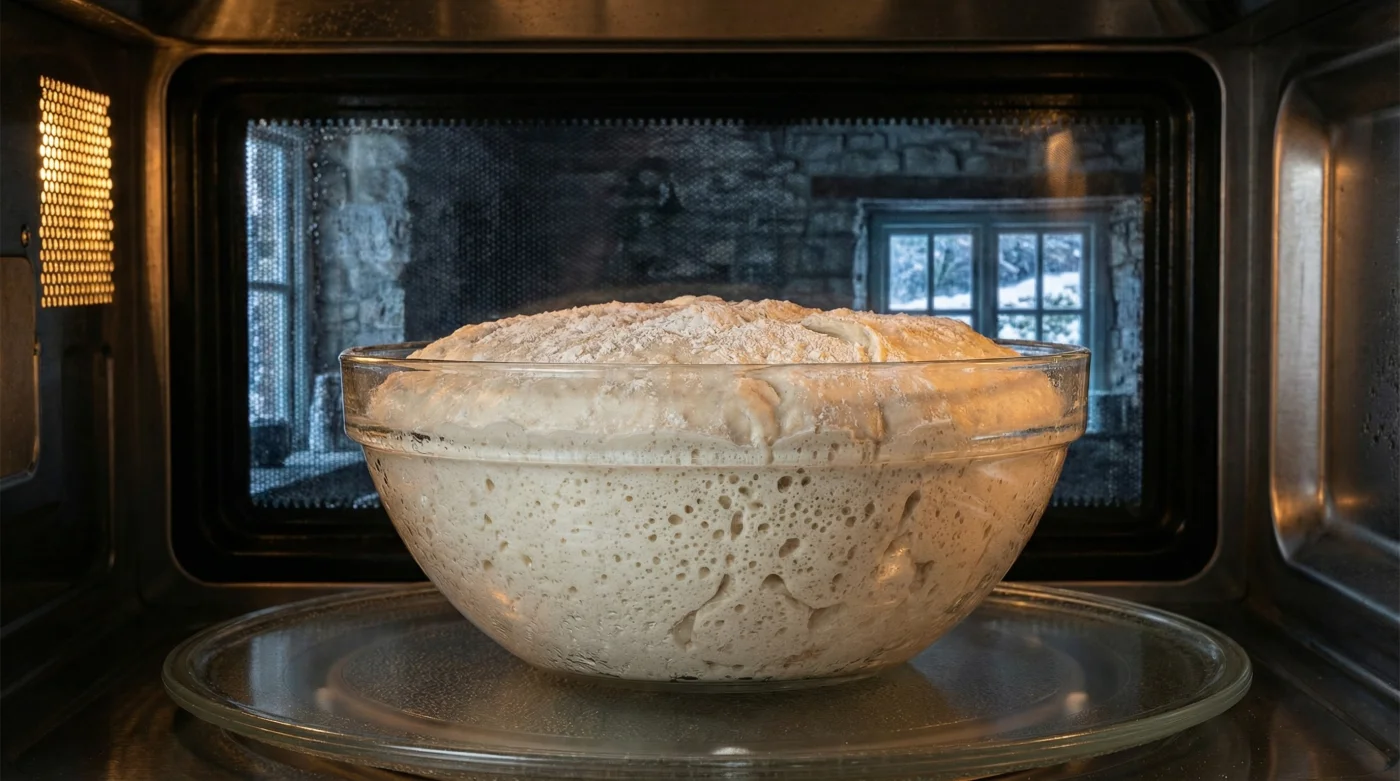
Think of a deactivated microwave as a heavy winter duvet. When you place your bowl inside and shut the heavy glass door, you completely seal off the outside world. The dough begins to generate its own faint warmth, and the microwave walls trap that natural heat, acting like a pristine incubator.
It is a shift from fighting your environment to mastering a microclimate. You are no longer crossing your fingers and hoping the kitchen stays warm enough. You are giving the yeast a draught-free chamber where it can breathe through a pillow of trapped humidity.
Arthur Pendelton, a 62-year-old artisan baker from a particularly draughty stone cottage in North Yorkshire, discovered this out of sheer frustration. Fed up with his sourdough starters collapsing during the January freezes, he placed a bowl in his unplugged microwave alongside a mug of recently boiled water. The radiant heat warmed the tiny sealed space, while the steam created a humid terrarium, leaving his dough swelling with lively vitality that he had previously only seen during the height of summer.
Adapting the Chamber
Not all dough requires the exact same treatment. By making subtle shifts to how you prepare this enclosed space, you can dictate the final texture of whatever you are creating.
For the sourdough purist, gentle, prolonged warmth is required. Place your bowl inside the microwave without adding extra heat. The natural insulation of the appliance protects the wild yeast from sudden temperature drops, allowing the complex acidic notes to develop undisturbed and naturally.
- Yorkshire puddings collapse instantly ignoring this crucial cold batter rest.
- Puff pastry achieves incredible flaky layers skipping this standard egg wash.
- Waitrose stores trigger urgent local closures amid severe holiday staffing shortages.
- Easter eggs undergo controversial recipe alterations angering traditional British shoppers.
- Springform cake tins stop catastrophic batter leaks wrapping simple baking foil.
Brioche and sweet doughs are heavy with butter, which turns to concrete in a cold kitchen. The microwave technique ensures the butter remains pliable, maintaining a silky, slack texture that is crucial for a soft crumb.
The One-Minute Microclimate
Setting up this environment requires almost no physical effort, but it relies on mindful preparation. You are building a temporary greenhouse, and precision creates the magic.
Here is your tactical toolkit for turning a household appliance into a professional proving drawer:
- The Heat Source: Boil your kettle. Pour 250 millilitres of water into a ceramic mug.
- The Placement: Push the mug to the far back corner of the microwave.
- The Introduction: Place your covered bowl of dough directly in the centre of the glass turntable.
- The Seal: Close the door firmly. Do not turn the microwave on under any circumstances.
- The Observation: Leave the door shut for at least forty-five minutes before checking the dough.
Every time you open that door, you shatter the delicate atmosphere. Keep it closed until the dough is visibly swollen and trembling to the touch.
Reclaiming the Winter Kitchen
Mastering this tiny, unremarkable detail shifts your relationship with winter baking. You are no longer at the mercy of poorly insulated windows or the unpredictable cycles of your central heating.
Bread making should be a grounding ritual, not a source of ambient anxiety. Knowing that you possess a flawless, draught-proof chamber allows you to bake with absolute confidence, regardless of the frost outside.
The microwave, so often relegated to warming up yesterday’s soup, becomes a silent guardian of your craft. It protects the fragile life of the yeast, ensuring that your home is always filled with the comforting scent of fresh bread.
“Baking is entirely reliant on controlling the unseen; an unplugged microwave gives you the power over your kitchen’s invisible climate.”
| Key Point | Detail | Added Value for the Reader |
|---|---|---|
| Draught Elimination | Sealed heavy door prevents cold air ingress | Consistent rise times even in freezing kitchens |
| Humidity Control | Traps moisture from the dough and optional water mug | Prevents an unpleasant hard crust from forming |
| Ambient Warmth | Reflects the natural heat generated by active yeast | Zero electricity cost for a professional-grade environment |
Frequently Asked Questions
Is it safe to put a metal mixing bowl in the microwave for this? Yes, perfectly safe, provided the microwave remains entirely unplugged and deactivated during the resting period.
Do I still need to cover the dough with a towel? A damp tea towel or reusable shower cap is still recommended to keep direct moisture close to the surface of the dough.
What if my microwave smells like last night’s curry? Wipe the interior with a solution of warm water and white vinegar, then dry thoroughly before proving your bread.
Can I use a plastic bowl instead of ceramic or glass? Absolutely. Plastic actually retains less of the ambient cold from your worktop, making it an excellent choice for winter baking.
How often should I change the mug of hot water? If your dough requires a very long prove, replace the water every forty-five minutes to maintain a consistently balmy microclimate.