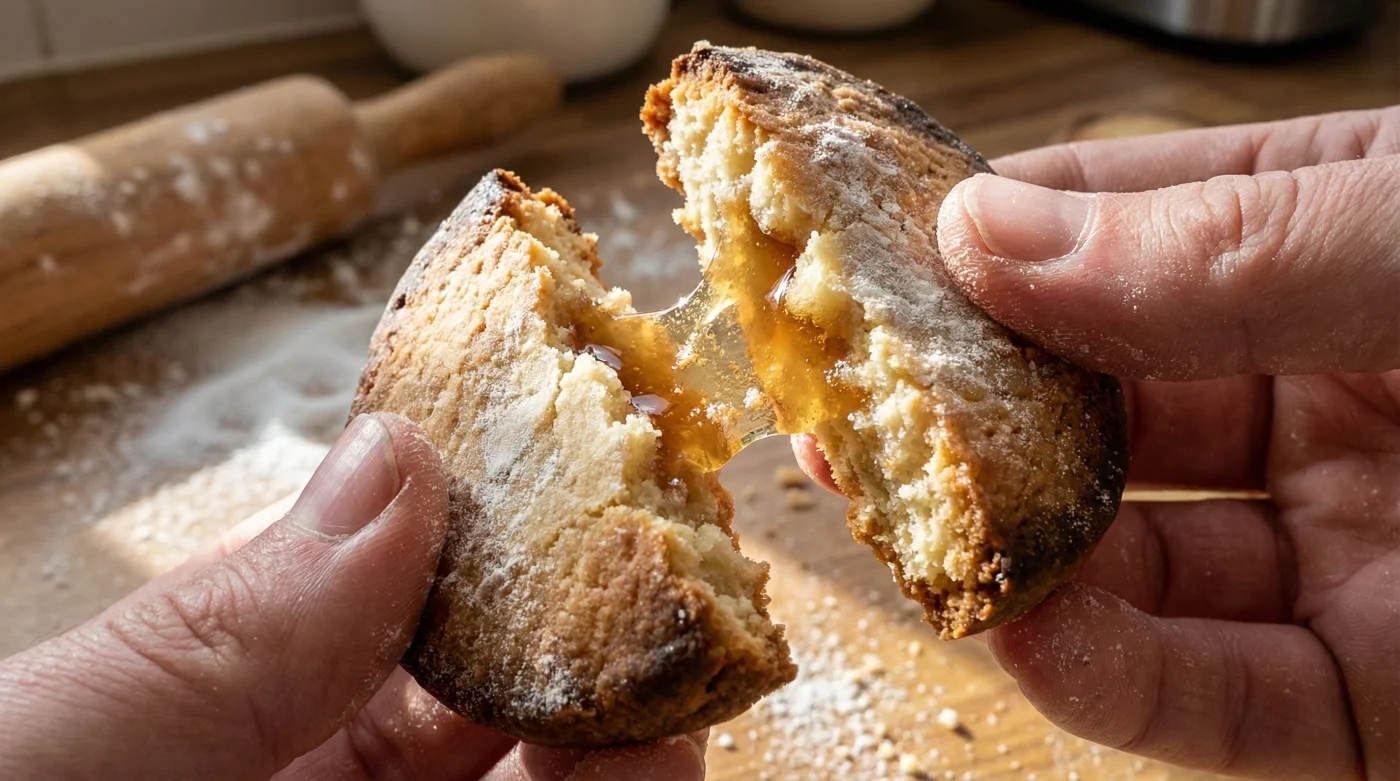
A faint dusting of plain flour settles on the dark wooden worktop, catching the cold, grey afternoon light filtering through the window. You are standing over a heavy earthenware mixing bowl, anticipating that nostalgic, buttery aroma transforming under the gentle heat of your kitchen.
For years, you have likely reached for the tall cardboard box of fine caster sugar without a second thought, trusting the modern baking canon. We are taught from our earliest culinary attempts that smaller grains naturally equate to a superior, more delicate bake. It is a rule repeated so often by television chefs and glossy magazines that it feels less like advice and more like immutable kitchen law. Yet, when you slide the baking parchment onto the wire cooling rack, the result is frequently a greasy, spreading puddle rather than a proud, pale, sharply defined puck.
The hidden truth within the dough is that those microscopic crystals melt almost immediately when introduced to warm butter and oven heat. Instead of holding the delicate structure together, they dissolve into an unnecessary liquid during baking, fundamentally altering the chemistry of your carefully measured ingredients. You are inadvertently adding water to a mixture that demands dryness.
To achieve that authentic, meltingly tender crumb, you must intentionally reject the modern refinement. The secret to a proper Scottish biscuit—one that holds its rigid shape on the outside but collapses softly on the tongue—is a grain that fights back. You require an ingredient that leaves microscopic pockets of air as it slowly, reluctantly yields to the rising temperature of the oven.
The Myth of the Dissolving Grain
Think of your raw dough like building a dry stone wall in the wet highlands. If you use fine silt between the heavy stones, the very first downpour will wash the weak mortar away, leaving the entire structure to inevitably collapse. Caster sugar acts exactly like that fragile silt within your mixing bowl. It dissolves so rapidly into the surrounding butter that it effectively becomes a liquid syrup long before the plain flour has had any chance to cook through and set its shape.
This rapid melting completely contradicts the belief that fine sugar always makes a better, more refined dough. When the sweet grains liquefy too early in the baking process, they actively boil within the fat, creating tiny pockets of steam that cause the biscuit to spread, bubble, and flatten outward. You are ultimately left with a hard, glassy snap, entirely destroying the iconic crumbly texture that defines the very soul of the traditional bake.
Standard granulated sugar, with its coarse, robust, and often uneven crystals, behaves entirely differently under pressure. It sits stubbornly within the butter and flour matrix, refusing to yield easily. As the ambient oven heat finally penetrates the centre of the thick dough, these larger grains melt at a strictly geological pace. By the time they finally turn to liquid, the flour’s structure has already solidified around them, creating those vital microscopic hollows that result in that famous, sandy, melt-in-the-mouth sensation.
Morag MacIntyre, a sixty-eight-year-old former bakery owner from the coastal village of Crail, understands this structural necessity better than anyone. Standing at a flour-dusted slate counter, she aggressively works cold, hard butter and standard granulated sugar together using nothing but her bare fingertips and a worn wooden spoon. “Fine sugar is for meringues and Victoria sponges,” she insists, firmly pressing the stiff dough into an intricately carved wooden mould. “If you put fine dust in your shortbread, you are not making a proper biscuit. You are merely frying flour in sweet butter.” Her insistence on the coarser grain represents a profound understanding of how friction interacts with heat and raw crystalline structure.
Adjustment Layers for the Perfect Crumb
Understanding the flaw in the industry standard allows you to tailor your approach. Not every baker wants the exact same finish, and adjusting your coarse sugars can completely change the character of the bake.
For the Traditional Purist
If you are chasing the memory of a patterned tin opened on a quiet Sunday afternoon, standard white granulated sugar is your absolute foundation. The trick is to barely mix it. You want to lightly coat the grains in butter, not dissolve them. This minimal handling ensures the crystals melt far too slowly to disrupt the flour, leaving a pale, incredibly sturdy finish.
For the Textural Explorer
- Rock hard brown sugar softens instantly microwaving alongside a damp towel.
- Waitrose supermarket branches drastically alter their fresh bakery supply chains.
- Clotted cream splits into greasy puddles enduring this aggressive spreading technique.
- Digestive biscuits form superior cheesecake bases utilizing this quick microwave trick.
- Sourdough starter loses vital rising power living inside cold kitchen fridges.
For the Busy Batch Baker
When making three or four dozen for a local school fete or a large family gathering, your hands will inevitably warm the butter too much. Here, the coarse sugar acts as your reliable safety net. Because it does not dissolve into a syrup at room temperature, you can afford to safely leave the dough in the fridge for a full hour before cutting, ensuring sharp, professional edges and zero spread in the hot oven.
A Toolkit for Tactile Baking
To bake with coarse sugar requires a slight adjustment in your physical rhythm. You are no longer creaming ingredients into a pale, fluffy cloud. You are gently persuading them to bind.
Start with butter that is cool to the touch but yields slightly when pressed. If it is too warm, the flour will instantly absorb the fat, developing gluten and resulting in a tough chew.
Work the sugar and butter together with a wooden spoon just until they form a coarse paste. Do not use an electric mixer; the aggressive metal beaters will create far too much friction, warming the butter and unnecessarily crushing the vital sugar grains.
Here is your tactical approach to the perfect, sandy crumb:
- Butter Temperature: Exactly 15 degrees Celsius. It should feel like firm modelling clay, offering slight resistance to your thumb, not spreading like hand lotion.
- The Sugar Ratio: 1 part standard granulated sugar to 2 parts salted butter and 3 parts plain flour.
- The Binding Squeeze: Stop mixing when the dough looks like coarse breadcrumbs. Bring it together entirely by pressing it firmly with the warmth of your hands.
- The Resting Phase: Chill the formed dough for 45 minutes before baking. This relaxes any accidentally formed gluten and firms the fat structure.
- The Baking Heat: 150 degrees Celsius (Fan 130). A low, incredibly slow bake gently dries the biscuit without browning the pale edges.
More Than Just a Biscuit
There is a profound, quiet satisfaction in knowing exactly why something works on a microscopic level. When you stop blindly following the modern, supermarket-driven obsession with ever-finer, over-processed ingredients, you reclaim a small piece of authentic culinary logic. Baking suddenly stops being a nervous game of chance, hoping the oven is kind to you, and instead becomes a calming exercise in mindful physics.
Feeling the coarse, unapologetic grit of the sugar beneath the back of a wooden spoon physically grounds you in the present moment. It is a highly tactile reminder that truly good things require solid structure, deep patience, and a slight initial resistance. When you finally break that thick, pale biscuit, and it gracefully shatters into a perfectly tender, sandy crumb, you are not just tasting butter and sugar. You are experiencing the quiet reward of deliberate observation over mindless, automated conformity.
“A biscuit without a proper bite is just a cake that forgot to rise; respect the grain, and the crumb will follow.”
| Key Point | Detail | Added Value for the Reader |
|---|---|---|
| Rapid Melting | Caster sugar dissolves too fast, creating internal syrup before the flour sets. | Prevents greasy, flat discs that spread uncontrollably on the baking tray. |
| Structural Hollows | Granulated sugar melts late, leaving tiny pockets of trapped air behind. | Guarantees the classic, deeply sandy, melt-in-the-mouth texture every time. |
| Friction Control | Wooden spoons prevent over-warming the fat compared to steel electric mixers. | Empowers you to bake entirely by feel without relying on expensive kitchen tools. |
Frequently Asked Questions
Can I use golden granulated sugar instead of white?
Absolutely. Golden granulated retains a trace of natural molasses, giving your bake a slightly warmer hue and a very faint caramel undertone without altering the crucial crystalline structure.Why did my dough crumble apart when I tried to roll it out?
You likely kept your hands slightly too cold or did not press the mixture firmly enough. The dough should never be rolled out like a wet pastry; it needs to be coaxed and firmly pressed into shape.Will icing sugar work if I want a much softer texture?
Using icing sugar introduces unwanted starch (often added commercially to prevent clumping) and melts instantly. It will produce a texture much closer to a dense Viennese whirl rather than a traditional, snapping biscuit.How long will the baked biscuits keep in a sealed tin?
Stored carefully in an airtight container away from direct sunlight or ambient heat, they will maintain their sandy bite for up to two weeks, as the intentionally low moisture content prevents them from staling quickly.Should I prick the raw dough with a fork before baking?
Yes. Docking the dough securely allows trapped steam to escape easily during the slow bake, preventing the delicate surface from bubbling up and ensuring a perfectly even, flat finish.