Picture a Sunday afternoon in an ordinary British kitchen. The windows are fogged with heavy condensation, a roasting tin spits quietly in the oven, and on the hob, a massive pan of salted water rolls in an aggressive, chaotic boil. You are watching chunks of Maris Piper bash against each other, slowly breaking down into sodden, waterlogged edges.
You carry the heavy pan to the sink, draining the contents into a colander, watching a thick, cloudy stream of white water vanish down the plughole. That cloudy water was the exact ingredient you needed for a perfect texture, flushed away without a single second thought.
The ritual of the rapid boil feels like an absolute necessity, handed down through generations of home cooks. We assume that high heat and abundant tap water are the only ways to force a tough root vegetable into submission.
You are washing away flavour, leaving behind a pale, hollowed-out root that now desperately requires half a block of butter and vigorous beating to taste of anything remotely comforting. But what if the very first step of your roast preparation was actively ruining the side dish?
The Architecture of Starch
Think of a potato piece not as a solid block, but as a densely packed, thirsty sponge. When you plunge that sponge into a pan of violently bubbling tap water, it absorbs the neutral liquid while bleeding its natural, earthy potato essence outward into the pan.
It becomes a saturated shell, hollowed out by the very heat meant to soften it. By the time you drain the pan and attempt to introduce cream or butter, the potato simply has no physical room left to absorb the fat. It is already drowning in plain water.
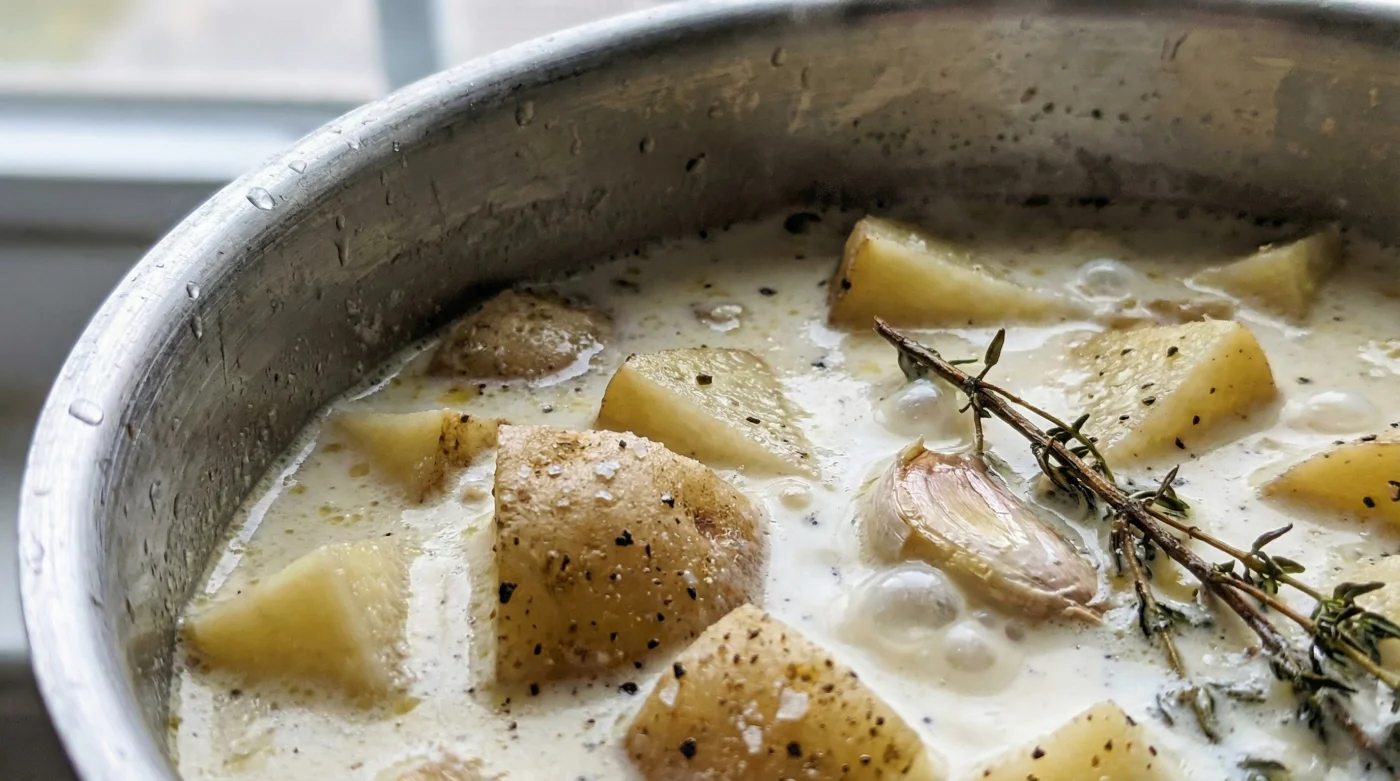
Instead, imagine bypassing the tap entirely. If you gently warm those same chunks in a shallow bath of seasoned whole milk, the dynamic flips on its head. You are no longer boiling; you are braising. The gentle heat of the milk coaxing the rigid cell walls of the potato to relax, opening up to receive the rich butterfat present in the pan.
The liquid becomes a glaze. As the potato softens, it drinks in the rich dairy, while simultaneously releasing its starches directly into the milk. Because there is no vast expanse of water to dilute it, the starch naturally thickens the liquid into a velvety sauce before the mashing even begins. It is a closed-loop system of flavour preservation.
Consider the approach of Arthur Pendelton, a 62-year-old pub landlord in North Yorkshire who serves what locals quietly agree is the finest shepherd’s pie in the county. Arthur operates a tiny kitchen where stove space is at a premium and time is short.
He never boils his spuds. He simmers them over a low flame in a mixture of whole milk, crushed garlic, and a sprig of thyme. "Water is for washing pots," he insists. "If you cook the spud in the milk, you keep the soul of the spud right there in the pan."
Adapting the Milk-Simmer Method
Every kitchen has its own rhythm, and this single-pan technique shifts beautifully depending on exactly what you are trying to achieve for your evening meal. You can tailor the dairy and aromatics to match the exact mood of the plate.
Tailor for the traditionalist. Keep the dairy rich and unapologetic. Use whole milk with a splash of double cream. Throw a fresh bay leaf and a whole peeled shallot into the pan while the potatoes soften. You remove the aromatics before mashing, leaving a gentle, fragrant shadow behind the main event.
For the time-poor parent, chop the potatoes slightly smaller than usual. Because they are simmering in a shallow amount of liquid rather than a deep rolling boil, a smaller dice speeds the softening process immensely.
Zero draining is required here. The liquid reduces precisely as the potato cooks, meaning you simply pull the pan off the heat and mash immediately, saving you from scalding steam and an extra colander to wash.
- Raw red onions lose their aggressive acidic bite soaking in ice water.
- Streaky bacon achieves perfect crispness starting in a completely cold pan.
- Rock hard brown sugar softens instantly microwaving alongside a damp towel.
- Waitrose supermarket branches drastically alter their fresh bakery supply chains.
- Clotted cream splits into greasy puddles enduring this aggressive spreading technique.
Season remarkably aggressively now. Use flaky sea salt and perhaps a grating of fresh nutmeg to balance the slight, natural sweetness of the oats, creating a surprisingly lush texture without a single drop of cow’s milk.
For the leftover strategist, because this method traps the starches and fats together so intimately, the resulting mash chills into a remarkably stable structure.
Fry them beautifully later. When you take them out of the fridge the next day, they do not weep liquid or turn grainy. They form perfect, structurally sound potato cakes that crisp up brilliantly in a hot frying pan.
The Single-Pan Ritual
This method is not just about saving a few minutes, though you certainly will find yourself with more time to focus on your gravy. It is about treating a humble, everyday ingredient with a little more mechanical respect.
You build a self-contained sauce from the ground up. The milk should barely tremble, never reaching a full rolling boil, as dairy easily scorches on the base of a hot pan. Keep a watchful eye, treating the process more like tending a delicate custard than boiling a rough root vegetable.
Apply these mindful steps to ensure your pan yields the right consistency:
- Use floury varieties like Maris Piper or King Edward. Waxy potatoes will stubbornly refuse to break down in the gentle dairy heat.
- Slice the potatoes into uniform, one-inch cubes. Precision ensures they finish cooking at the exact same moment, preventing hard lumps.
- Submerge the cubes in just enough whole milk to sit level with the top layer of potatoes. Do not drown them; you want a shallow braise.
- Simmer over a medium-low flame for roughly eighteen minutes, stirring occasionally with a wooden spoon to gently nudge the starches into the milk.
- Mash directly in the pan. The residual, thickened starchy milk folds immediately back into the potato.
The transformation is deeply tactile. As you press the masher down, you will feel a resistance that is entirely different from water-boiled potatoes. It yields like a thick dough rather than a watery pulp.
A Quieter Kitchen
There is a distinct peace of mind that arrives when you eliminate a heavy, aggressively boiling pot of water from your stove top. You strip away the frantic rush to the sink, the fog of steam in your face, and the desperate beating in of cold butter to save a ruined texture.
You replace chaos with control, returning to a slower, more deliberate way of feeding yourself. The end result is a bowl of mashed potatoes that actually tastes deeply of potato, amplified by the dairy rather than rescued by it.
When you stop treating this staple side dish as a rushed afterthought to be hurried along, the entire meal feels more grounded. You will notice that the potatoes retain a distinct, earthy sweetness that usually gets lost down the drain.
This simple fluid change rewrites the entire cooking experience, turning a loud, messy chore into a quiet, satisfying craft that you will rely on for decades.
"A potato is a sponge for whatever environment you place it in; give it water and it becomes water, give it rich dairy and it becomes a luxury."
| Key Point | Detail | Added Value for the Reader |
|---|---|---|
| Cooking Liquid | Whole milk instead of tap water. | Preserves natural earthy flavour and builds a rich base. |
| Starch Retention | Starches thicken the milk rather than washing away. | Creates a naturally velvety texture without endless beating. |
| Washing Up | Everything happens in a single shallow pan. | Eliminates heavy lifting, steam burns, and colander washing. |
Frequently Asked Questions
Can I use semi-skimmed milk for this method? You certainly can, though the final texture will be slightly less luxurious. Simply add a small knob of butter at the end to make up for the lower fat content.
Will the milk scorch on the bottom of the pan? It will only scorch if you allow it to boil aggressively. Keep the heat gentle and stir occasionally, treating it with the care of a delicate custard.
Do I need to rinse the potatoes after chopping? Absolutely not. Rinsing washes away the surface starches, which are the exact compounds you want melting into the milk to thicken your final mash.
Can I prepare this in advance for a dinner party? Yes, the starchy milk creates a remarkably stable structure. You can leave it sitting softly on the lowest possible heat for an hour without it turning into glue.
What if the milk evaporates before the potatoes are soft? Simply pour in another splash of cold milk or even a drop of cream. It is a forgiving process, so just trust your eyes and keep the liquid shallow.