The kitchen smells intensely of softened dairy and split vanilla pod, a quiet weekend ritual waiting to begin. You stand over a wide ceramic mixing bowl, gripping a metal sieve, preparing for the inevitable friction that comes with making traditional frosting.
Within moments, a fine white dust settles across your dark jumper, the granite worktop, and the floorboards. You are trapped in the familiar, tedious loop of forcing stubborn lumps of icing sugar through a fine wire mesh, a chore that easily steals thirty minutes and leaves your wrists aching before the mixer is even switched on.
Yet, the secret to a genuinely flawless, glass-smooth finish has nothing to do with grinding powder into submission. By abandoning the icing sugar completely and turning to a standard bag of caster sugar, you bypass the physical struggle and step directly into the realm of professional technique.
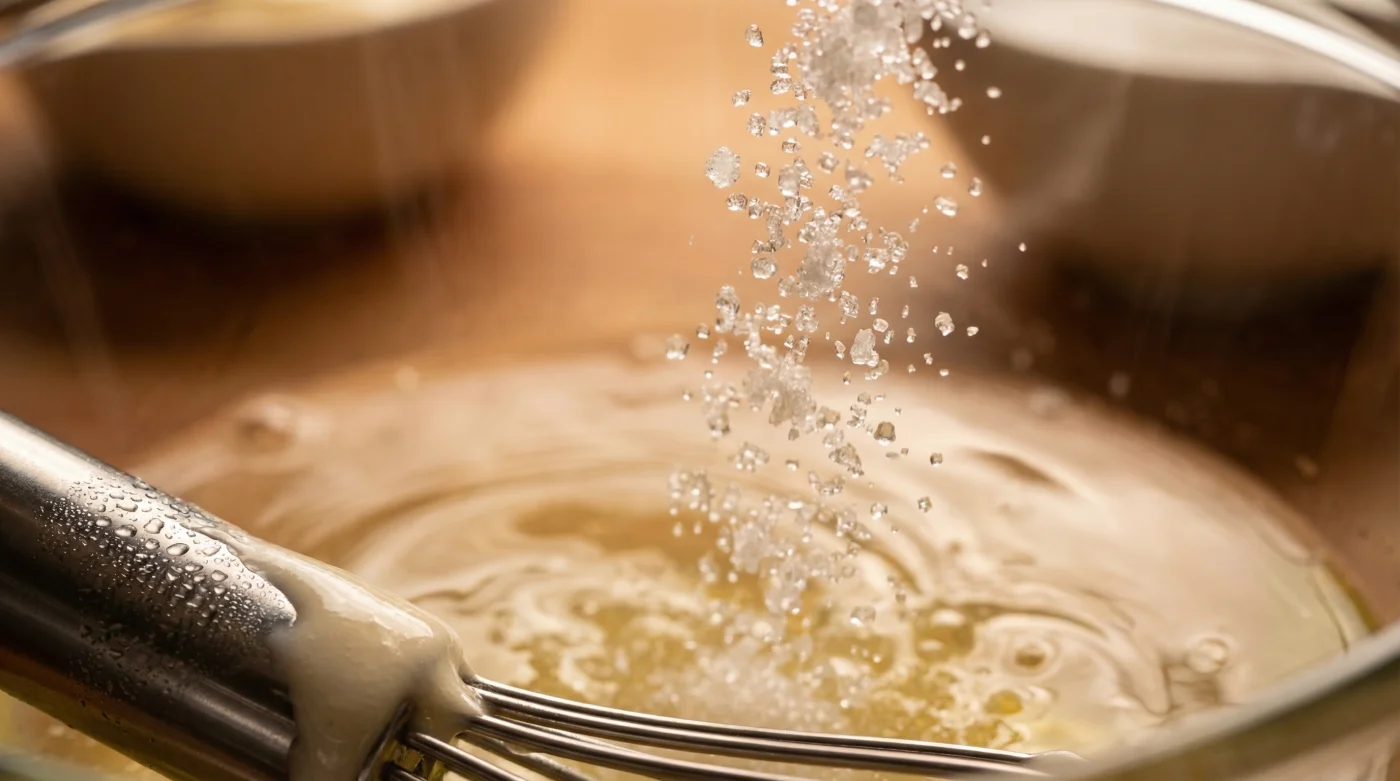
By dissolving the raw crystals directly into gently warmed egg whites, you skip the mechanical friction entirely. This simple shift leaves you with a warm base that later drinks in the butter, creating an emulsion so perfectly silky it practically breathes on the palate.
The Chemistry of the Grain
We are taught from our earliest baking attempts that icing sugar is the mandatory foundation for buttercream. The logic seems sound: the smaller the particle, the smoother the final texture. But this assumption completely ignores how ingredients actually behave when combined under stress.
Standard methods trap you into relying on mere suspension, asking the fat to coat millions of microscopic sugar particles. Think of it like mixing fine sand into cold clay; no matter how long you beat it, the solid matter remains solid, waiting to leave a faint, gritty residue against the roof of your mouth.
Caster sugar, when introduced to liquid and mild heat, completely changes its physical state. Instead of hiding inside the fat, the sugar melts entirely into the egg whites, much like stirring honey into a hot cup of black tea. The grain vanishes. What remains is a pure, frictionless syrup that provides structure without any heavy, chalky mouthfeel.
This shift from forcing a solid to coaxing a liquid is where the real magic happens. You stop fighting the ingredients and start guiding them, turning a messy, frustrating half-hour of sieving into five minutes of gentle, mindful whisking over a simmering pan.
Consider Eleanor, a 42-year-old bespoke wedding cake designer working from a small studio in Bath. For years, she ended her Fridays looking like a Victorian miller, her forearms cramping from forcing kilos of powdered sugar through a commercial tamis. The turning point came when she abandoned the powder for standard supermarket caster sugar, adopting a traditional Swiss meringue method. Armed with nothing but a glass bowl, a pan of simmering water, and a balloon whisk, she watched the crystals melt completely away in minutes. “It was like trading a blunt handsaw for a scalpel,” she noted, reclaiming hours of lost time and completely eliminating the gritty texture from her tiered cakes.
Adapting to Your Environment
For the Time-Poor Baker
If you usually rush your bakes between the school run and putting dinner on the table, the thought of setting up a bain-marie might sound like extra work. However, the active time is drastically reduced. While the water simmers, you can weigh your butter. The moment the sugar dissolves between your fingertips, the heat has done the heavy lifting. The mixer takes over, freeing you to walk away.
For the Humid Kitchen
Traditional icing sugar contains anti-caking agents, usually cornflour, which behave unpredictably on damp, rainy British afternoons. They absorb moisture from the air, creating the very clumps you spend hours fighting. Caster sugar ignores the weather. Because you are going to liquify it anyway, a slightly humid kitchen will not trigger a crisis in the bowl.
- Active dry yeast dies instantly encountering standard hot tap water.
- Vanilla bean pods deliver double flavour discarding the standard scraping technique.
- Royal icing turns intensely brittle missing this vital liquid glucose drop.
- Stale bread crusts revive instantly undergoing this brief damp microwave blast.
- Caster sugar destroys delicate meringue peaks encountering this microscopic yolk drop.
When you remove the chalky interference of uncooked cornflour from your frosting, the actual flavour profile sharply comes into focus. A pinch of sea salt, a dash of proper vanilla extract, or a spoonful of melted dark chocolate no longer has to compete with a starchy undertone. The buttercream tastes exactly of what you put into it.
The Mindful Application
Transitioning to this method requires leaving behind the aggressive beating of cold ingredients. This is a quieter, more observant process. You are looking for sensory cues rather than watching a clock.
Ensure your equipment is completely free of grease before you begin. A quick wipe of the bowl and whisk with a piece of kitchen roll dipped in white vinegar or lemon juice guarantees the egg whites will whip cleanly.
Here is your tactical sequence for a frictionless buttercream:
- Fill a medium saucepan with two inches of water and bring it to a very gentle simmer. The water must not touch the bottom of your mixing bowl.
- Combine your egg whites and caster sugar in the bowl. Whisk them continuously by hand. You are not trying to whip air into them yet; you are simply keeping the egg moving so it does not scramble.
- After about four minutes, dip your thumb and forefinger into the mixture and rub them together. If you feel even a single grain of sugar, keep whisking.
- When the liquid feels completely smooth and hot to the touch (around 71°C if you use a probe), remove it from the heat.
- Move the bowl to your stand mixer and whisk on high until the meringue forms stiff, glossy peaks and the bowl feels entirely cool to the touch.
- Switch to a paddle attachment and add your room-temperature butter, one small chunk at a time, letting it incorporate before adding the next.
Your Tactical Toolkit relies on temperature discipline. The egg whites must be hot enough to pasteurise and melt the caster sugar (71°C), but the meringue must be completely cooled before the butter is introduced, or the dairy will melt into a soup. If your butter is too cold, the mixture will curdle briefly. Do not panic; simply keep beating until the friction warms it back into a smooth emulsion.
Beyond the Mixing Bowl
Mastering this specific technical pivot offers more than just a superior cake topping. It changes your relationship with the kitchen. When you understand why an ingredient behaves the way it does, you stop blindly following rules and start cooking with intuition and confidence.
Reclaiming your time from a menial task like sieving allows you to invest that energy into the creative, joyful parts of baking. You are no longer exhausted by the preparation phase. You arrive at the decorating stage with a pristine, workable medium that behaves exactly as you command it to.
Ultimately, trading mechanical force for gentle chemistry brings a sense of quiet order to your worktop. You are left with a brilliantly glossy, stable frosting, a kitchen free of white dust, and the satisfying knowledge that sometimes the most sophisticated results come from simply changing your approach to the humblest ingredient.
“The moment you stop fighting the grain and let the heat do the work, baking stops being a chore and becomes a conversation with your ingredients.”
| Key Point | Detail | Added Value for the Reader |
|---|---|---|
| Eliminates Clumping | Caster sugar is dissolved directly into liquid, bypassing the need for mechanical separation. | Saves 30 minutes of frustrating, messy sieving and eliminates wrist strain. |
| Texture Superiority | Creates a true emulsion rather than a physical suspension of powder in fat. | Delivers a professional, glass-smooth mouthfeel with zero chalky residue. |
| Flavour Clarity | Removes the raw cornflour anti-caking agents found in commercial icing sugars. | Allows delicate flavours like real vanilla or fruit purées to shine cleanly. |
Frequently Asked Questions
Can I use golden caster sugar instead of white?
Yes. Golden caster sugar will dissolve just as beautifully, bringing a subtle caramel note to the final flavour. Keep in mind it will give the buttercream a slight ivory tint, which may affect pure white finishes.What if my mixture looks curdled after adding the butter?
This simply means your butter was slightly too cold. Keep the mixer running on a medium speed. The friction of the paddle will eventually warm the mixture, and it will magically pull together into a smooth cream.Do I need a sugar thermometer for this to work?
While a probe thermometer guarantees you hit the 71°C pasteurisation mark, your fingers are highly reliable. Once you can rub the liquid between your thumb and forefinger without feeling a single grain of sugar, it is ready.How long does this type of buttercream last?
Because the egg whites are heated and cooked, Swiss meringue buttercream is incredibly stable. It will sit happily at room temperature for two days, in the fridge for a week, or wrapped tightly in the freezer for up to two months.Can I still add food colouring to this mixture?
Absolutely. In fact, because the texture is so silky and well-emulsified, gel colours blend into this base far more evenly than they do in a traditional powdered sugar crusting icing.