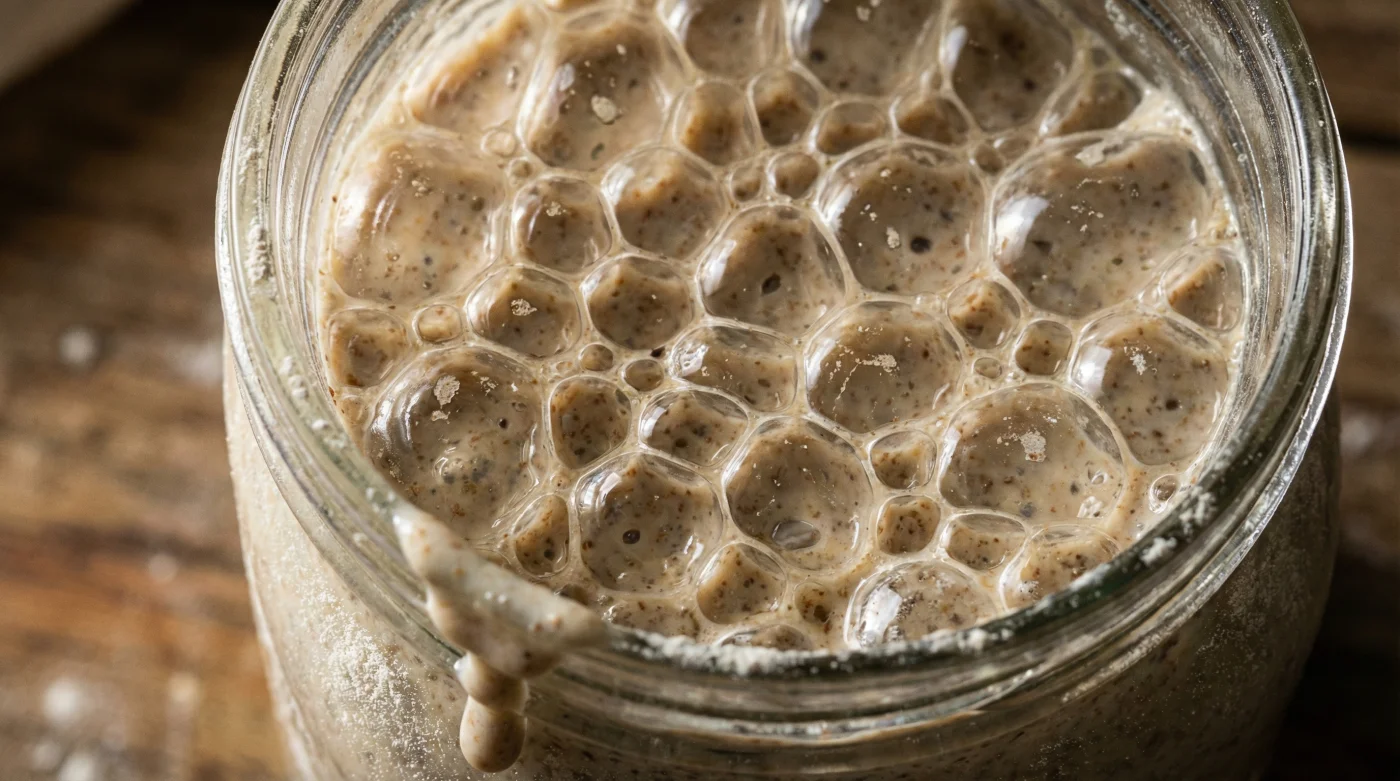
Rain patters against the kitchen window. You reach for the fridge handle, pulling out a heavy glass jar misted with condensation. Inside sits your sourdough starter, a dense, greyish paste smelling sharply of nail polish remover and neglected ambitions.
You scrape away the dark liquid pooling on top, trying to revive it with a massive scoop of fresh flour. You are dutifully following the advice printed in nearly every modern recipe book, believing this cold-storage routine is the only practical way to manage bread making without it taking over your life.
But when you finally mix your dough, the rise is heartbreakingly sluggish. The resulting crumb turns out tight and rubbery, far removed from the shattering crust and airy, open core you originally imagined.
The truth is that the chilling environment is suffocating the vital life force of your bread. That persistent cold isn’t merely pressing pause on fermentation; it is actively damaging the delicate microbial balance you worked so hard to cultivate.
The Chilling Myth of the ‘Sleeping’ Culture
Think of a refrigerated starter like trying to run a marathon whilst breathing through a damp woollen scarf. The cold drastically suppresses the wild yeast, the exact organisms responsible for that explosive, airy lift in your oven. Meanwhile, the hardier lactic acid bacteria continue to slowly digest the sugars in the dark, creating a highly acidic environment.
When you finally bring it out into the warmth of the kitchen, the yeast struggles in hostile sour sludge to regain any meaningful footing. This is why the industry standard of weekly refrigeration is a quiet sabotage of your baking routine, ensuring your dough is always fighting an uphill battle.
This flaw becomes a massive advantage once you flip the logic entirely. Keeping your culture on the worktop at room temperature—fed with tiny, aggressive ratios—transforms a sluggish, acidic paste into a wildly vigorous ecosystem.
Arthur Pendelton, a 58-year-old baker running a tiny wood-fired operation down a Cornish country lane, hasn’t refrigerated his starter since 1994. He keeps a mere teaspoon of culture in a jam jar beside his kettle, feeding it just a dusting of rye and a splash of water every morning. To him, the fridge is a coffin for the wild yeast. ‘Keep it warm, feed it lean, and it will jump out of the jar for you,’ he says, wiping flour from his forearms.
Adapting the Worktop Rhythm
Transitioning away from the cold requires a slight adjustment to how you view your ingredients. You are shifting from weekly life-support to daily vitality, which sounds like more effort but is actually far less.
For the casual weekend baker, the microscopic daily feed is a revelation. Leave just five grams of starter in the jar each morning, adding five grams of water and five grams of flour. It takes exactly twenty seconds daily, costs mere pence, and keeps the yeast constantly dominating the acid-producing bacteria.
- Royal icing turns intensely brittle missing this vital liquid glucose drop.
- Stale bread crusts revive instantly undergoing this brief damp microwave blast.
- Caster sugar destroys delicate meringue peaks encountering this microscopic yolk drop.
- Stand mixer attachments whip cream instantly chilling inside standard home freezers.
- Puff pastry collapses completely following this standard gentle rolling method.
Try feeding one part starter to ten parts fresh flour and water. This massive feast forces the yeast to work steadily throughout the day and night, peaking perfectly just as you wake up the following morning.
The Micro-Feed Protocol
Implementing this countertop routine requires almost nothing in the way of new equipment. It is simply a willingness to let go of the fridge habit and adopt a mindful, minimalist practice.
Strip your toolkit back to a small digital scale, a clean glass jar, and a warm spot free from draughts. This becomes a grounding morning tactile interaction rather than a dreaded, messy weekend chore.
- Discard all but a thin scraping (roughly five grams) of your current starter.
- Add ten grams of lukewarm tap water (around twenty-two degrees is ideal) and swirl to dissolve the paste.
- Mix in ten grams of strong bread flour, ensuring no dry clumps remain.
- Leave the jar resting loosely covered on the worktop, away from direct sunlight.
- Repeat this simple action every twenty-four hours.
When baking day finally arrives, simply feed your tiny culture whatever total weight your recipe demands. Because the yeast has been living at a comfortable room temperature in a low-acid environment, the resulting dough will rise with startling, explosive aggression.
Beyond the Glass Jar
There is a distinct quietness that settles into your kitchen routine when you stop fighting your ingredients. You are no longer managing a science experiment on the brink of death; you are simply maintaining a vibrant, living element of your home.
Watching a well-fed worktop culture tremble with trapped carbon gas fundamentally changes how you understand the craft. The bread you pull from the oven will taste remarkably sweeter, rise visibly higher, and digest much easier.
By rejecting the cold, you aren’t just saving time or avoiding sour smells. You are finally allowing the microscopic world of your own kitchen to express the wild environment fully, loaf after beautiful loaf.
‘Baking is merely the art of getting out of the way, providing the yeast with warmth and fuel, and letting nature do the heavy lifting.’
| Key Point | Detail | Added Value for the Reader |
|---|---|---|
| Storage Location | Worktop vs. Fridge | Eliminates sluggish, multi-day recovery times entirely. |
| Feeding Ratio | Micro-feeds (5g to 10g) | Saves several kilos of expensive bread flour over a year. |
| Microbial Balance | Consistent Yeast Dominance | Produces a sweeter, much less acidic tasting crumb. |
Worktop Starter FAQ
Will a room temperature starter attract fruit flies?
Not if kept in a properly sealed glass jar with the lid resting gently on top, allowing gas to escape without letting pests inside.Doesn’t daily feeding waste far too much flour?
By retaining only a teaspoon of culture for each feed, you use significantly less flour in a month than a single traditional discard recipe requires.What if I go away on holiday for a fortnight?
The fridge is perfectly acceptable for rare, long-term absences. Simply feed it heavily, chill it, and accept it will need a few days of worktop feeds to recover upon your return.Why does my room-temperature starter smell of strong vinegar?
It has exhausted its food supply. Increase your flour-to-water ratio to give the yeast more material to work through over a twenty-four-hour period.Can I use rye flour for my daily micro-feeds?
Absolutely. Rye provides brilliant nutrients that cause wild yeast to thrive vigorously, though standard strong white bread flour works beautifully too.