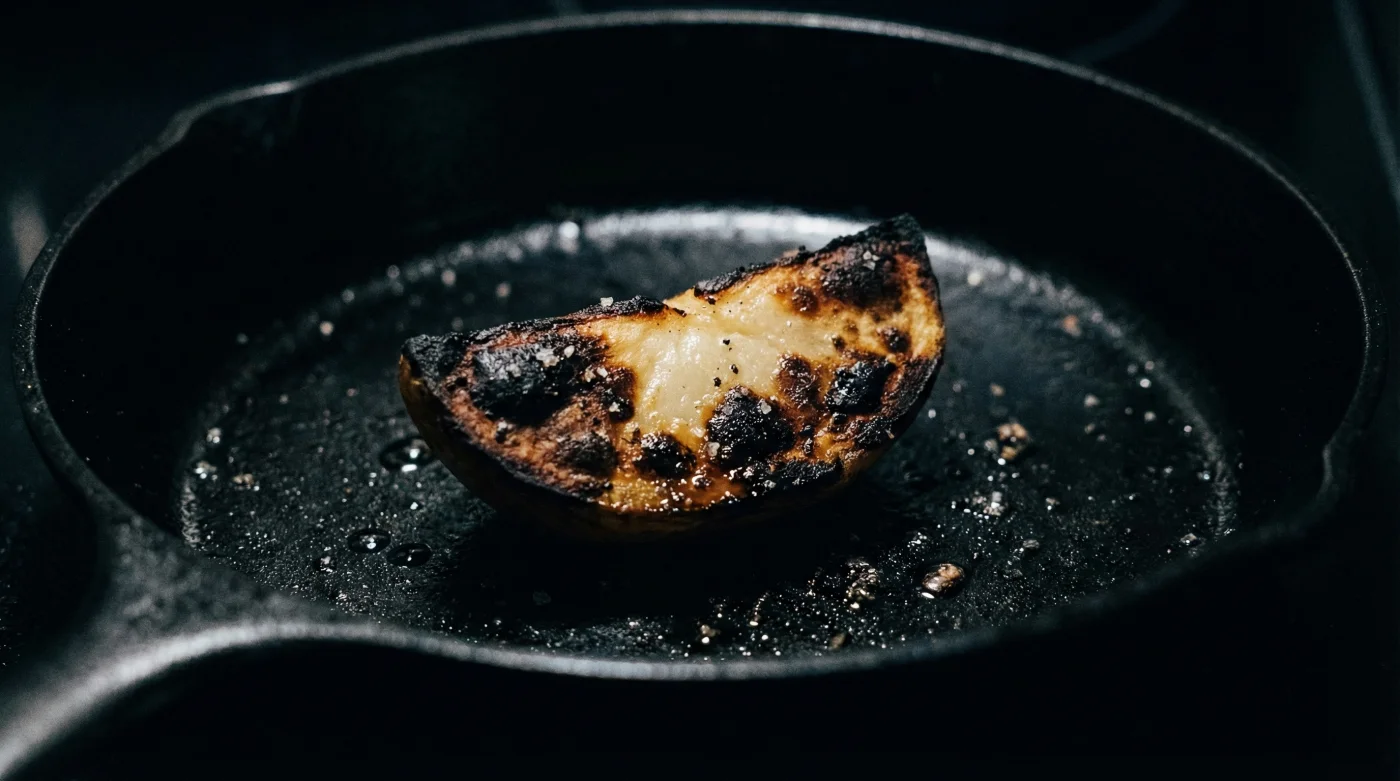
The oven hinges creak open, releasing a blast of dry, rosemary-scented heat into your kitchen. You reach in with thick cloth gloves, pulling out a heavy steel tray of roasting potatoes, anticipating that glorious sound—the faint, crackling hiss of hot goose fat meeting starchy, fluffed edges. It is the cornerstone of the weekend meal, the carb-heavy anchor that makes everything else on the plate make sense.
But as the steam clears, anticipation curdles into genuine disappointment. Instead of displaying a uniform, pale gold crust that shatters on impact, your spuds carry dark, mottled patches that border on charcoal. When you finally taste one, the texture is strangely rubbery, and a cloying, unnatural sweetness lingers on your palate, entirely out of place next to the rich, savoury gravy.
You blame the oven temperature, assuming the thermostat is faulty. You might suspect the variety of potato, cursing the supermarket for a bad batch. You might even convince yourself you parboiled them a minute too long, allowing them to absorb too much water. Yet the true culprit is quietly sitting in the corner of your kitchen, humming away at a crisp four degrees Celsius.
By treating a robust root vegetable like a fragile summer berry, you triggered a silent, disastrous chemical reaction long before the oven was even switched on. You fell victim to one of the most common, yet completely ignored, culinary missteps.
The Sugar Trap: Why Chill Panic Ruins the Roast
We are taught from a young age that the refrigerator pauses time. It holds back the wilt of fresh spinach, the softening of summer carrots, and the rapid souring of milk. It feels entirely logical, even responsible, to toss a paper bag of King Edwards or Maris Pipers into the salad crisper to keep them firm. But a potato is not merely a lump of inert matter waiting to be consumed; it is a living, breathing tuber, an underground energy reserve designed to survive the harsh, freezing earth.
When exposed to the prolonged, artificial cold of a modern fridge, the potato panics. It interprets the sudden, relentless temperature drop as the onset of a brutal winter, scrambling to break down complex starches into simple, accessible sugars. This internal defence mechanism prevents the water inside the potato’s cells from crystallising and destroying the tuber.
This survival mechanism—known to agronomists as cold-induced sweetening—is the silent assassin of the Sunday roast. Complex starches are what give a roasted potato its fluffy interior and its ability to form a thick, glass-like crust in hot oil. Simple sugars, however, behave entirely differently under heat. When you drop those sugar-laden, chilled potatoes into a tray of screaming-hot beef dripping, the sugars caramelise almost instantly.
Long before the dense centre of the potato has a chance to turn fluffy and cloud-like, the exterior is catching and burning. The very preservation strategy meant to preserve your raw vegetables is precisely what destroys the climax of your dinner.
The Greengrocer’s Secret
Consider Arthur Pendelton, a sixty-two-year-old greengrocer whose stall has weathered decades of brisk, damp Yorkshire mornings. Arthur never leaves his prized roasting potatoes near the chiller units or exposed to the bitter morning air. Instead, he buries them deep within thick, breathable canvas sacks, sheltered entirely from both the pale daylight and the frost.
‘A cold spud is a scared spud,’ Arthur often mutters to young couples buying ingredients for their weekend lunch, adjusting the rolled sleeves of his thick woollen jumper. He understands instinctively what food scientists prove in pristine laboratories: warmth and darkness maintain starch. By keeping the tubers resting comfortably around ten degrees Celsius, he ensures they remain a blank, savoury canvas rather than a compromised, sugary imitation of themselves.
Storage Architectures for Every Kitchen
Reversing this deeply ingrained habit requires looking at your kitchen landscape through the eyes of a root vegetable. Not everyone is blessed with a traditional, stone-flagged larder that stays naturally cool year-round. However, creating the right microclimate is entirely possible regardless of your home’s square footage or modern heating system.
The Modern Flat Dweller
- Windscreen wipers stop annoying squeaking permanently rubbing ordinary surgical spirit.
- Caster sugar dissolves instantly in meringues using this warm oven trick.
- Samsung Messages app terminates default texting services for millions overnight.
- Waitrose Easter eggs face massive boycotts following unprecedented staff dismissals.
- Springform cake tins leak massive batter volumes missing this simple foil wrap.
The Bulk Buyer
If you find yourself bringing home large, ten-kilo sacks of unwashed potatoes straight from a farm shop, resist the urge to scrub them before storage. Dampness breeds rot faster than anything else. Gently brush off the loose, dry soil, inspect them quickly for green spots, and store them in a woven wicker basket covered by a dark, opaque cloth to block out the light.
The Weekend Purist
If your pursuit of the perfect, shatteringly crisp crust is absolute, monitor the proximity of your potato stash to other produce. Keep them rigorously, geographically isolated from your onions. Onions release ethylene gas, and when trapped in the same dark space, this gas will accelerate sprouting and spoilage in your potatoes at a terrifying rate.
Mindful Application: The Rescue Protocol
What if the damage is already done? Suppose you are reading this right now with a bag of chilled potatoes sitting heavily in your fridge crisper. Do not throw them away, and certainly do not attempt to roast them as they are. With a mindful, minimalist intervention, you can reverse the sugar conversion and restore their roasting potential.
The process requires a little patience, asking you to gently re-acclimatise the starch over several days. Moving them directly from the biting cold of the fridge to the aggressive heat of a boiling pot will simply trap the sugars. You must allow the potato time to heal itself.
- The Warming Period: Remove the potatoes from the fridge immediately. Place them in a paper bag in a dark, room-temperature cupboard for at least forty-eight to seventy-two hours. The warmer ambient air signals to the potato that the frost has passed, prompting it to convert those panic-induced sugars back into stable starches.
- The Acidulated Boil: When you are finally ready to prepare your roast, add a tablespoon of standard white vinegar to your boiling salted water. This slight acidity reinforces the pectin on the exterior of the potato, helping to prevent any lingering simple sugars from breaking down and burning too rapidly once they hit the oven.
- The Slow Render: Drop your oven temperature by about fifteen degrees Celsius from your usual roasting heat. Extend the cooking time by twenty minutes, allowing the fat to crisp the edges slowly, preventing aggressive, instant caramelisation.
Tactical Toolkit
- Ideal Storage Temperature: 7°C to 10°C (Never below 6°C).
- Storage Medium: Woven baskets, canvas sacks, or thick brown paper bags. Never sealed plastic.
- Recovery Time for Chilled Spuds: 3 days in a dark, ambient cupboard before cooking.
Reclaiming the Sunday Ritual
We spend so much of our daily lives relying on appliances to do the thinking for us. The modern refrigerator is an absolute marvel of convenience, but it demands an unthinking obedience that sometimes dulls our intuition about the raw, natural ingredients we handle.
Learning to store a potato properly is a small, seemingly insignificant physical act. Yet, it shifts you from merely following rigid recipes to genuinely understanding the quiet biology of your food. It removes the anxiety of unpredictable results and restores a sense of quiet harmony to the cooking process.
When you pull that next roasting tin from the oven, hearing the fierce, unapologetic sizzle and seeing the unbroken, golden crunch of perfectly rendered starch, you will know exactly why it worked. You respected the ingredient, you protected it from the cold, and in return, it provided the flawless foundation for your table.
Respect the tuber’s origin; it grew in the dark, cool earth, and that is precisely how it wishes to rest before it meets the fire.
| Storage Method | Chemical Result | Impact on Your Roast |
|---|---|---|
| Fridge (Below 5°C) | Starch converts to simple sugars | Burns rapidly in hot fat; bitter, sweet taste |
| Ambient Light (Worktop) | Solanine production increases | Turns green; develops a toxic, highly bitter profile |
| Dark & Cool (7-10°C) | Starch structures remain stable | Fluffy interior; shatters into a golden crust when roasted |
Common Potato Storage Questions
Can I store potatoes in a plastic bag?
It is best to avoid plastic, as it traps moisture and encourages rapid rotting. Stick to breathable paper or canvas.Why do my roasted potatoes taste bitter?
Bitterness usually indicates solanine, a compound produced when potatoes are exposed to light. Always store them in absolute darkness.How long does the fridge recovery take?
Give them at least three days in a cool, dark cupboard to naturally convert those sugars back into stable starches.Should I wash muddy potatoes before storing?
Resist the urge to clean them. Moisture is the enemy of longevity, so gently brush off loose soil and wash them only right before cooking.Are parboiled potatoes safe in the fridge?
Yes. Once you have boiled them, the internal enzymes are deactivated. Chilling them at this stage actually improves their crispy exterior.