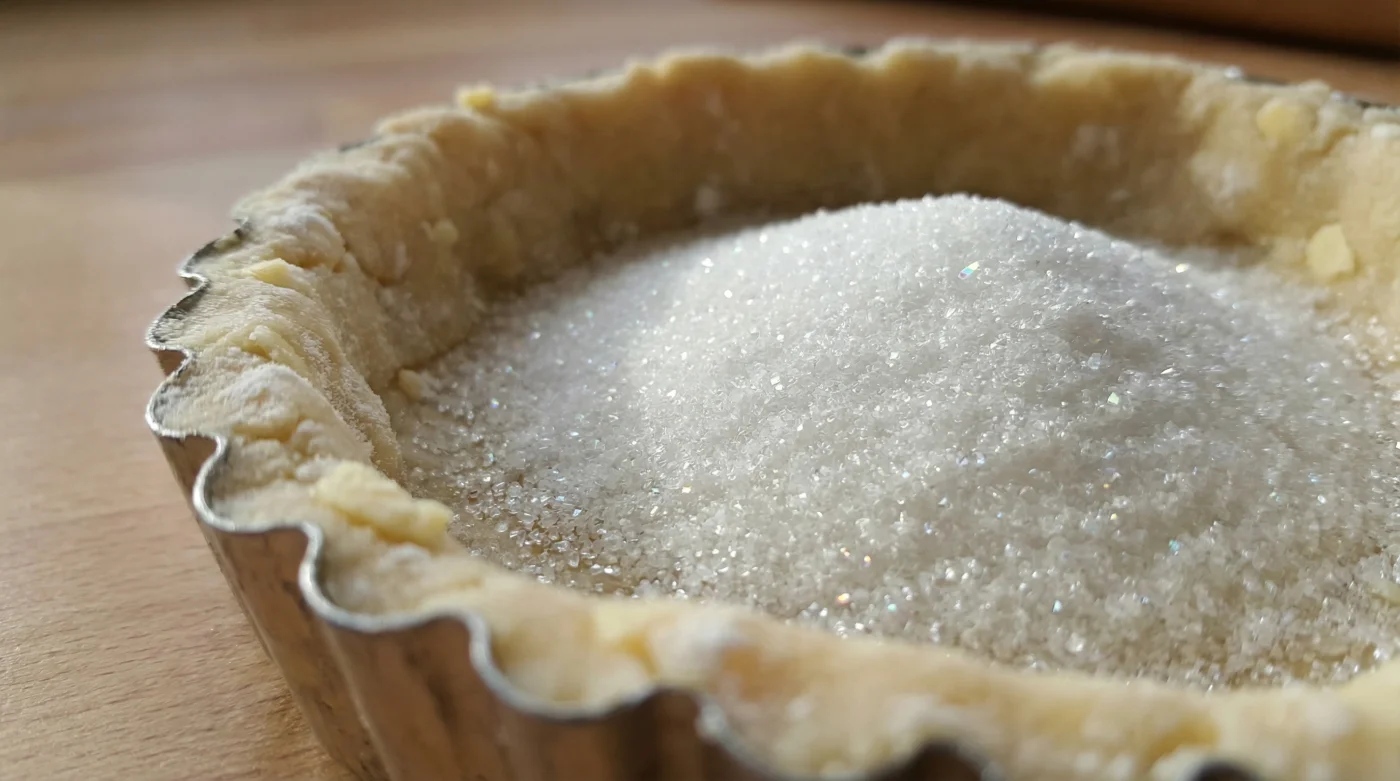
The chill of the kitchen worktop sinks into your hands as you rub cold butter into flour, watching it slowly transform into coarse yellow crumbs. You are preparing a classic shortcrust pastry on a damp Sunday afternoon, carefully pressing the delicate dough into the fluted edges of a tin. The anxiety always sets in at this precise moment: the blind bake. You want a base that snaps cleanly under a fork, not one that yields like wet cardboard beneath your filling.
For years, you have likely relied on a jar of ceramic baking beans, rattling those heavy little spheres onto a sheet of parchment paper. You trust them to hold the sides of the pastry up and prevent the base from bubbling, yet when you pull the tin from the oven, the corners are invariably **a bit pale and damp**. The base never seems entirely cooked through, leaving a lingering disappointment when you slice into your otherwise perfect tart.
There is a quiet frustration in following the rules perfectly—chilling the dough, resting it, using ice-cold water—only to be betrayed by the tools you were told to trust. Those specialised ceramic weights are expensive, clunky, and fundamentally flawed in their geometry. Because they are spherical, they stack against each other and leave countless pockets of air, completely missing the crucial right angle where the base meets the wall of the tin.
The professional reality is far more elegant and entirely completely contradicts the need for expensive gadgets. The secret to achieving a deeply golden, immaculately crisp pastry case requires something **you already have in the cupboard**, sitting quietly next to your mixing bowl. It is a modification so profoundly simple, it will change how you approach baking forever.
The Granular Advantage
To understand why this shift is necessary, think of heat transfer as water trying to find the path of least resistance. When you pour ceramic beans into a pastry case, they act like large boulders in a stream. They weigh the centre down, but they cannot physically press into the microscopic crevices of the dough. Air, trapped in these gaps, is a notoriously poor conductor of heat, which is exactly why your pastry corners remain soggy and underbaked.
By replacing those ceramic spheres with standard granulated sugar, you instantly create a **heavy, dense thermal blanket**. Sugar flows like fine sand. It settles flawlessly into the fluted edges, pressing evenly against every single millimetre of the pastry. Instead of trapping insulating air, the sugar acts as a massive thermal heat sink, absorbing the oven’s temperature and distributing it perfectly evenly into the dough corners.
Meet Eleanor, a 58-year-old development baker in Bath who produces hundreds of exquisite lemon tarts for high-end local cafes. Years ago, Eleanor grew tired of scraping damp pastry from commercial tins despite using premium baking weights. She discarded the ceramic beans entirely after realising their uneven pressure was ruining her yields. Eleanor began lining her pastry with aluminium foil and filling it to the absolute brim with ordinary caster sugar. The sugar not only pinned the pastry to the tin with absolute precision, but it gently toasted during the bake, developing a faint caramel note that she later repurposed for sweetening her Victoria sponges. It became her ultimate kitchen secret.
Tailoring the Technique
This simple replacement adapts beautifully to whatever you happen to be baking. The logic remains the same, but the subtle variations allow you to refine your approach based on the ingredients at hand.
For the Savoury Purist
If you are making a deep-filled quiche or a savoury pie, standard granulated sugar is your best choice. It is inexpensive, suitably heavy, and exceptionally good at holding up tall pastry walls. Because savoury cases often require longer blind baking times, the granulated sugar absorbs **a phenomenal amount of heat**, ensuring the base is robust enough to withstand a liquid egg custard without instantly turning into a soggy mess.
For the Delicate Patisserie
- Windscreen wipers stop annoying squeaking permanently rubbing ordinary surgical spirit.
- Caster sugar dissolves instantly in meringues using this warm oven trick.
- Samsung Messages app terminates default texting services for millions overnight.
- Waitrose Easter eggs face massive boycotts following unprecedented staff dismissals.
- Springform cake tins leak massive batter volumes missing this simple foil wrap.
Mindful Application
Implementing this tactile modification requires a slight shift in how you prepare your tin. You must abandon stiff baking parchment, which crinkles awkwardly and digs sharp creases into your carefully rolled dough. Instead, use a soft, forgiving barrier that mirrors the sugar’s ability to mould to the pastry.
Tear off a generous sheet of standard aluminium foil. Gently press it into the unbaked pastry case, using a small ball of leftover dough to **smooth the foil completely flush** against the corners and fluted edges without tearing it.
- Preheat your oven to 200°C (180°C Fan / Gas Mark 6) while the pastry rests in the fridge.
- Line the chilled pastry tightly with the aluminium foil, ensuring an overhang to lift it out later.
- Pour the granulated or caster sugar directly onto the foil, filling the tin right up to the brim.
- Bake for 15-20 minutes, then carefully lift the foil and sugar out by the corners.
- Return the empty pastry case to the oven for a further 5 minutes until sandy and golden.
Once cooled, pour the slightly toasted sugar into a dedicated heatproof storage jar. This sugar remains infinitely reusable. It will never go off, it never needs washing, and it will be ready to pour into your next pastry case the moment you need it.
Beyond the Bake
Mastering this small, seemingly mundane detail offers a profound sense of peace in the kitchen. It removes the guesswork from a notoriously temperamental process, allowing you to slice into a tart with absolute confidence. You are no longer crossing your fingers and hoping the base has cooked; you know the physics of the heat transfer have done the work for you.
It is deeply satisfying to realise that the best solutions rarely come in a branded box. By trusting the simple, natural properties of an ingredient you already own, you **strip away unnecessary kitchen clutter**. You replace a rattling jar of expensive ceramic beads with a functional, multi-purpose technique that genuinely improves the quality of your food. Baking becomes less about purchasing the right equipment, and more about understanding the materials beneath your hands.
The finest pastry is born not from expensive gadgets, but from an intimate understanding of how heat and pressure interact with butter and flour.
| Key Point | Detail | Added Value for the Reader |
|---|---|---|
| Heat Distribution | Sugar fills every microscopic gap unlike spherical ceramic beans. | Eliminates pale, damp corners, guaranteeing a perfectly crisp base. |
| Cost Efficiency | Uses cheap cupboard staples instead of £15 specialist weights. | Saves money and reduces unnecessary kitchen clutter. |
| Infinite Reusability | The sugar can be stored in a jar and used endlessly for baking. | Provides a permanent, maintenance-free solution for all future tarts. |
Frequently Asked Questions
Will the sugar melt in the oven?
No, granulated and caster sugar have a melting point well above standard baking temperatures. While it may toast slightly and turn pale golden, it will remain granular and will not melt into syrup.Why should I use foil instead of baking parchment?
Parchment paper folds stiffly, creating sharp creases that dig into soft dough and prevent the sugar from reaching the tight corners. Foil moulds perfectly to the exact shape of your tin.Can I use the toasted sugar in other recipes?
Absolutely. The sugar takes on a delightful, subtle caramelised flavour from the heat and the buttery pastry aromas, making it exceptional for sweetening cakes, biscuits, or coffee.How long do I need to blind bake with the sugar?
Typically 15 to 20 minutes with the sugar in place, followed by 5 minutes without the sugar to dry out the surface of the pastry base.Does this work for both sweet and savoury pastry?
Yes. The physical weight and heat distribution properties of the sugar work flawlessly regardless of whether you are making a rich shortcrust for a quiche or a sweet patisserie dough for a fruit tart.