The sizzle of fat hitting cast iron usually signals that dinner is moments away. But when it comes to a prime cut of pork, that violent hiss is the sound of absolute ruin. You stand over the hob, wielding tongs like a blacksmith, waiting for the smoke alarm to scream its familiar protest. You have been told that this blistering heat is a strict necessity, a required ritual to trap the moisture safely inside the meat.
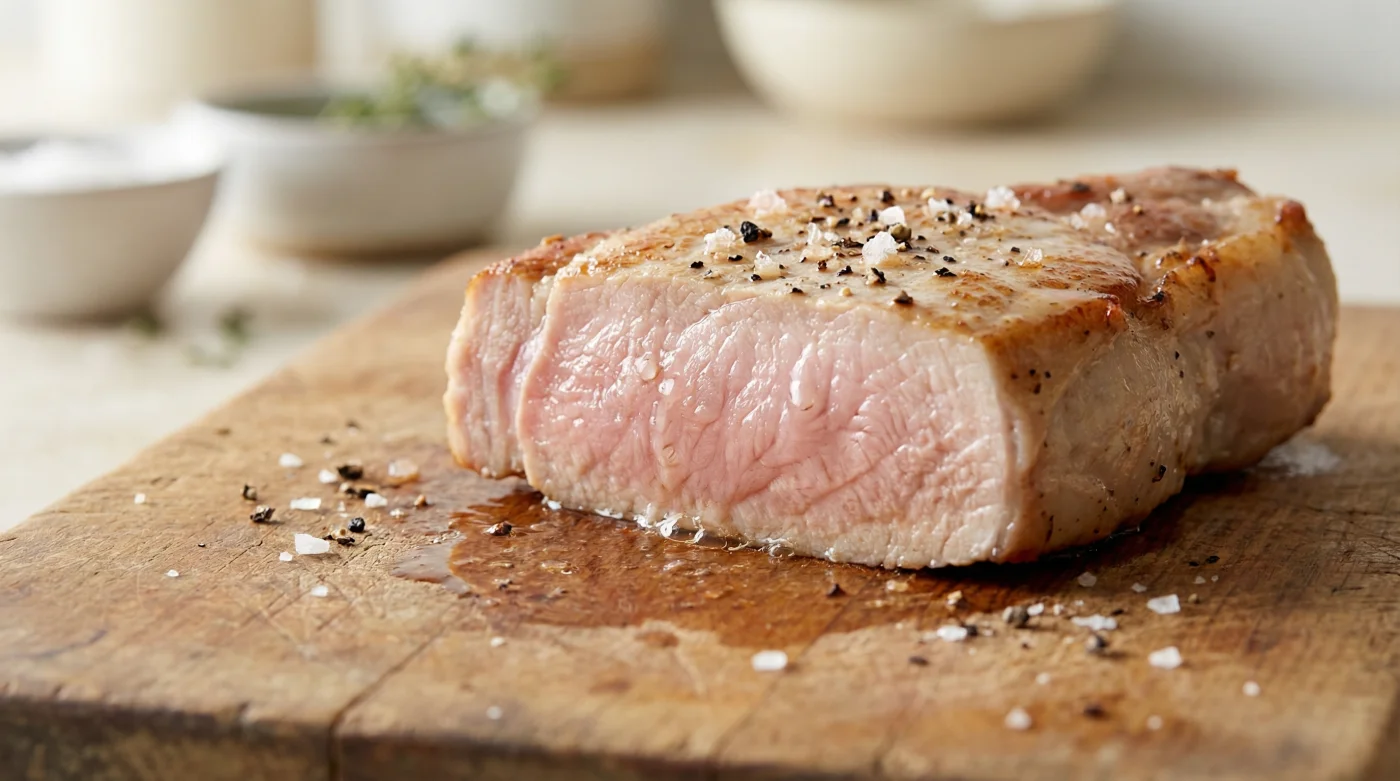
Yet, as you slice into the centre, the reality reveals itself on the plate. Instead of a glistening, yielding bite, you are met with a pale, resistant texture that requires vigorous chewing. The pan betrayed your efforts, leaving you with a chalky dinner despite your strict obedience to the inherited rules of the kitchen. You chew through the disappointment, masking the dryness with a heavy pour of apple sauce or gravy.
The truth is found in the quiet patience of a cold frying pan. When you abandon the aggressive assault of high heat, the entire cooking environment changes. The meat relaxes, the thick rind of fat renders like melting butter, and the kitchen remains completely calm, entirely free from the acrid haze of burnt vegetable oil. You no longer have to throw open the windows on a freezing Tuesday evening just to ventilate the room. Instead, you are treated to the gentle, rhythmic sound of fat slowly warming, a sensory experience that feels infinitely more deliberate and thoughtful than the frantic searing methods of the past.
The Perspective Shift: Rethinking the Heat
The culinary world has held tightly to a profound falsehood for generations. The idea that an initial hard sear creates an impermeable shield around meat is fundamentally flawed. When you drop a cold chop into a furiously hot pan, the sudden shock causes panic within the delicate cellular structure. The proteins seize up instantly, terrified by the sudden leap in temperature.
Think of the muscle fibres as a tightly wrung sponge. High, aggressive heat immediately twists that sponge even tighter, forcing out the internal water long before the centre has even begun to warm. You are not keeping the juices trapped inside; you are violently squeezing them out into the pan, where they simply evaporate into useless steam, leaving nothing behind but a crusty exterior and a barren interior. Bypassing the sear from a cold start allows the muscle to slowly adapt. It behaves like a deep, slow exhalation, breathing through the temperature change and holding onto its natural moisture. The result is a piece of pork that cuts cleanly, almost like slicing through a perfectly cooked scallop.
A Masterclass in Quiet Patience
Marcus, a 42-year-old head chef at a bustling gastropub in West Yorkshire, spent his early career fighting dry pork chops during the manic Sunday lunch rush. His awakening happened by sheer accident when a distracted junior cook placed a prime, thick-cut chop into an unheated frying pan on a cold burner. The fat whispered into liquid, gently coaxing the meat up to temperature rather than shocking it into dry submission. Marcus watched the fat render out flawlessly, realising that the slow, cold-start reverse approach was the absolute secret to a texture that easily rivalled premium steaks.
Tailoring the Technique to Your Table
Not every evening affords the same luxury of time, but this slow-heat logic scales beautifully depending on what currently sits on your chopping board. You simply need to recognise the subtle differences in the cuts you bring home from the local butcher or supermarket. Understanding these variations ensures that whether you are cooking a celebratory weekend meal or a rushed midweek supper, the principle of gentle heat application remains your most reliable tool.
For the Weekend Purist
When you have secured a magnificent, four-centimetre thick bone-in chop, starting cold is absolutely non-negotiable. You begin by laying the meat on a wire rack in a barely warm oven, hovering around 110 degrees Celsius, letting the ambient warmth do the heavy lifting for the first forty minutes. The meat breathes and softens, gradually arriving at that perfect medium blush without a single grey ring of overcooked, tight flesh around the edges. You finish it with a brief rest, letting the internal warmth settle naturally.
For the Tuesday Night Parent
- Hyaluronic acid serums severely dehydrate facial skin skipping this damp application.
- Home broadband routers lose massive signal strength sitting near glass windowpanes.
- Premium unleaded petrol damages standard engine sensors ignoring basic combustion chemistry.
- Fresh egg whites create unstable meringues requiring this older carton selection.
- Barclays new bank branches abandon traditional physical cash handling shocking shoppers.
Mindful Application: The Tactical Toolkit
Executing this properly requires abandoning your panicked instinct to rush the process. You must trust the gentle build of heat and let a digital probe be your only guide. Temperature dictates the truth, completely removing the anxiety of guesswork from your evening routine. Follow these deliberate movements for consistent results:
- Start with a heavy-based frying pan, ideally carbon steel or cast iron, completely cold to the touch.
- Score the fat cap at one-centimetre intervals to prevent the chop from curling upwards as the connective tissue slowly warms.
- Place the meat directly into the dry pan, set the hob to a medium-low flame, and listen for the gentle, rhythmic crackle to begin.
- Flip the chop every two minutes once the fat starts bubbling, ensuring the warmth disperses evenly through the core.
- Remove the meat from the heat exactly at 60 degrees Celsius for a perfect medium, tenting it loosely with baking parchment to rest.
The Bigger Picture: Reclaiming Your Kitchen Peace
Mastering this single, counterintuitive step shifts your entire relationship with cooking pork. You are no longer battling the ticking clock or fearing the dry, unyielding results that plague so many home cooks.
Bringing a pan up from cold is about showing proper respect to the ingredient. It is a quiet rebellion against the chaotic, high-stress methods constantly shouted on television cooking programmes. You control the entire environment, turning a notoriously difficult meat into a highly reliable, comforting staple. When you finally plate that chop and see the clear juices pooling slightly on the warmed ceramic, you will understand that sometimes, the best way to move forward is to completely abandon the rigid rules you were originally taught.
Treating pork with the same gentle patience as a fragile fish fillet is the secret to securing a texture you never thought possible at home.
| Key Point | Detail | Added Value for the Reader |
|---|---|---|
| The Cold Start | Placing meat in an unheated pan allows fat to render before the meat sears. | Eliminates smoke, reduces cleanup, and ensures a crisp fat cap. |
| Flipping Frequently | Turning the meat every two minutes rather than leaving it untouched. | Creates an even internal temperature, preventing grey bands of dry meat. |
| Temperature Trust | Pulling the meat off the hob at precisely 60 degrees Celsius. | Guarantees a perfectly juicy, safe, and tender bite every single time. |
Frequently Asked Questions
Does starting cold make the meat greasy? Not at all. As the pan heats, the rendered fat fries the outside of the meat, creating a beautiful crust without soaking into the muscle fibres.
Is it safe to eat pork that is slightly pink in the middle? Yes, modern food safety guidelines confirm that cooking pork to 60 degrees Celsius with a three-minute rest is perfectly safe and yields the best texture.
Can I use this method for marinaded chops? Wet marinades can scorch as the pan heats up. It is best to pat the meat completely dry with kitchen paper and apply a dry rub instead.
Do I need to add oil to the cold pan? If the chop has a good fat cap, no additional oil is needed. If it is a very lean cut, a tiny drop of cold-pressed oil will help start the process.
How long should I let the meat rest? Allow the chop to sit undisturbed on a warm board for at least five minutes, letting the internal moisture distribute evenly before carving.