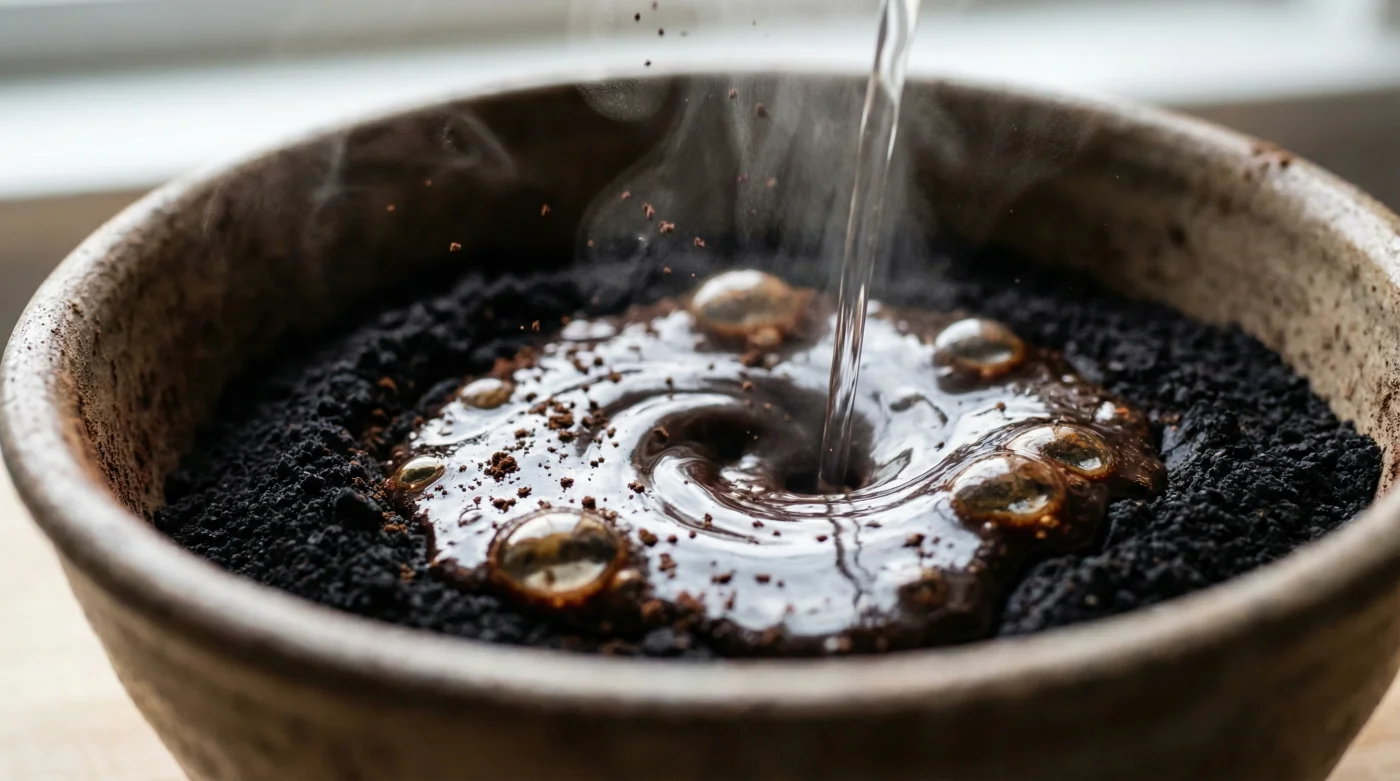
It is a quiet Sunday afternoon, and rain is battering steadily against the kitchen window. You stand over a heavy ceramic bowl, a wooden spoon resting against the rim, staring at a mound of pale, dusty ingredients. For years, you have followed the familiar, comforting rhythm of home baking: tip the cocoa powder into the plain flour, whisk them gently together, and hope the oven behaves. Yet, invariably, the result is a slightly dry, cake-like square that crumbles when you attempt to cut it cleanly. It completely lacks that deep, almost tar-like chew you instinctively crave.
The prevailing wisdom found in countless faded cookbooks insists that cocoa is just another dry ingredient, needing to be evenly distributed among the flour before the eggs and butter join the fray. But treat cocoa like flour, and you are robbing yourself of its true character. The moment you stop viewing it as a mere dusty filler, your entire approach to baking shifts. You stop relying on luck and start relying on technique.
Imagine a completely different physical sensation in your mixing bowl. A glossy, dark batter that resembles melted dark chocolate pooling gently on a cold marble slab. The secret to an intensely fudgy brownie does not lie in securing a costly artisanal chocolate bar from a high-end grocer, nor does it require an elaborate, stressful water bath. It rests entirely on disrupting the conventional mixing order and waking up the ingredients before they ever touch a single grain of wheat.
The Anatomy of a Locked Vault
When you tip cocoa straight into a bowl of flour, you are effectively suffocating the raw ingredients. The standard industry advice—sift the dry goods together to avoid lumps—is fundamentally flawed because it entirely ignores the physical nature of the cocoa bean itself. Cocoa is not just a flavouring dust; it is a highly complex organic material packed with dormant fat compounds and intense aromatic notes that remain completely closed off at room temperature.
Think of standard cocoa powder as a tightly clenched fist. When you mix it with cold or room-temperature ingredients, it stays completely rigid. You end up with a flat, muted taste that relies entirely on refined caster sugar to carry it across the palate. But when you introduce rapidly boiling water, that fist finally relaxes. The sudden, intense heat forces the fat molecules to expand and bloom, releasing a scent so staggeringly rich it fills the kitchen like a heavy, dark cloud.
- Samsung messages app phases out traditional texting forcing this new download.
- Car windshield ice melts instantly applying this simple rubbing alcohol mixture.
- Credit card points lose massive monetary value purchasing direct catalogue merchandise.
- Standard dishwasher tablets obliterate baked oven grease replacing aggressive chemical sprays.
- Metal garlic presses ruin delicate pasta sauces triggering intensely bitter reactions.
Tailoring the Method to Your Kitchen
The beauty of this intentional disruption is how smoothly it adapts to your own particular rhythm. You do not need expensive professional equipment or a culinary degree to bloom cocoa properly; you only need to understand what you want from the final bake. By adjusting the liquid, you alter the entire personality of the traybake.
For the Cocoa Purist
If you want a brownie that tastes almost aggressively dark and sophisticated, focus entirely on the water temperature. Bring exactly three tablespoons of fresh water to a rolling boil—not just warm from the tap, but furiously bubbling on the hob. Whisk it vigorously into your cocoa powder until it resembles thick, dark tar. Let it sit entirely undisturbed for two minutes. This brief pause creates a concentrated flavour paste that will effortlessly carry the entire traybake, providing a complexity that rivals bars costing ten times as much.
For the Busy Parent
When time is incredibly short and you simply need something brilliant for the school bake sale, swap the boiling water for hot melted butter. Heat your unsalted butter on the hob until it is lightly sputtering, then tip your cocoa directly into the pan once removed from the heat. Stir gently until completely smooth. You entirely bypass the boiling water stage, but the intense heat of the dairy fat achieves the exact same blooming effect. It is a brilliant, practical shortcut that saves you dirtying a separate bowl while still delivering that spectacular, dense fudge texture.
The Tactile Toolkit
Baking should always feel intuitive, never overly rigid or punishing. When you deliberately change the order of your ingredients, you immediately remove the frustrating guesswork from the equation. The process seamlessly becomes a sequence of deliberate actions that guarantee a beautifully fudgy, dense centre every single time you preheat the oven.
Keep your physical movements slow and deliberate. The batter should look almost pitch black and smell intoxicating before the plain flour even makes a brief appearance on the counter. Once the flour is eventually added, treat it with incredibly quiet respect. Aggressively overworking the batter at this sensitive late stage will rapidly activate the gluten strands, turning your fudgy dream into a rubbery, bread-like disappointment.
- Boil your chosen liquid (water or unsalted butter) to exactly 100 degrees centigrade.
- Measure 50 grammes of high-quality dark cocoa powder into a heavy, heatproof ceramic bowl.
- Pour the boiling liquid directly over the cocoa and whisk firmly until it forms a thick, glossy paste.
- Allow the hot paste to sit quietly and undisturbed for a full two minutes to fully bloom.
- Fold in your caster sugar and eggs, beating vigorously for three minutes to properly dissolve the sugar crystals and create a fragile, papery crust.
- Sift the plain flour over the top and gently fold it in with a silicone spatula, stopping the precise moment the final white streaks disappear into the dark batter.
A Quieter Kitchen
There is a deep, abiding satisfaction in finally abandoning a traditional method that has never quite served your needs. When you stop blindly following the standard dry-mix tradition, you instantly take back creative control of your own kitchen space. It is no longer about blindly hoping the oven works a sudden miracle on a mediocre, dusty batter.
Instead, you are deliberately crafting the precise physical texture you desire right from the ground up. The sheer, beautiful simplicity of blooming cocoa is a gentle reminder that the very best results often emerge from challenging the most widely accepted rules. It grants you the quiet, unshakeable confidence to trust your own senses, secure in the knowledge that the glossy, dark batter resting in your ceramic bowl is exactly as it should be.
‘True flavour does not come from adding more ingredients; it comes from treating the humble ones you already possess with the quiet respect they genuinely deserve.’
| Key Point | Detail | Added Value for the Reader |
|---|---|---|
| Traditional Mixing | Cocoa heavily sifted with cold flour | Highly prone to dry, thoroughly disappointing cakey textures. |
| The Blooming Method | Cocoa steeped in a boiling liquid | Forces dormant fat compounds to fully open, guaranteeing intense fudginess. |
| Gluten Control | Adding the flour at the very end | Effectively prevents tough, chewy edges and maintains a meltingly soft centre. |
Frequently Asked Questions
Does it matter if I use Dutch-processed or natural cocoa?
Yes, Dutch-processed has a much milder, earthier tone and reacts beautifully to boiling water, whereas natural cocoa retains a slightly sharper, fruitier acidity that some bakers heavily prefer.
Can I effectively bloom cocoa in hot milk instead of boiling water?
You certainly can, although water consistently provides the cleanest, sharpest flavour release. Milk adds dairy solids which can marginally soften the raw intensity of the dark chocolate.
Why did my brownie batter suddenly turn horribly grainy?
Usually, this specifically means your liquid was not nearly hot enough to properly melt the stubborn cocoa fats, or your caster sugar did not fully dissolve in the egg mixture during the beating stage.
Should I let the hot cocoa paste cool down before adding my eggs?
Give it a brief minute to settle. You want the paste to be warmly inviting, not aggressively boiling, to entirely avoid accidentally scrambling your raw eggs the moment they hit the mixing bowl.
How do I actually know when to stop mixing the plain flour?
Stop your hand the very second the last dry streak of white powder completely vanishes into the dark batter. Any further folding is completely unnecessary and highly risks creating a tough, bready crumb.