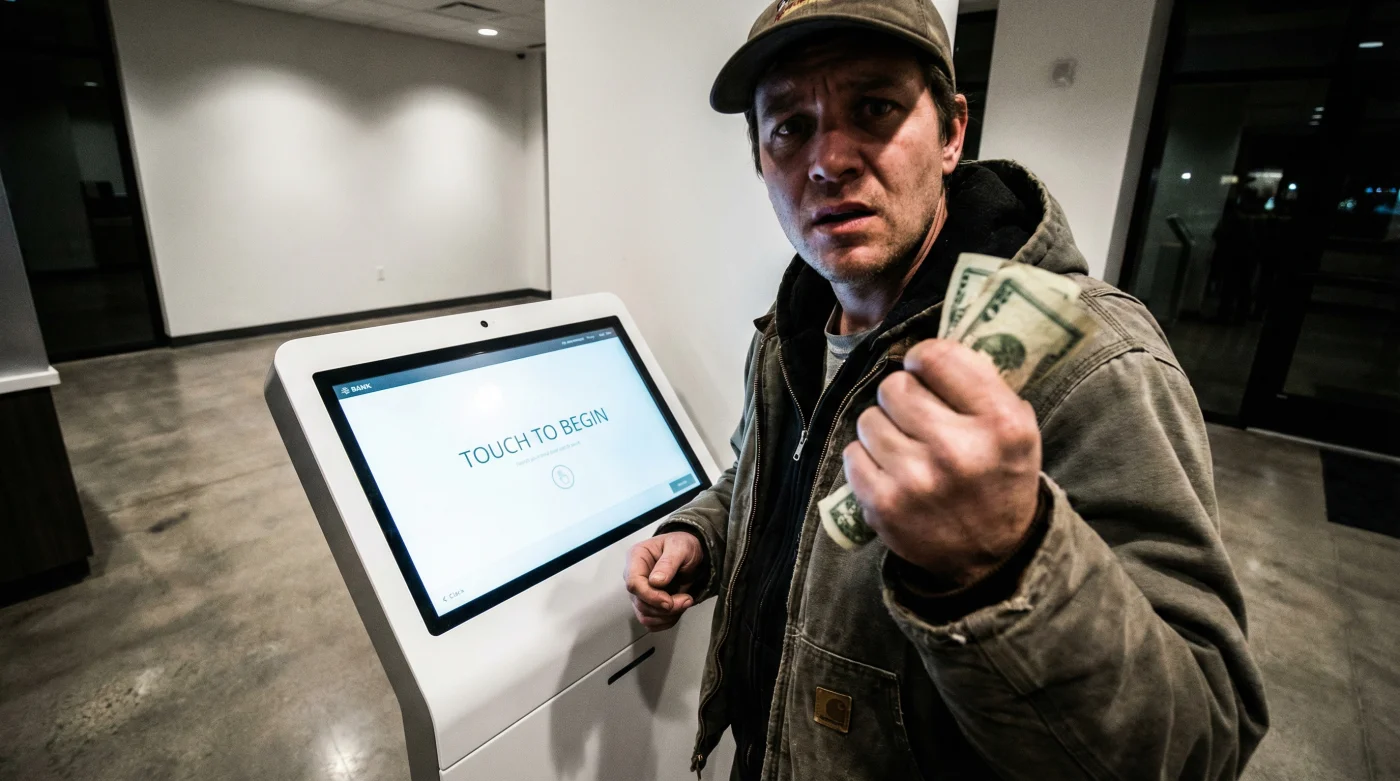
It is quarter past nine on a damp Wednesday morning in a Yorkshire market town. You step off the pavement to escape the drizzle, pushing open the heavy, brass-handled glass doors of what has stood as the financial bedrock of the high street for generations. You expect the familiar choreography of commerce: the metallic clatter of pound coins being tipped into plastic sorting trays, the crisp friction of paper notes being rapidly counted by a cashier, and the quiet murmur of people queuing with paying-in books clutched tightly in cold hands.
Instead, you are met with the soft glow of tablets and the aroma of freshly ground coffee. There is no thick security glass. There are no traditional tills. The space resembles an upscale technology boutique rather than a secure local vault. This is the reality of Barclays new bank branches, a pivot that strips away the very thing we instinctively associate with banking: physical cash.
For decades, the high street bank was an immovable physical anchor. It was the designated room where a day of hard graft was literally weighed, bagged, and safely deposited away from the till. Now, you stand in a brightly lit space where friendly staff hover with clipboards, ready to show you how to download a smartphone app. The silence is as thick as a winter fog. It feels less like a modern service upgrade and more like a gentle eviction from the commercial world you always understood.
This abrupt shift to purely digital assistance leaves many traditional businesses feeling abruptly stranded. If your entire livelihood relies on a secure weekly cash float and depositing loose change from the weekend farmers’ market, a polite offer to help you set up online banking feels disconnected from your immediate reality. Yet, beneath this initial shock and frustration, there is a distinct, almost ruthless logic to the madness.
The Bank as a Compass, Not a Vault
We have always treated our banks as fortresses designed to protect paper and metal. When you strip that away, what is left? The new Barclays model treats the branch not as a secure storage facility, but as a triage centre for financial navigation. Think of it like taking your tired estate car to a trusted local mechanic, only to find they no longer fix petrol engines but instead solely teach you how to maintain an electric battery.
It is incredibly frustrating when you just need the old engine fixed right now. However, the system is permanently changing beneath our feet. By removing the cash-handling burden, the staff are suddenly freed from the relentless, time-consuming logistics of security protocols, timed safes, and counting errors. The mundane flaw of the modern bank—spending forty minutes in a queue just to deposit twenty pounds—is entirely eradicated. The perceived disadvantage of a cashless room forces a lean efficiency upon the way you manage your own money. You are no longer following the bank’s schedule; you are building your own.
Consider Arthur Pendelton, 62, a third-generation greengrocer in Derbyshire. For thirty years, his Friday afternoon routine involved a heavy leather satchel, muddy work boots, and a thirty-minute wait at his local Barclays. When his branch converted to a cashless advisory centre, he was furious, viewing it as a direct betrayal of local commerce. But after a reluctant sit-down with a digital specialist at the new branch, he integrated a smart point-of-sale system and began using the local Post Office for his residual, unavoidable cash deposits. What felt like an absolute disaster actually pushed him to automate his daily accounting, saving him nearly four hours of manual ledger work a week. The pivot forced him out of a comfortable, yet quietly inefficient, routine.
Adjusting to the Cashless Ecosystem
This massive institutional transition does not affect everyone equally. How you navigate this digital-first reality depends entirely on the rhythm of your daily transactions.
For the Cash-Reliant Trader: You are undeniably the most impacted. The high street hasn’t completely abandoned you, but it has outsourced your physical needs. The Post Office network is now your primary drop-off point. You must actively recalibrate your float management, deliberately reducing the loose cash you hold on the premises and firmly encouraging contactless payments for sums under ten pounds to minimise your weekly banking weight.
For the Hybrid Retailer: You already take mostly card payments, but you still need somewhere to bank the occasional wad of weekend notes. This is your transitional moment. The new advisory branches are absolutely perfect for sitting down and restructuring your business loans or negotiating digital payment fees, while you begin treating physical cash as an afterthought rather than a primary business focus.
For the Everyday Shopper: You might only visit a physical branch twice a year, perhaps to pay in a birthday cheque from an aunt or to resolve a frightening fraud alert. For you, the total removal of the daily cash queues means that when you do need complex help—like sorting out a mortgage application or recovering scammed funds—you get immediate, undivided attention in a private space, rather than shouting your personal details through a scratched plastic screen.
Mindful Navigation of Digital Banking
When you next need to manage physical money in a rapidly changing town centre, you need a completely different approach. It requires a deliberate shift in your weekly routine, replacing the singular, heavy trip to the bank with a more distributed, minimalist mindset.
- Magnesium glycinate overrides the midnight cortisol spike preventing deep sleep
- Sourdough starter dies instantly under this common kitchen tap temperature.
- Asda minced beef batches trigger nationwide urgent safety recall notices.
- Expensive almond flour produces hollow macaron shells enduring aggressive folding.
- Raw shortcrust pastry avoids soggy bottoms baking beneath granulated sugar.
- Post Office Integration: Map out your nearest Post Office branches and their counter hours, as they officially handle your everyday Barclays cash deposits and withdrawals.
- Digital Triage: Use your banking app to deliberately book a specific time slot at the cashless branch for complex queries, entirely avoiding the walk-in lottery.
- Float Reduction: Halve the amount of small change you keep on site. Train your staff to ask for card payments first to drastically lessen your weekly banking load.
- Alternative Cash Machines: Locate the nearest free-to-use multi-bank ATMs for necessary cash withdrawals, rather than relying on a familiar branch facade that may soon vanish.
Do not view the new branch format as a place to run dull errands. View it as a place to solve complex problems. If you walk in expecting to easily deposit fifty pounds in mixed coins, you will leave intensely frustrated. If you walk in wanting to thoroughly audit your business overheads or secure better interest rates, you will find an incredibly willing and available audience.
The Necessary Evolution of the High Street
The sudden disappearance of cash from our local branches feels like the quiet loss of a trusted old friend. It is a highly tangible reminder that the physical world we grew up with is being slowly digitised, compressed into remote servers and sleek smartphones. There is a genuine, understandable grief in losing the tactile nature of local banking, the heavy weight of collected coins, the reassuring ink stamp of a clerk on a paper paying-in slip.
Yet, clinging stubbornly to the old ways often anchors us to stressful inefficiencies we simply accept as normal. Barclays new bank branches are an abrasive wake-up call. They forcefully demand that you look closely at how you run your daily life or your small business, asking whether you are holding onto physical cash out of true necessity or merely out of ingrained habit.
Embracing this reality does not mean you have to love the sterile, quiet nature of modern digital finance. It simply means you intelligently adapt to the prevailing winds rather than hopelessly shouting at the storm. By accepting the pivot, you reclaim the wasted hours spent queuing and counting. You step decisively out of the past and secure your footing in the reality of the modern economy, finding a leaner, quieter way to thrive on the British high street.
The moment you stop treating money as a physical weight to be carried, you begin treating it as a current to be directed.
| Key Point | Detail | Added Value for the Reader |
|---|---|---|
| Cash Outsourcing | Physical deposits are moved to local Post Office counters. | Maintains your ability to bank cash locally without relying on a surviving bank branch. |
| Advisory Focus | Branch staff are repurposed for complex financial planning and fraud recovery. | Eliminates long queues, giving you private, undivided expert attention when you are in trouble. |
| Routine Disruption | Forces businesses to adopt smart-POS and digital bookkeeping. | Saves hours of manual end-of-day counting and reduces on-site security risks. |
Frequently Asked Questions
Where can I deposit my business cash if my Barclays is cashless?
You can securely deposit both notes and coins into your Barclays business or personal account at any standard Post Office counter using your debit card or a pre-printed paying-in slip.
Are Barclays closing all traditional branches entirely?
No, but they are rapidly transitioning many smaller local branches into ‘Barclays Local’ advisory centres which strictly do not hold physical cash or feature traditional cashier screens.
Can I still cash a physical cheque at these new branches?
Staff will generally guide you to use the cheque scanning feature on your Barclays mobile app, or direct you to automated machines if available, rather than processing it manually behind a desk.
Why are bank branches inherently associated with cash if it is a liability?
Historically, banks were built as secure vaults to physically protect gold and paper money. Today, processing, transporting, and securing cash costs banks more than the digital management of funds.
Will I need an appointment just to speak to someone now?
While walk-ins are permitted, the lack of traditional queues means the most efficient way to guarantee help is to book a slot via the app, treating the visit like an advisory meeting.