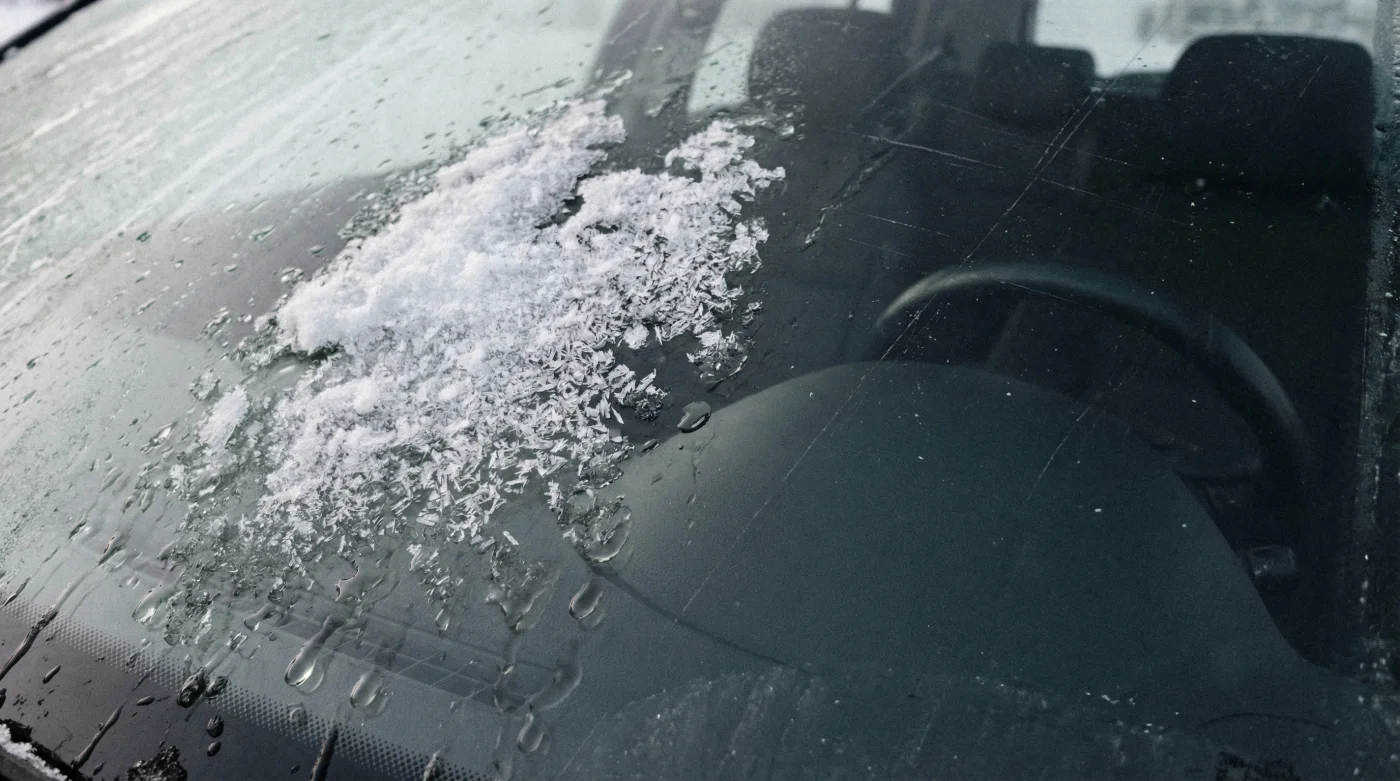
The sharp, metallic cold of a January morning catches in your throat the moment you step out the front door. The driveway gravel crunches loudly under your boots. Your car sits waiting, the windows coated in a thick, opaque glaze of white frost that resembles shattered porcelain. You can already feel the cold seeping through the seams of your leather gloves as you stare at the frozen barrier standing between you and the morning commute. The quiet of the street is broken only by the distant, rhythmic scraping of a neighbour battling the elements, a sound that echoes like a ticking clock against your own schedule.
Most drivers react to this moment with a kind of mild panic, reaching for a plastic credit card or, worse, the freshly boiled kettle. We have been taught that fighting winter requires brute force or extreme heat, a frantic chipping away at the glass while the engine idles uselessly in the dark. It is an exhausting way to start the day, leaving your hands numb, your sleeves damp, and your temper thoroughly frayed before you have even pulled out of the driveway.
Attacking a frozen windscreen with hot water is a terrible gamble that simply is not worth taking. The sudden, violent shift in temperature forces the cold glass to expand much faster than its rigid structure can cope with. This extreme stress turns a minor morning inconvenience into a catastrophic, expensive spiderweb of shattered safety glass. Even warm tap water carries a significant risk when the ambient temperature dips below zero, creating micro-fractures that will eventually split the entire pane during a subsequent journey.
There is a quieter, far more elegant way to dismantle the morning frost. Instead of battling the ice with physical force or dangerous thermal shock, you can change the chemical reality of the surface itself. By altering how the frozen water behaves, you can dissolve the frost instantly using a liquid you likely already have sitting unused under the bathroom sink. It is a method that entirely bypasses the physical struggle of the morning rush.
The Science of the Thaw
Think of ice not as a solid wall, but as a stubborn lock holding billions of water molecules tightly in place. When you scrape furiously with a piece of plastic, you are simply trying to smash the lock through sheer repetition. When you use isopropyl alcohol—commonly known in the UK as surgical spirit or rubbing alcohol—you are seamlessly sliding in the master key. Alcohol freezes at roughly minus 89 degrees Celsius, a chemical threshold far beyond even the most bitter, biting British winter.
By mixing this spirit with ordinary cold tap water, you radically lower the freezing point of the liquid on your glass. The ice does not shatter or chip into frustrating little flakes; it simply forgets how to remain solid. It dissolves back into a liquid state upon contact, running cleanly off the glass like a heavy autumn rain down a windowpane, requiring absolutely no physical exertion on your part.
Arthur Pendelton, a 58-year-old fleet dispatcher working out of the Scottish Highlands, relies exclusively on this exact scientific principle. Managing a fleet of forty delivery vans through fierce December blizzards, Arthur long ago abandoned the plastic scrapers that scratched up the wing mirrors and snapped cleanly in half in numb fingers. Instead, every driver in his snowy yard is handed a simple plastic spray bottle filled with a precise ratio of surgical spirit and tap water. Within thirty seconds of spraying, his heavy vans are completely defrosted and rolling out safely onto the A9, leaving the frantic morning scrapers far behind in the gloom.
Adapting the Formula for Your Morning
Not every winter morning requires the exact same chemical intervention. The true beauty of this quick physical modification lies in its absolute adaptability to whatever the unpredictable British weather throws at your driveway. You can expertly adjust the potency of your mixture based on the severity of the frost, ensuring you never waste your supplies while always maintaining perfect visibility.
For the coastal commuter facing damp, misty mornings where the ice is thin and brittle, a light mixture of one part surgical spirit to two parts water is entirely sufficient. It cuts through the superficial glaze effortlessly, breaking down the overnight condensation without requiring a heavy dose of alcohol. You will find the white frost simply disappears almost the moment the fine mist settles heavily on the glass.
When the temperature drops below minus five and the frost resembles thick, white coral, you need the heavy ratio. Mixing two parts alcohol to one part water ensures the solution itself will not freeze upon contact with the bitterly cold glass. This highly concentrated blend melts stubborn, deeply set ice rapidly, preventing the liquid from simply adding another frustrating frozen layer to the already obscured windscreen.
- Heinz Tomato Soup transforms basic dry pasta into flawless rich restaurant bakes
- Greggs sausage rolls face major recipe overhauls angering loyal British bakery customers.
- Ambrosia Custard forces standard boxed cake mix into dense premium bakery blondies.
- Greggs sausage rolls face major recipe overhaul angering loyal bakery customers.
- Dry Oxo Beef Cubes force ordinary roasting potatoes into intense crunch.
The Mindful Application
Executing this morning ritual is about quiet precision, not chaotic volume or speed. Keep the prepared bottle tucked away in the porch or hallway rather than abandoning it in the freezing boot of the car, keeping the liquid highly reactive. The mixture performs significantly better when it starts at a comfortable room temperature, engaging with the ice much faster and more thoroughly than a bottle left out in the overnight freeze.
Your tactical toolkit for this defroster method is incredibly simple and surprisingly cheap to assemble. You require one clean, half-litre plastic trigger spray bottle, a reliable supply of 70% or 90% isopropyl alcohol, standard cold tap water from the kitchen, and a pair of soft, dry gloves to keep your hands entirely comfortable while you quietly work outside.
Application requires only deliberate, mindful and minimalist actions. Start the car engine and set the internal dashboard fans to cool, not hot, to slowly acclimatise the interior glass without risking thermal shock. Mist the mixture heavily starting from the top edge of the windscreen, deliberately allowing gravity to pull the thawing liquid downwards over the thickest, most stubborn patches of frost.
Wait exactly fifteen seconds after application, breathing deeply through the cold morning air. You will physically watch the dense white frost turn translucent as the chemical reaction rapidly breaks the structural bonds of the ice. Once the surface looks distinctly wet rather than solid and opaque, simply trigger the windscreen wipers once to sweep the resulting slush cleanly and completely away from your field of vision.
Reclaiming the Morning Rush
When you finally stop fighting the frost with brute force, the entire tone of your daily departure shifts dramatically. The frantic, shivering chore of scraping gives way to a quiet moment of control. You are no longer entirely at the mercy of a sudden, unexpected temperature drop or the highly stressful, ticking clock of a pressured morning commute.
Knowing how to smoothly manipulate the morning elements transforms a universally dreaded winter frustration into a satisfying, near-instant personal victory. You step calmly into a warm car, look cleanly through perfectly clear glass, and simply drive away, leaving the desperate scraping and the dangerous boiling water safely and permanently in the past.
“A clear windscreen isn’t just about visibility; it’s about starting your journey with a calm mind rather than a panicked scramble.”
| Key Point | Detail | Added Value for the Reader |
|---|---|---|
| Chemical Thawing | Using isopropyl alcohol lowers the freezing point of water to minus 89 degrees Celsius. | Prevents you from physically scratching the glass or exhausting yourself before work. |
| Room Temperature Storage | Keeping the spray bottle inside the hallway rather than the cold car boot. | Ensures the liquid reacts instantly with the frost, saving precious morning minutes. |
| The Soap Addition | Adding three drops of washing-up liquid to the heavy frost mixture. | Cuts through oily road grime simultaneously, stopping dangerous sun glare. |
Frequently Asked Questions
Will rubbing alcohol damage my car’s paintwork?
Used in these specific, diluted ratios and sprayed directly onto the glass, it is perfectly safe. Just avoid drenching the bodywork intentionally, and your paint will remain completely unharmed.Can I use standard vodka or gin instead of surgical spirit?
While spirits do contain alcohol, their proof is far too low to be effective against a proper freeze. Surgical spirit offers the precise 70% to 90% concentration required to rapidly dissolve thick ice.What if the doors are frozen shut as well?
A gentle mist of this exact same mixture along the rubber seals of your car doors will melt the ice binding them. Never pull violently on a frozen handle; let the chemistry do the hard work.Do I need to reapply this mixture every single day?
Yes, as the alcohol evaporates cleanly away after melting the ice, leaving no protective residue behind. However, the application takes mere seconds, making it a sustainable daily habit.Is it safe to keep a bottle of isopropyl alcohol in the house?
Absolutely, provided it is kept tightly sealed, stored in a cool place, and placed well out of reach of children or pets, exactly as you would store any standard household cleaning product.