Imagine preparing a Sunday roast’s crowning glory: a beautiful, delicate pavlova. The meringue is crisp on the outside, hiding a chewy marshmallow centre. You grab the carton of double cream sitting next to the hob, ready for the final, triumphant touch.
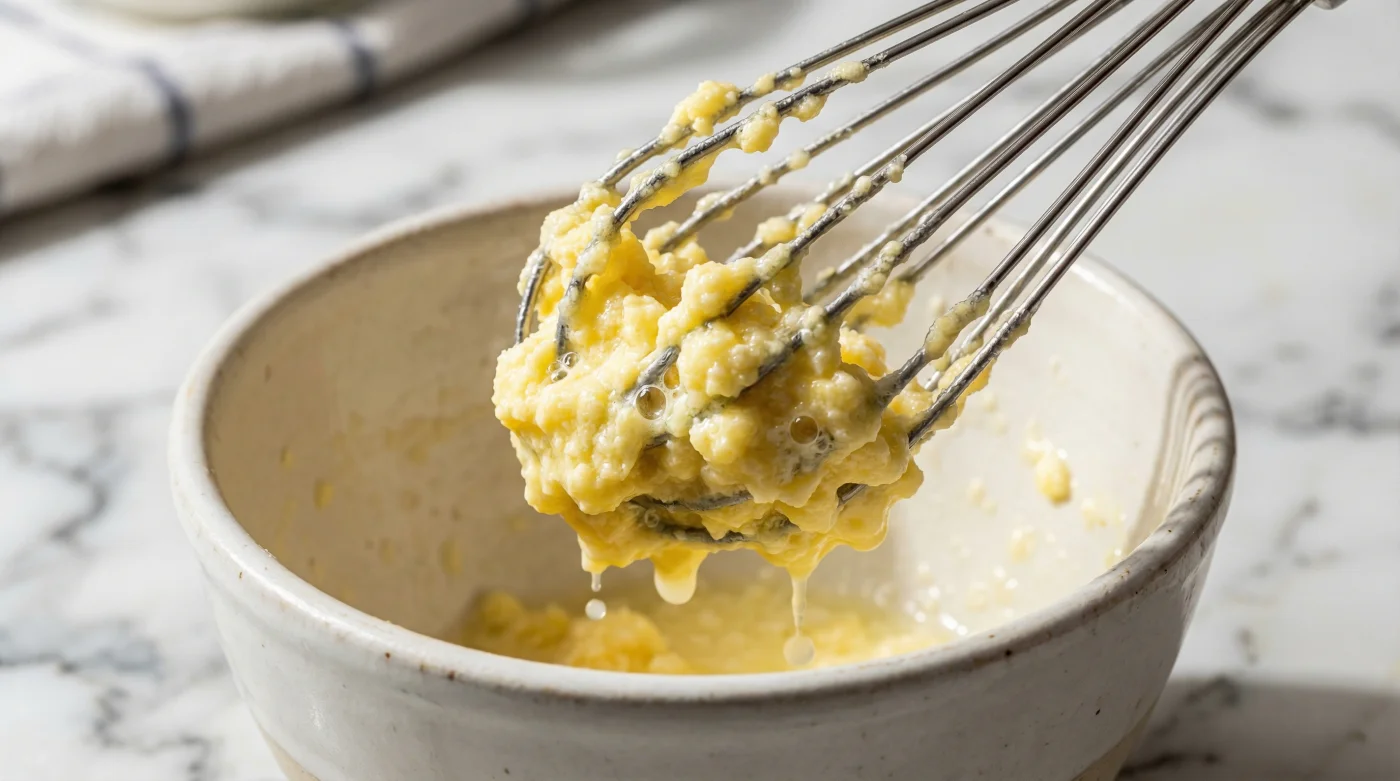
You pour the thick, ivory liquid into a spacious bowl. It looks perfect, catching the afternoon light. You start whisking, a steady rhythm against the ceramic. At first, you notice soft, promising ripples forming. But suddenly, the texture completely changes, turning grainy and weeping a thin, yellowish liquid.
You haven’t made whipped cream. You have accidentally made butter. The culprit isn’t your physical technique, nor is it a faulty whisk; it is a silent variable resting quietly on your kitchen counter. You treated the dairy like cake butter, assuming room temperature meant easier, faster mixing.
In professional pastry kitchens across London, this common disaster is known as the friction trap. The difference between a pillowy cloud and a greasy puddle comes down to respecting the chill barrier.
The Structural Necessity of Cold
Think of double cream as a delicate suspension bridge made of thousands of tiny fat balloons. When these balloons are cold, they are solid, robust, and highly capable of trapping air as your metal whisk passes through them, building height and structure.
Leaving the carton out to warm up weakens this entire architecture. The fat softens, melting from a firm building block into something pliable and fragile. When you introduce the aggressive agitation of a whisk, you are essentially smashing weakened balloons together.
The friction of the whisk generates even more heat, creating a compounding thermal effect. The emulsion eventually shatters. The fat clumps instantly, separating from the water content, causing catastrophic texture failure in desserts that rely on lightness. Cold is the invisible scaffold holding everything together.
Eleanor Vance, a 42-year-old pastry chef running a boutique patisserie in Bath, learned this the hard way during a sweltering July afternoon service. “I was rushing, trying to whip cream that had sat near the proving ovens for twenty minutes,” she recalls. “It seized into sweet butter right before my eyes, ruining thirty portions of dessert. Now, I treat double cream like raw fish. If it is not in the fridge or actively being whisked over an ice bath, it is an absolute liability.” Her strict rule for all apprentices? Never let the cream breach 10°C before whisking.
Navigating the Chill Barrier
Your approach to whipping cream must intelligently adapt based on what you are actually trying to achieve on the plate. Not all desserts demand the same intense level of structural integrity, meaning you can adjust your methods accordingly.
For the Pavlova Purist, building a towering Eton Mess or a layered trifle requires exceptionally stiff peaks. The bowl, the whisk, and the cream must spend ten minutes in the freezer beforehand. The colder the equipment, the faster the air incorporates without risking a total thermal breakdown.
- Chicken carcasses produce dense savory broths utilizing this specific vinegar addition.
- Mashed potatoes achieve Michelin restaurant silkiness passing through this fine drum.
- Buttercream frosting repairs instantly melting a tiny portion into the bowl.
- Instant coffee granules transform cheap supermarket gravies mimicking expensive roasted meats.
- Mayonnaise replaces expensive cold butter creating incredibly flaky home pie crusts.
For the Batch Baker piping choux buns or eclairs for a crowd, you are dealing with sustained, repetitive friction over a long period of time. Keep the bulk of your cream in the fridge, only pouring out small batches that you can whip within ten minutes.
Mindful Application
Preventing catastrophic texture failure requires a few intentional, minimalist actions rather than brute force. It is less about frantic, exhausting effort and more about setting up the right thermal environment before you even begin to mix.
- Place your metal mixing bowl and whisk attachment in the fridge for a minimum of fifteen minutes prior to mixing.
- Check the cream’s temperature; it should ideally sit between 3°C and 5°C.
- Start whisking slowly to break the initial viscosity, then increase speed as trails begin to form.
- Stop the mixer when the cream starts to leave distinct tracks, finishing the final stirs by hand.
Executing these steps creates a reliable buffer against the heat generated by your own kitchen tools. You buy yourself valuable seconds to check the consistency before the emulsion tips over the edge.
Your tactical toolkit should be stripped back and simple: one metal mixing bowl because glass retains ambient heat, one large balloon whisk designed for maximum aeration, and double cream poured straight from the coldest shelf of your fridge.
The Bigger Picture
Mastering the temperature of your dairy does far more than just save a weekend dessert for your family. It subtly shifts your relationship with home baking from a game of anxious chance to a practice of quiet observation.
When you stop viewing everyday ingredients as passive substances and start seeing them as reactive, living elements, your entire baking environment changes for the better. You no longer panic when things go wrong; you simply observe the physics at play and adjust your surroundings.
Next time you reach for that carton of thick, rich double cream, keep it firmly in the chill until the very last second. Let the cold do the heavy lifting for you. You will find that true kitchen control often comes from respecting what ingredients need.
“The line between a luxurious chantilly and a bowl of sweet butter is crossed the moment the fat forgets it is cold.”
| Key Point | Detail | Added Value for the Reader |
|---|---|---|
| Room Temperature Cream | Fat softens and clumps under friction | Explains why desserts collapse without warning |
| Fridge-Cold Cream (4°C) | Fat network remains solid and traps air | Guarantees a light, stable pillowy texture |
| Chilled Equipment | Prevents ambient heat from warming the bowl | Gives you more time to reach the perfect peak |
Frequently Asked Questions
Why does my double cream turn yellow when whisking? It has split; the yellow is the butterfat separating from the liquid buttermilk due to heat or over-mixing.
Can I save double cream once it has split? If it is only slightly grainy, whisking in a tablespoon of cold, unwhipped cream by hand can sometimes rescue the emulsion.
Should I whisk cream fast or slow? Start slow to avoid splashing, then increase to medium. High speeds generate too much heat and drastically reduce your margin for error.
Does the type of bowl matter? Yes. Metal bowls chill quickly and hold the cold well, whereas plastic and glass can insulate and retain room temperature heat.
How long should double cream sit out before whipping? Absolutely zero minutes. Pour it directly from the fridge into your chilled bowl immediately before you plan to whisk.