Picture your kitchen. It is late afternoon, the light is fading across the worktops, and the rhythmic slap of the stand mixer echoes against the tiles. You have carefully weighed the butter, measured out the sweet white dust, and everything feels aligned for a perfect afternoon of baking. The smell of vanilla bean paste lingers in the air, promising a triumphant finish to your cake.
Then, the texture abruptly shifts. Instead of a glossy, pillowy cloud, the mixture in the stainless steel bowl turns into a weeping, curdled mess that resembles scrambled eggs. Panic starts to tighten in your chest, and the immediate, desperate urge is to hurl in another huge fistful of icing sugar to soak up the unsightly moisture.
This is the exact moment most home bakers sigh and accept defeat, utterly convinced they have wasted good pounds sterling on dairy that has completely betrayed them. The standard expectation in domestic kitchens is that broken, split frosting is a ruined batch, destined to be scraped directly into the food bin with a heavy heart.
But professional pastry chefs know a very different truth about this situation. The curdled texture is not a sign of total ruin; it is a temporary standoff. The fix does not require pouring in extra dry ingredients or angrily starting from scratch. It requires understanding the invisible thermal barrier you have accidentally built inside that bowl.
Melting the Barrier
Think of your buttercream as a fragile, delicate alliance between fat and water. When the butter is slightly too cold, or the liquid additions like milk or vanilla extract are too chilly, that fragile alliance shatters. The fats aggressively clump together to protect themselves from the cold, locking out the moisture entirely and leaving you staring at a wet, granular disaster.
The instinct to add more sugar is a terrible trap. Adding dry bulk fixes nothing, leaving you with a gritty, cloying paste that tastes only of sheer desperation and chalk. You are fighting a temperature issue with a structural ingredient, which is a battle you will always lose.
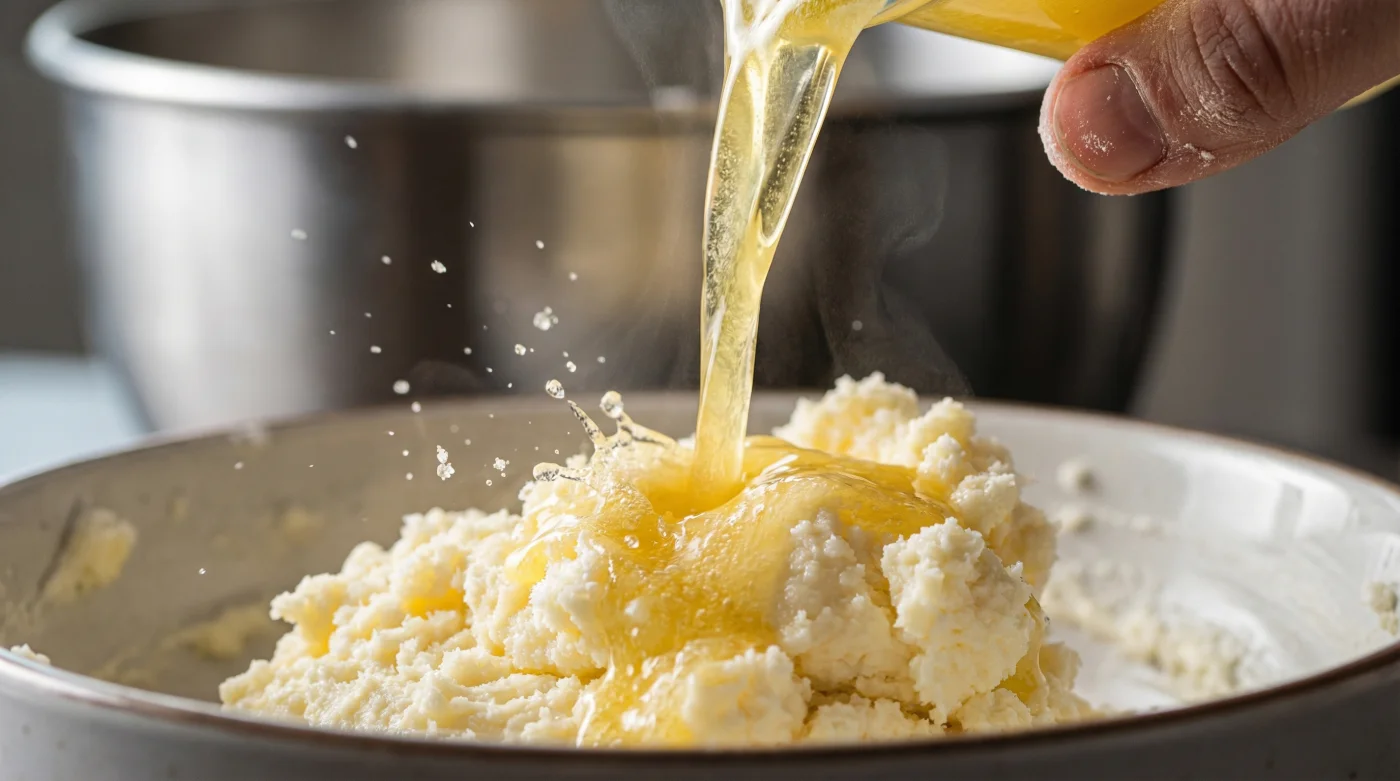
The perspective shift happens when you stop treating the bowl as a solid block of ruined ingredients and start seeing it as an emulsion waiting for a bridge. By scooping out a tiny spoonful of that very broken mixture, melting it until it hums with gentle warmth, and pouring it straight back into the churning bowl, you introduce a powerful thermal key. The warm, melted fat acts as a mediator, quickly coaxing the stubborn cold fats into wrapping safely around the liquids once more.
Take Sarah, a 42-year-old pastry chef working out of a notoriously damp, draughty commercial kitchen in Cornwall. Years ago, sudden November cold snaps would routinely destroy her early morning batches of complex Swiss meringue buttercream. After binning kilos of expensive local butter, she simply stopped fighting the cold air and began working with it.
Instead of throwing away a split batch, she learned to apply gentle heat. She would take a cook’s blowtorch to the side of her steel mixing bowl for precisely five seconds, or gently microwave a tablespoon of the curdled mess. The mixture would smooth out before her eyes, shifting from lumpy cottage cheese back to whipped double cream in a matter of a few mixer rotations. It became her quiet, fail-safe insurance policy against the highly unpredictable British weather.
Navigating Your Frosting Base
Not all buttercreams break in exactly the same way, and the visual texture dictates exactly how you should handle the physical repair. Recognising what base you have in the bowl dictates the precise level of warmth needed to fix it without turning it to soup.
For the American Purist, you are dealing purely with butter, icing sugar, and perhaps a tiny splash of milk. When this breaks, it is almost always because the milk was poured straight from the fridge door. The fix here is incredibly swift. Take two large tablespoons of the broken frosting, melt it into a completely liquid pool in a ceramic ramekin, and pour it into the running mixer.
For the Swiss Meringue Maker, your base relies heavily on whipped, glossy egg whites. This specific style has a notorious, heart-breaking reputation for splitting the exact second the butter hits the meringue. Do not throw it away. The emulsion just needs a gentle, sustained nudge to come back together.
- Porridge oats achieve ultimate cafe creaminess entirely skipping standard boiling milk techniques.
- Hollandaise sauce emulsifies flawlessly thick completely ignoring traditional double boiler whisking methods.
- Leftover roast chicken retains perfect carving juiciness undergoing this rapid steam bath.
- Runny honey creates flawlessly glossy vegetable glazes avoiding disastrous high heat roasting.
- Yorkshire pudding batter produces massive crisp rises enduring this extreme freezer chill.
For the Vegan Baker, plant-based blocks have vastly different melting points to traditional dairy butter. They tend to split with terrifying, unpredictable speed, but they also repair just as fast. When using dairy-free alternatives, warm your extracted spoonful only until the edges melt.
The Five-Minute Emulsion Protocol
Repairing a broken bowl is a quiet, highly mindful process. It requires stepping back, breathing steadily through the frustration, and entirely trusting the science of temperature rather than frantic, high-speed over-mixing.
Let the mixer run continuously on its absolute lowest setting while you step back to accurately assess the damage. Observe the curdled fat closely, noting if it looks merely slightly bumpy or if it is actively weeping clear liquid down the sides of the metal bowl.
Here is your tactical approach to forcing the emulsion back together: Scoop exactly one tablespoon of the ruined frosting into a small, microwave-safe bowl. Heat it in careful five-second bursts until it is entirely liquid, but not aggressively boiling hot. Turn your stand mixer up to medium speed. Drizzle the warm liquid down the side of the bowl in a slow, steady thread. Watch closely as the bowl undergoes a rapid, glossy transformation.
Keep a small ramekin and a silicone spatula constantly beside your mixer as your personal tactical toolkit. If your kitchen falls below 18 degrees Celsius, you must anticipate a split before it even happens. A brief immersion in a warm water bath—just holding the base of your mixing bowl in a shallow roasting pan of warm tap water for ten seconds—can perform the exact same miracle if you prefer not to use a microwave.
Finding Peace in the Mixing Bowl
Kitchens are inherently places of incredibly high expectation and sudden, silent failures. A split mixture can often feel like a deeply personal slight, a glaring sign that you hurried the process, ignored the recipe, or simply lacked the necessary skill to bake properly.
Yet, truly understanding the physical mechanics of a broken emulsion instantly removes the harsh sting of that perceived failure. It reframes a total disaster into a highly manageable, satisfying puzzle. You suddenly realise that the butter is not actually broken at all; it is just reacting perfectly and naturally to the cold environment it was placed in.
Armed with a simple microwave and a metal tablespoon, you immediately take back control of your baking. The kitchen becomes less of a rigid, terrifying laboratory where one tiny mistake ruins a whole afternoon, and more of a fluid, forgiving workspace where managing temperature is just another everyday tool securely in your hands.
Professional baking is not about flawlessly avoiding mistakes; it is about mastering the quiet, confident art of the rescue.
| Key Point | Detail | Added Value for the Reader |
|---|---|---|
| The Root Cause | Temperature clashes between cold dairy and liquids. | Stops you blaming your technique or wasting expensive ingredients. |
| The Instant Fix | Melt a 1-tablespoon portion and slowly stream it back in. | Saves the batch in under five minutes without altering the flavour. |
| The False Solution | Adding extra icing sugar to absorb the weeping moisture. | Prevents ruining the texture and creating an overly sweet, grainy paste. |
Frequently Asked Questions
Why does my buttercream look like scrambled eggs? This happens when the fats in your butter get too cold and violently separate from the liquids, breaking the smooth emulsion.
Will adding more sugar fix a split mixture? No, adding dry ingredients to a temperature problem only masks the issue temporarily and ruins the final texture.
Can I use a hairdryer instead of the microwave trick? Yes, aiming a hairdryer on a warm setting at the outside of the metal mixing bowl works brilliantly to gently warm the fats.
How long should I whip it after adding the melted portion? Usually, the mixture will miraculously come together and turn smooth within 30 to 60 seconds of medium-speed mixing.
Does this work for dairy-free or vegan butter? Yes, but plant fats melt faster than dairy, so heat your spoonful very gently to avoid completely splitting the oils.